

Shopping for espresso machines for home means balancing three things: pull quality, milk steaming, and how much effort you’re willing to put in each morning. After comparing 15 popular models, the Breville Barista Express stands out as the best overall pick because it bundles a built-in conical burr grinder with precise temperature control, covering the two biggest variables in café-quality espresso. For tighter budgets, the De’Longhi Stilosa delivers genuine manual espresso at a fraction of the cost, while the Breville Bambino makes the most sense for small kitchens that still want serious steam power. The main tradeoff in this category is convenience versus control: touchscreen super-automatic-style machines are fast but limiting, while manual machines reward skill with better shots over time. Keep reading for the full breakdown of all 15 machines, including who each one suits and who should skip it.

Get the little things that make your day delivered free with Prime
- Fast, free delivery on millions of items
- Prime Video, Amazon Music and more included
- Member-only deals all year
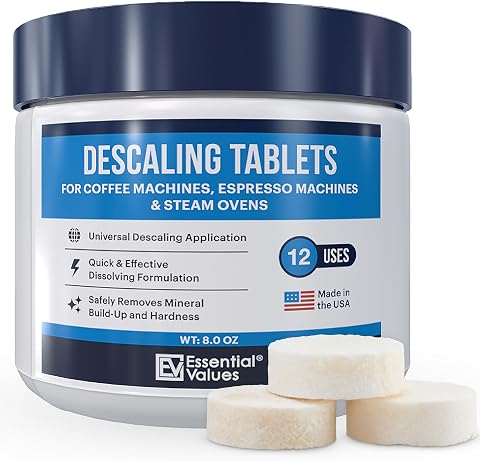
Complete the kit


Key Takeaways
- Built-in grinders were the biggest single differentiator in this roundup: the three Breville Barista Express variants were the only machines that grind fresh beans on demand, which explains why they dominate the top tier.
- Several of the 15 machines are near-duplicates from the same manufacturer (the two XIXUBX units, both CASABREWS models, and the generic 20-bar and compact touchscreen units), so the real field of distinct choices is closer to ten than fifteen.
- Bar pressure marketing (15-bar, 20-bar) mattered far less than temperature stability — the compact machine with PID control punched above its price class against flashier touchscreen rivals.
- The Ninja Luxe Café is the only true multi-beverage machine here, making it the pick for households where espresso drinkers and drip coffee drinkers share one counter.
- The IMUSA 4-Cup is not really an espresso machine in the café sense — it’s a moka-style electric maker, and it ranked last for anyone who wants real crema and steamed milk drinks.
| XIXUBX Espresso Machine with Milk Frother, Grey |  | Best for Hot and Cold Brewing | Type: Semi-automatic espresso machine | Power: 1350W | Pump pressure: 20 bar | VIEW LATEST PRICE | See Our Full Breakdown |
| Arecovas Espresso Machine with Touchscreen and Milk Frother |  | Best Smart Interface | Type: Semi-automatic espresso machine | Pressure: 20 bar | Power: 1300 watts, 120 volts | VIEW LATEST PRICE | See Our Full Breakdown |
| Breville Barista Express Espresso Machine, Brushed Stainless Steel |  | Best Bean-to-Cup Upgrade | Model: BES870XL | Finish: Brushed stainless steel | Grinder: Integrated precision conical burr grinder | VIEW LATEST PRICE | See Our Full Breakdown |
| Ninja Luxe Café Premier 3-in-1 Espresso Machine, Drip Coffee Maker, and Cold Brew Maker |  | Best All-in-One Machine | Brew types: Espresso, drip coffee, and cold brew | Espresso styles: Double shot and quad shot | Drip coffee styles: Classic, rich, and over ice | VIEW LATEST PRICE | See Our Full Breakdown |
| CASABREWS 3700 Essential Stainless Steel Espresso Machine with Steam Wand |  | Best Budget Starter | Type: Semi-automatic espresso machine | Pump pressure: 20 bar | Wattage: 1350 watts, 120 volts | VIEW LATEST PRICE | See Our Full Breakdown |
| Breville Barista Express Espresso Machine, Black Sesame |  | Best All-in-One Machine | Model: BES870BSXL | Grinder: Integrated precision conical burr grinder | Water tank capacity: 67 oz | VIEW LATEST PRICE | See Our Full Breakdown |
| De’Longhi Stilosa Compact Manual Espresso Machine with Milk Frother | 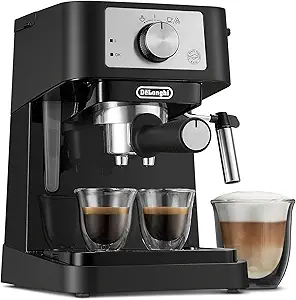 | Best Budget Entry Point | Machine type: Manual espresso machine | Milk frother: Manual | Boiler: Stainless steel | VIEW LATEST PRICE | See Our Full Breakdown |
| XIXUBX Espresso Machine with Milk Frother |  | Best for Fast Mornings | Pressure: 20 bar | Water tank capacity: 42 oz | Steam wand: 360° rotating, detachable | VIEW LATEST PRICE | See Our Full Breakdown |
| 20-Bar Espresso Machine with Milk Frother, Cold Brew, and Touchscreen |  | Best Versatile Feature Set | Pump pressure: 20 bar | Boiler power: 1350 W | Temperature control: PID | VIEW LATEST PRICE | See Our Full Breakdown |
| Aromaster 1400W Espresso Machine with Milk Frother |  | Best Small-Space Semi-Automatic | Power: 1400 W | Pump pressure: 20 bar | Operation mode: Semi-automatic | VIEW LATEST PRICE | See Our Full Breakdown |
| IMUSA 4-Cup Electric Espresso and Cappuccino Maker, Black |  | Best Budget Starter Pick | Capacity: 4 cups | Color: Black | Frother: Milk frother included | VIEW LATEST PRICE | See Our Full Breakdown |
| Breville Bambino Espresso Machine, Brushed Stainless Steel (BES450BSS) | 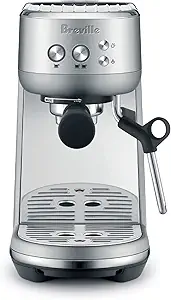 | Best Compact Semi-Automatic | Model: BES450BSS | Heating system: ThermoJet | Heat-up time: 3 seconds | VIEW LATEST PRICE | See Our Full Breakdown |
| Breville Barista Express Espresso Machine, Black Truffle (BES870BTR) |  | Best All-in-One Upgrade | Model: BES870BTR | Color: Black Truffle | Grinder: Integrated precision conical burr grinder | VIEW LATEST PRICE | See Our Full Breakdown |
| Compact Espresso Machine with Steam Wand and PID Temperature Control |  | Best Feature-Packed Value | Machine type: Semi-automatic espresso machine | Power: 1400 W | Pump pressure: 20 bar | VIEW LATEST PRICE | See Our Full Breakdown |
| CASABREWS CM5418 Compact Espresso Machine with Milk Frothing Steam Wand |  | Best for Beginners Learning the Craft | Model: CM5418 | Type: Semi-automatic espresso machine | Pump pressure: 20 bar | VIEW LATEST PRICE | See Our Full Breakdown |
More Details on Our Top Picks
XIXUBX Espresso Machine with Milk Frother, Grey
Most budget espresso machines force a choice between hot shots and iced drinks, but this XIXUBX model stands out for its one-touch cold brew option alongside traditional espresso. That dual capability puts it in rare company — only the Ninja Luxe Café offers similar versatility, and at a far higher price point. The 1350W system with 30-second heating means morning drinks arrive quickly, and NTC temperature control keeps extraction steady shot after shot.
The tradeoff is control. Unlike the Arecovas touchscreen model, there’s no pressure gauge or temperature display, so dialing in a new bag of beans is guesswork. Push-button simplicity is the whole point here: this pick makes the most sense for casual drinkers who want speed and variety, not for hobbyists chasing the perfect extraction.
Pros:- One-touch cold brew alongside hot espresso
- Heats in about 30 seconds for fast morning drinks
- Adjustable steam wand with included frothing pitcher
- NTC temperature control for consistent extraction
Cons:- No pressure gauge or temperature dials for manual adjustment
- Push-button controls limit customization for serious tuning
Best for: Iced-coffee lovers and casual drinkers who want espresso and cold brew from one affordable machine
Not ideal for: Hands-on espresso hobbyists — the lack of a pressure gauge or adjustable temperature dials limits tuning
- Type:Semi-automatic espresso machine
- Power:1350W
- Pump pressure:20 bar
- Heating time:About 30 seconds
- Temperature control:NTC sensor
- Beverage options:Hot espresso and one-touch cold brew
- Milk frother:Adjustable steam wand with pitcher
- Warranty:1 year
Our verdict“Choose this if you want fast, simple shots and cold brew in one machine without paying premium prices.”
Arecovas Espresso Machine with Touchscreen and Milk Frother
Where the XIXUBX keeps things analog with push buttons, the Arecovas leans fully into its touchscreen interface — single shots, doubles, and even Americanos are one tap away. The real-time pressure gauge on the LED display is the standout feature; it’s something even the popular CASABREWS 3700 omits, and it makes a genuine difference when you’re learning how grind and dose affect extraction.
Dual sensors paired with PID-style regulation hold brew and steam temperatures steady, which translates to fewer sour or bitter surprises. The narrow 5.2-inch footprint also makes it more counter-friendly than the Breville Barista Express. The compromise: it’s ground-coffee only, so you’ll need a separate grinder, and semi-automatic operation still means manual prep work every morning.
Pros:- Touchscreen with preset single, double, and Americano options
- Real-time pressure gauge helps dial in shots
- PID algorithm and dual sensors regulate temperatures
- Compact stainless steel body with removable 1.2L tank
Cons:- Requires ground coffee — no built-in grinder
- Semi-automatic operation still involves manual preparation steps
Best for: Tech-inclined beginners who want shot data on screen and preset drinks without a grinder built in
Not ideal for: Bean-to-cup shoppers — there’s no integrated grinder, so whole beans require separate equipment
- Type:Semi-automatic espresso machine
- Pressure:20 bar
- Power:1300 watts, 120 volts
- Interface:Touchscreen with LED display and pressure gauge
- Water tank:1.2 L (40 oz), removable
- Brew options:Single shot, double shot, Americano
- Dimensions:12 × 5.2 × 11.9 in (D × W × H)
- Body material:Stainless steel
Our verdict“This model is better suited to buyers who want visible brewing data and one-tap presets than those wanting a fully hands-off machine.”
Breville Barista Express Espresso Machine, Brushed Stainless Steel
For buyers ready to move past entry-level machines, the Barista Express delivers what the Arecovas and XIXUBX can’t: an integrated conical burr grinder that doses fresh grounds straight into the portafilter. Fresh grinding is the single biggest quality jump most home brewers can make, and here it happens in the same footprint as the machine itself. The 67 oz water tank also dwarfs the CASABREWS 3700’s 43.9 oz, meaning fewer refills for multi-drink households.
Low-pressure pre-infusion and PID temperature control give it the extraction precision that separates café-style shots from passable ones. The catch is effort: grind size, dose, and milk texturing are all manual, and there’s a real learning curve before drinks taste consistently good. Compared with the Ninja Luxe Café, which automates dosing and tamping, this machine demands skill but rewards it.
Pros:- Integrated conical burr grinder grinds directly into the portafilter
- PID temperature control and low-pressure pre-infusion for precise extraction
- Steam wand textures milk into microfoam for latte art
- Complete accessory kit including tamper, milk jug, and cleaning tools
Cons:- Fully manual operation with a steep learning curve
- Grind settings require adjustment when switching beans
Best for: Aspiring home baristas who want fresh-ground espresso and are willing to learn manual technique
Not ideal for: Set-and-forget drinkers — adjusting grind settings and texturing milk yourself takes time and practice
- Model:BES870XL
- Finish:Brushed stainless steel
- Grinder:Integrated precision conical burr grinder
- Water tank:67 oz
- Bean hopper:1/2 lb capacity
- Power:1600W, 120V
- Shot options:Single or double
- Warranty:1 year limited
Our verdict“This pick makes the most sense for coffee lovers who see the brewing process as part of the enjoyment, not a chore.”
Ninja Luxe Café Premier 3-in-1 Espresso Machine, Drip Coffee Maker, and Cold Brew Maker
The Ninja Luxe Café takes a completely different approach from every other machine in this lineup. Instead of doing one thing well, it replaces three appliances: espresso, drip coffee, and cold brew all come out of one unit. For households where one person drinks pour-over-style coffee and another wants a quad-shot latte, this flexibility beats the Breville Barista Express, which is espresso-only.
Its guided brewing is the real differentiator — automatic dosing and an assisted tamper walk beginners through steps that the Barista Express leaves entirely to you. The 25-setting grinder offers more adjustment range than most, and automatic frothing with four presets removes the steam-wand learning curve entirely. The compromises are counter space and complexity: replacing three appliances means a bigger machine with more parts to clean, and multi-function units rarely match single-purpose machines on espresso purity.
Pros:- Espresso, drip coffee, and cold brew in a single machine
- Guided brewing with automatic dosing and assisted tamping
- Built-in conical burr grinder with 25 settings
- Automatic dual froth system with four presets plus manual mode
Cons:- Likely a large footprint since it replaces three appliances
- More parts and programs mean more cleaning and maintenance
Best for: Households with mixed coffee preferences who want espresso, drip, and cold brew without three separate appliances
Not ideal for: Espresso purists — a multi-function machine sacrifices some shot refinement for versatility
- Brew types:Espresso, drip coffee, and cold brew
- Espresso styles:Double shot and quad shot
- Drip coffee styles:Classic, rich, and over ice
- Cold brew styles:Cold-pressed espresso and cold brew coffee
- Grinder:Built-in conical burr grinder, 25 settings
- Frothing:Automatic dual froth system, 4 presets
- Water reservoir:70 oz, removable
Our verdict“This option stands out for busy households that value variety and guided simplicity over single-minded espresso performance.”
CASABREWS 3700 Essential Stainless Steel Espresso Machine with Steam Wand
As a first espresso machine, the CASABREWS 3700 gets the basics right without overwhelming you. The 20-bar pump and 1350W heating match what the pricier XIXUBX offers, but the package stays simpler: grind, tamp, pull, steam. Both one-cup and two-cup filters come in the box, so it handles a partner’s drink as easily as your own, and the removable 43.9 oz tank and drip tray make the daily cleanup routine painless.
Compared with the De’Longhi Stilosa, another popular starter pick, the stainless steel build feels sturdier for office use. Where it falls short of the Arecovas is feedback — there’s no pressure gauge, so you can’t see how your shots are actually running. It also needs a first-use rinse cycle before brewing, a small annoyance but worth knowing before your first morning pull.
Pros:- Steam wand froths milk well enough for latte art practice
- Removable water tank and drip tray simplify cleaning
- Includes both one-cup and two-cup filters
- Compact stainless steel design suits home or office counters
Cons:- Requires a first-use cycle before brewing
- No pressure gauge for monitoring extraction
Best for: First-time espresso buyers and office kitchens wanting a simple, sturdy machine for basic milk drinks
Not ideal for: Data-driven brewers — without a pressure gauge or temperature display, shot tuning is trial and error
- Type:Semi-automatic espresso machine
- Pump pressure:20 bar
- Wattage:1350 watts, 120 volts
- Water tank:43.9 oz, removable
- Milk frother:Steam wand
- Coffee input:Ground coffee
- Included filters:One-cup and two-cup
- Finish:Silver stainless steel
Our verdict“A sensible entry point for anyone testing whether home espresso fits their routine before committing to a bigger machine.”
Breville Barista Express Espresso Machine, Black Sesame
The Barista Express stands out for one reason above all: the integrated conical burr grinder. Every other budget machine in this lineup assumes you already own a grinder, and a decent burr grinder alone often costs as much as an entry-level espresso machine. Here, beans go from hopper to portafilter in seconds, which is the single biggest lever for fresher, better-tasting espresso at home. The PID temperature regulation and low-pressure pre-infusion put it a tier above simpler machines like the De’Longhi Stilosa, where temperature stability is left to chance. The tradeoff is real, though: this is hands-on brewing with a learning curve, and the 1-year warranty is stingy for a machine at this level. Compared with the Breville Bambino, you gain grinding and dose control but give up counter space.
Pros:- Integrated burr grinder delivers fresh grounds straight into the portafilter
- PID temperature control and pre-infusion support balanced, repeatable extraction
- Steam wand produces microfoam suitable for latte art
- Generous accessory bundle covers brewing, dosing, and cleaning
Cons:- Fully manual workflow requires skill development and daily hands-on effort
- Only a 1-year limited warranty
- Takes up more counter space than compact rivals like the Stilosa
Best for: Home brewers ready to grind fresh beans and learn manual dialing-in without buying a separate grinder
Not ideal for: Anyone wanting push-button convenience — this demands hands-on effort every single morning
- Model:BES870BSXL
- Grinder:Integrated precision conical burr grinder
- Water tank capacity:67 oz
- Bean hopper capacity:1/2 lb
- Power:1600 W
- Shots:Single or double
- Warranty:1-year limited
Our verdict“The most complete package for a beginner who wants café-quality espresso without buying a grinder separately.”
De’Longhi Stilosa Compact Manual Espresso Machine with Milk Frother
The Stilosa makes this list because it removes nearly every barrier to trying espresso at home. It has no grinder, no PID, no touchscreen — and that’s exactly the point. Where the Breville Barista Express bundles everything, the Stilosa asks you to bring your own ground coffee and keep expectations modest. Its stainless steel boiler and manual frother still cover the basics: single and double shots, cappuccinos, and lattes, all from a footprint small enough for a cramped apartment counter. The two-level cup holder is a small but genuinely useful touch the XIXUBX doesn’t offer. The honest tradeoff: without temperature regulation, shots will vary from day to day, and the manual frother takes practice to get silky milk. This is a trial-and-error machine, not a precision instrument.
Pros:- Compact footprint fits tight kitchen counters
- Manual frother handles cappuccinos, lattes, and flat whites
- Includes both single- and double-shot filters
- Two-level cup holder suits different cup sizes
Cons:- No temperature regulation, so shot consistency varies
- Manual operation and frothing involve a real learning curve
- Requires a separate grinder for anything better than pre-ground coffee
Best for: First-time espresso drinkers or students who want to experiment cheaply in a small kitchen
Not ideal for: Enthusiasts chasing consistent shot quality — the lack of temperature control makes repeatable extraction difficult
- Machine type:Manual espresso machine
- Milk frother:Manual
- Boiler:Stainless steel
- Included filters:Single and double espresso
- Cup holder:Two-level
- Design:Compact
Our verdict“A low-commitment way to find out whether home espresso is your hobby before spending more.”
XIXUBX Espresso Machine with Milk Frother
Where the De’Longhi Stilosa asks for patience, the XIXUBX prioritizes speed. Its fast heating means less waiting between powering on and pulling a shot — a genuine quality-of-life difference for anyone brewing before work. The 42 oz water tank is larger than the Aromaster’s 37 oz, so it handles several drinks before needing a refill, and the included stainless steel frothing pitcher means one less accessory to buy. The 360° rotating, detachable steam wand is the standout convenience feature: it froths at comfortable angles and detaches for rinsing, which the Stilosa’s fixed wand can’t match. The caveat worth knowing: the advertised 20-bar pressure is a marketing ceiling, not an extraction target — proper espresso happens around 9 bars, so expect a dialing-in period to avoid bitter, over-extracted shots.
Pros:- Fast heat-up for both brewing and steaming
- Rotating, detachable steam wand simplifies frothing and cleaning
- Large 42 oz tank supports multiple servings between refills
- Frothing pitcher included in the box
Cons:- 20-bar rating exceeds ideal espresso pressure and requires dialing in
- No published dimensions, making counter-fit planning a guess
- Lacks the PID temperature control found on rivals like the Aromaster
Best for: Busy commuters who want espresso and a milk drink ready quickly with minimal cleanup
Not ideal for: Detail-oriented brewers who care about pressure precision and extraction control — the 20-bar system demands trial and error
- Pressure:20 bar
- Water tank capacity:42 oz
- Steam wand:360° rotating, detachable
- Body material:Stainless steel
- Included accessory:Stainless steel milk frothing pitcher
- Warranty:1 year
Our verdict“A speed-focused pick for households that value quick turnaround over lab-grade precision.”
20-Bar Espresso Machine with Milk Frother, Cold Brew, and Touchscreen
This machine earns its spot by doing something none of the others in this lineup attempt: cold brew alongside hot espresso. The Ninja Luxe Café also covers cold brew, but at a far higher tier of price and complexity — this machine brings that flexibility to a compact, single-purpose format. The PID temperature control and pre-infusion put it closer to the Breville Barista Express in extraction quality than to the Stilosa, while the touchscreen with customizable volume lets you program your usual shot once and repeat it. The steam wand rounds things out for cappuccinos and lattes. The honest tradeoffs: there’s no grinder built in, so you’ll still need to source grounds, and the manufacturer provides no dimensions, so measure carefully if your counter space is tight. The cold brew function is also slower than dedicated cold brew gear.
Pros:- PID control and pre-infusion support consistent, balanced extraction
- Dual hot espresso and cold brew capability in one machine
- Touchscreen allows customizable, repeatable shot volumes
- Removable tank and detachable drip tray simplify cleaning
Cons:- No integrated grinder, unlike the Barista Express
- Cold brew function is slower than dedicated cold brew makers
- No published dimensions to verify counter fit
Best for: Households split between hot espresso drinkers and iced coffee fans who want one machine for both
Not ideal for: Buyers with very limited counter space — the lack of published dimensions makes fit a gamble
- Pump pressure:20 bar
- Boiler power:1350 W
- Temperature control:PID
- Water tank capacity:45 oz removable
- Controls:Touchscreen with customizable coffee volume
- Additional function:Cold brew
- Milk frother:Steam wand
- Body material:Stainless steel
Our verdict“The pick for one-machine households that want hot espresso and cold brew without a second appliance.”
Aromaster 1400W Espresso Machine with Milk Frother
The Aromaster is the only machine in this batch that publishes its dimensions — 13 x 7 x 14 inches — and that transparency matters when your counter is already crowded. At just 7 inches deep, it slips into spaces where the Breville Barista Express would dominate. Despite the small footprint, it carries features usually reserved for larger machines: PID and NTC temperature control, pre-infusion, and a 360° swivel steam wand. The one-touch descaling and removable parts lower the maintenance burden compared with the XIXUBX, and auto shut-off plus anti-dry burn protection add safety the Stilosa simply doesn’t have. The catch is the tiny listed 2.4 oz capacity, which limits back-to-back drink making, and the semi-automatic workflow still demands daily hands-on effort. This suits a one-or-two-person household, not a brunch crowd.
Pros:- Compact 7-inch depth fits genuinely small counters
- PID and NTC temperature control with pre-infusion for consistent flavor
- One-touch descaling and removable parts simplify upkeep
- Auto shut-off and anti-dry burn protection add safety
Cons:- Listed 2.4 oz capacity limits serving multiple people
- Semi-automatic operation still requires hands-on preparation daily
- No grinder included, unlike the Barista Express
Best for: Apartment dwellers with tight counters who still want temperature-controlled, semi-automatic espresso
Not ideal for: Anyone brewing for guests — the small capacity makes multiple sequential drinks tedious
- Power:1400 W
- Pump pressure:20 bar
- Operation mode:Semi-automatic
- Water tank:Removable, 37 oz
- Temperature control:PID and NTC
- Dimensions:13 x 7 x 14 inches
- Features:Pre-infusion, fast heat-up, one-touch descaling, auto shut-off, cup warmer, anti-dry burn protection
Our verdict“The best fit where counter space is the deciding factor and drinks are made one or two at a time.”
IMUSA 4-Cup Electric Espresso and Cappuccino Maker, Black
For anyone curious about espresso without committing serious money, this IMUSA 4-cup maker is the simplest entry point in this lineup. Unlike the Breville Bambino, which demands grinding, dosing, and tamping technique, this machine uses a permanent filter basket and brews stovetop-style coffee in larger batches — closer to strong moka-pot coffee than true 9-bar espresso. The included milk frother means you can still make cappuccino-style drinks, something the De’Longhi Stilosa crowd would recognize. The tradeoff is real: the heat-resistant plastic exterior feels lightweight compared with the brushed stainless bodies of the CASABREWS CM5418, and there’s no PID control or pressure gauge to help you refine shots. This pick makes sense for dorm rooms, vacation homes, or first-time experimenters who value convenience over café-grade results.
Pros:- Brews up to four cups at once, great for serving several people
- Milk frother included for cappuccinos and lattes
- Removable drip tray and permanent filter basket make cleanup quick
- No paper filters or accessories needed to get started
Cons:- Plastic exterior feels less durable than stainless competitors
- Limited to four-cup capacity with no shot-level precision
- No temperature control or pressure gauge for refining extraction
Best for: Budget-conscious beginners and occasional drinkers who want simple, no-technique espresso-style coffee
Not ideal for: Espresso enthusiasts chasing true 9-bar extraction and balanced shots — the steam-pressure brewing can’t match a PID-controlled machine
- Capacity:4 cups
- Color:Black
- Frother:Milk frother included
- Exterior:Heat-resistant plastic
- Drip tray:Removable
- Filter:Permanent filter basket
- Voltage:120 V
Our verdict“A low-commitment gateway machine for casual coffee drinkers, not for anyone serious about shot quality.”
Breville Bambino Espresso Machine, Brushed Stainless Steel (BES450BSS)
The Breville Bambino stands out for bringing genuine barista-grade engineering into a footprint small enough for an apartment counter. Its ThermoJet heating system reaches extraction temperature in about 3 seconds — a sharp contrast to the Compact Espresso Machine with PID Control in this lineup, which takes 45 seconds, and to single-boiler machines that need several minutes. The digital PID temperature control and low-pressure pre-infusion are the same principles behind the bigger Breville Barista Express, but here without the integrated grinder, which is the central tradeoff: you’ll need a separate quality grinder to get the most from the 19 g dose. Compared with the budget IMUSA, this model rewards technique with properly extracted, balanced shots rather than strong coffee. Buyers wanting one machine that does everything should step up to the Barista Express instead.
Pros:- 3-second heat-up means no waiting between turning it on and pulling a shot
- PID temperature control and pre-infusion support balanced extraction
- Compact footprint fits tight counters and small kitchens
- Ships with filter baskets, milk jug, tamper, and descaling powder
Cons:- Requires fully manual preparation — grinding, dosing, tamping, and steaming are on you
- No integrated grinder, so total cost of ownership rises once you add one
- Only a 1-year limited warranty
Best for: Small-kitchen dwellers or intermediate users who already own (or will buy) a good grinder
Not ideal for: Buyers wanting an all-in-one setup — the lack of an integrated grinder means a second purchase and more counter gear
- Model:BES450BSS
- Heating system:ThermoJet
- Heat-up time:3 seconds
- Temperature control:Digital PID
- Portafilter size:54 mm
- Portafilter dose:19 g
- Power:1560 W
- Settings:1 cup, 2 cups, hot water, steam
- Warranty:1-year limited
Our verdict“The smartest pick for someone who wants real espresso quality in the smallest possible package, provided they own a grinder.”
Breville Barista Express Espresso Machine, Black Truffle (BES870BTR)
This is the machine I’d point serious home baristas toward when they want the complete workflow in a single unit. The integrated conical burr grinder doses directly into the 54 mm portafilter, eliminating the separate grinder purchase that the Breville Bambino requires — and eliminating the stale-coffee problem of pre-ground machines like the Compact Espresso Machine with PID Control. Combined with PID temperature control and low-pressure pre-infusion, fresh grinding gives you the two biggest levers over shot quality in one body. The 67 oz water tank and 1/2 lb bean hopper mean fewer refills than the CASABREWS CM5418’s 34 oz tank. The honest tradeoff: this is a fully manual, learn-heavy machine. Expect a learning curve dialing in grind size and dose, and a 1-year warranty that feels short for a premium purchase. Skip it if you want push-button convenience — the Ninja Luxe Café handles that better.
Pros:- Integrated burr grinder delivers fresh grounds straight into the portafilter
- PID control and pre-infusion support precise, repeatable extraction
- Steam wand allows full manual milk texturing and latte art
- Large 67 oz water tank and 1/2 lb bean hopper reduce refill frequency
Cons:- Steep learning curve across grinding, extracting, and steaming
- Only a 1-year limited warranty despite the premium positioning
- Bulky footprint compared with compact picks like the Bambino
Best for: Dedicated home baristas who want fresh-ground, café-quality espresso without buying separate equipment
Not ideal for: Casual or impatient drinkers — dialing in grind, dose, and milk texturing takes weeks of practice
- Model:BES870BTR
- Color:Black Truffle
- Grinder:Integrated precision conical burr grinder
- Water tank capacity:67 oz
- Bean hopper capacity:1/2 lb
- Power:1600 W
- Shot options:Single or double
- Temperature control:Digital PID
- Warranty:1-year limited
Our verdict“The best single-box path to genuine café espresso at home, as long as you’re willing to learn the craft.”
Compact Espresso Machine with Steam Wand and PID Temperature Control
This unbranded compact machine punches above its weight by bundling features that usually cost more: PID and NTC temperature control, pre-infusion, a touchscreen interface, a cup warmer, and even a cold brew function — versatility that no Breville in this lineup offers. The 45-second heat-up is slower than the Breville Bambino’s near-instant ThermoJet but far quicker than traditional single boilers, and the 5.3-inch depth makes it one of the slimmest options here. Compared with the CASABREWS CM5418, you get a larger 57.5 oz tank and finer temperature regulation, though you give up the built-in pressure gauge that helps beginners diagnose weak shots. The main limitation is that it accepts pre-ground coffee only — unlike the Barista Express, there’s no grinder, so peak freshness depends entirely on your beans and how you store them. A rotating steam wand keeps latte art within reach.
Pros:- PID and NTC temperature control stabilizes extraction for the price
- Cold brew and hot water functions add drink variety beyond espresso
- Slim 5.3-inch depth fits under most cabinets
- Removable 57.5 oz tank and descaling function ease maintenance
Cons:- Requires pre-ground coffee, capping shot quality potential
- Manual steam wand takes practice to master
- Less established brand support than Breville or De’Longhi
Best for: Value-focused buyers in small kitchens who want temperature stability and drink variety without a Breville budget
Not ideal for: Freshness purists — with no grinder, pre-ground coffee limits how good shots can taste
- Machine type:Semi-automatic espresso machine
- Power:1400 W
- Pump pressure:20 bar
- Temperature control:PID and NTC
- Heat-up time:45 seconds
- Water tank capacity:57.5 oz, removable
- Dimensions:11.4 x 5.3 x 11.4 inches
- Interface:Touchscreen
- Special features:Cup warmer, milk frother, pre-infusion, cold brew function
Our verdict“A strong middle path for small-space buyers who want modern features and temperature control on a modest budget.”
CASABREWS CM5418 Compact Espresso Machine with Milk Frothing Steam Wand
The CASABREWS CM5418 occupies a smart middle ground between toy-tier machines and premium Brevilles. Its standout feature for newcomers is the built-in pressure gauge — something the Compact Espresso Machine with PID Control lacks — which visually shows whether your grind, dose, and tamping are dialed in. That feedback loop is exactly what a beginner needs, and it’s absent from the IMUSA entirely. The 1350W boiler with 20-bar pump delivers respectable shots, though like most budget machines it uses a single boiler, so you’ll wait for cooldown after steaming milk before pulling your next shot — a workflow snag the dual-capability Breville Barista Express handles more gracefully. The 34 oz tank is the smallest here among serious machines, meaning more refills for multi-drink households. Still, its brushed stainless build and compact size make it a practical starter for home or a shared office.
Pros:- Built-in pressure gauge helps beginners diagnose and fix extraction problems
- Steam wand produces textured milk for lattes and cappuccinos
- Compact brushed stainless design suits home or office counters
- Includes single and double shot filters, portafilter, and tamper
Cons:- Must cool down after frothing milk before brewing again
- Requires grind, dose, and tamping adjustments to reach proper pressure
- Small 34 oz water tank needs frequent refilling
Best for: First-time espresso makers who want visual feedback while learning grind, dose, and tamping technique
Not ideal for: Multi-drink households — the small 34 oz tank and steam-to-brew cooldown make back-to-back drinks slow
- Model:CM5418
- Type:Semi-automatic espresso machine
- Pump pressure:20 bar
- Wattage:1350 W
- Water tank:34 oz, removable
- Milk frother:Steam wand
- Pressure gauge:Built-in
- Included filters:One-cup and two-cup filters
Our verdict“An approachable learning machine that teaches real espresso fundamentals without a premium price.”
How We Picked
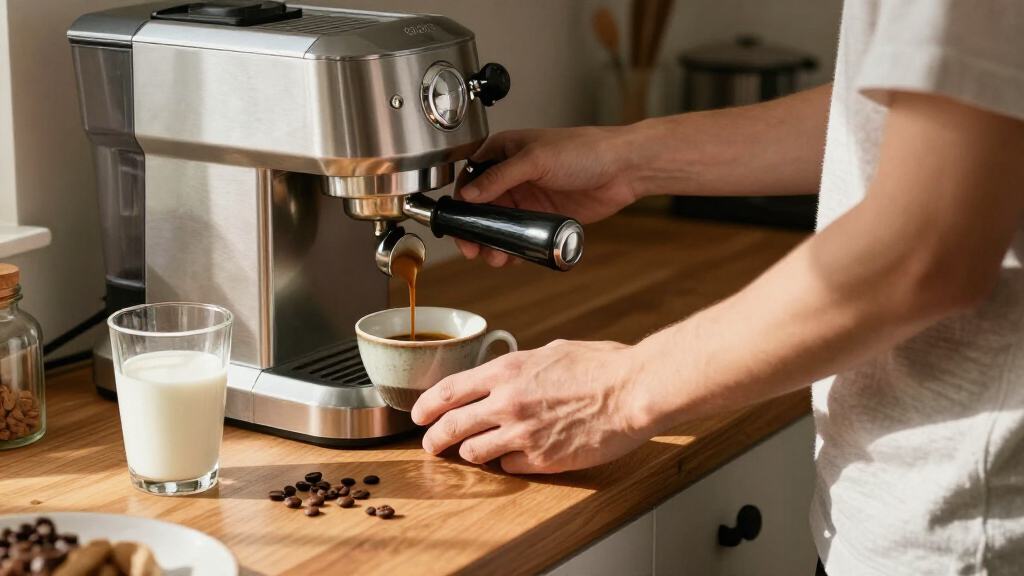
I evaluated every machine against the same five criteria: espresso quality (pressure profiling, temperature stability, and whether the machine can produce true 9-bar extraction), milk steaming capability (wand power, control, and whether it can texture milk for latte art), ease of use (workflow from bean to cup, learning curve, cleanup), build and footprint (materials, durability signals, and counter space demands), and long-term value (what you get relative to comparable machines at similar tiers). Machines with grinders, PID temperature control, or genuine 58mm-style portafilters scored higher on extraction quality; barebones steam wands and plastic builds pulled scores down.
The ranking logic follows a simple principle: machines that remove the most guesswork without removing control rose to the top. That’s why the Breville Barista Express variants lead the list while capable-but-manual budget machines rank mid-pack, and why near-identical clones are grouped together rather than spread artificially across the list. Beginner-friendly features like automatic milk frothing were credited only when they didn’t compromise shot quality — a pattern that separated the Bambino from the touchscreen-only budget machines.
Factors to Consider When Choosing Espresso Machines For Home
Before matching yourself to a specific machine, it helps to understand what actually drives espresso quality at home — and where buyers most often overspend or underestimate.Grinder or No Grinder: The Decision That Shapes Everything
The single most common mistake I see is buying a quality espresso machine and feeding it pre-ground coffee. Espresso requires grinding immediately before brewing — pre-ground coffee goes stale within hours and produces sour, thin shots no matter how good the machine is. If your budget is limited, a modest machine paired with a decent burr grinder will outperform an expensive machine running on stale grounds. That’s the logic behind ranking the Barista Express so high: its integrated grinder eliminates a separate purchase and a second appliance. If you choose a machine without a grinder, budget for a capable burr grinder separately, and remember that blade grinders simply cannot produce the consistent particle size espresso demands.
Semi-Automatic, Manual, or Automatic: Matching Effort to Routine
These categories describe how much work the machine does for you. Manual machines like the De’Longhi Stilosa give you full control over pressure and timing, which rewards practice but punishes rushed mornings. Semi-automatic machines — most of this list — automate pump pressure while you control grind, dose, and extraction time, which is the sweet spot for most home brewers. Touchscreen-driven machines like the Arecovas simplify the interface but often hide the variables you’d want to adjust as your skills improve. A useful test: if you drink one milk drink a day and enjoy the ritual, go manual or semi-automatic; if you make three drinks back-to-back for a household, automation earns its cost.
Steam Wand Quality: The Difference Between Froth and Microfoam
Not all milk systems are equal, and this is where budget machines cut corners. A true steam wand with adequate pressure can produce silky microfoam for lattes and cappuccinos; weak wand pressure produces large-bubble froth closer to what you’d get from a jar of shaken milk. Machines with higher boiler or thermoblock capacity — the Bambino is a standout here — recover steam power quickly between drinks, which matters if two people brew sequentially. Automatic frothers found on some entry machines are convenient but produce uniformly textured milk with no room for latte-art technique. If milk drinks are half your routine, weigh steam performance nearly as heavily as shot quality.
Temperature Stability and Why Bar Pressure Numbers Mislead
Manufacturers love advertising 15-bar or 20-bar pumps, but proper espresso extracts at roughly 9 bars — every machine on this list exceeds that threshold, so the number tells you almost nothing. What actually varies is temperature stability: water that fluctuates more than a couple of degrees between shots produces inconsistent flavor. Machines with PID controllers (like the compact touchscreen model in this lineup) actively hold temperature steady, which is why a modest machine with PID can outperform a flashier one without it. When comparing specs, look for PID mentions, thermoblock versus boiler design, and warm-up time — these predict shot consistency far better than pressure claims.
Counter Space, Water Tank, and Daily-Annoyance Factors
Espresso machines live on your counter, not in a cabinet, so dimensions matter more than most buyers expect. Machines with integrated grinders like the Barista Express run deep and tall; compact units like the CASABREWS CM5418 or Bambino fit under cabinets but sacrifice water tank capacity, meaning more frequent refills. Check the tank size against your household’s drink count — a 1.5-liter tank means constant trips to the sink for a family of espresso drinkers. Also consider the drip tray depth (shallow trays overflow fast), portafilter size (51mm accessories are cheaper but 54mm and 58mm extract more evenly), and whether the wand has a wipe-clean design.
When to Pay More — and When You Shouldn’t
The steep part of the value curve sits around the mid-range: below it, machines make real compromises in steam power and temperature control; above it, gains come in build materials and consistency rather than raw drink quality. Pay more when you brew multiple drinks daily, when steam recovery speed matters, or when you want a machine that will still satisfy you after two years of skill improvement. Skip the premium tier if you’re testing whether espresso is your hobby at all — a Stilosa or CM5418 will teach you the fundamentals for far less, and you’ll know exactly what features to demand from your upgrade. One warning: avoid buying capacity you won’t use. A multi-beverage powerhouse like the Ninja Luxe Café only pays off if your household genuinely drinks drip coffee, cold brew, and espresso.
Frequently Asked Questions
Is the Breville Barista Express worth it if I already own a grinder?
Only if your existing grinder is espresso-capable, meaning it can grind fine and consistently enough for pressurized extraction — many general-purpose burr grinders cannot. If it can, the Breville Bambino becomes the smarter buy: it shares the same 54mm portafilter ecosystem and thermojet heating but skips the integrated grinder, saving counter space and money. If your grinder tops out at pour-over fineness, the Barista Express solves that problem in one appliance and justifies its position. Also factor in workflow — dosing straight from an attached grinder into the portafilter is faster and less messy than grinding separately, which matters on busy mornings.
Can a budget espresso machine under $150 actually make good espresso?
Yes, but with two honest caveats. Machines like the De’Longhi Stilosa and CASABREWS CM5418 can genuinely pull rich, crema-topped shots, yet they typically ship with pressurized portafilter baskets that fake crema rather than building it from proper extraction, and their steam wands run out of power quickly. Upgrading to a non-pressurized basket and fresh beans lifts their results dramatically, but that demands dialing-in skill. Compared with a machine like the Bambino, you’ll spend more time compensating for temperature swings. For a first machine or an occasional-drinker household, that tradeoff is reasonable; for daily latte rituals, it usually isn’t.
Do the different Breville Barista Express colors (Stainless, Black Sesame, Black Truffle) differ in performance?
No — all three are the same BES870-series machine with identical internals, grinders, and controls; the finish is purely cosmetic. This matters for comparison shopping because you should simply pick whichever finish suits your kitchen or comes in stock, without worrying you’re getting a different machine. The real decision is between the Barista Express and its siblings: the Bambino omits the grinder entirely, and the Barista Express Impress (not in this lineup) adds assisted tamping. If you see two finishes at different prices, treat it as a styling choice, not a spec difference, and grab whichever one you prefer.
Are touchscreen espresso machines better than machines with manual dials and buttons?
Touchscreens are easier on day one but less flexible on day one hundred. Models like the Arecovas and the 20-bar touchscreen unit simplify presets — tap a drink, walk away — which suits households with multiple users of varying skill. The drawback is that when a shot tastes off, you often can’t adjust the underlying variables the way a manual machine lets you tweak dose, tamp, and timing. Physical gauges and dial-based controls also age better; touch panels can feel laggy and are harder to repair. My guidance: choose touchscreen if convenience for multiple people is the priority, choose manual controls if improving your technique is the goal.
How much maintenance do home espresso machines actually require?
More than most buyers expect, and this is where cheap machines quietly cost you. Daily basics take two minutes: knocking out the puck, wiping the steam wand immediately (milk residue hardens fast and clogs the tip), and rinsing the basket. Weekly, you should backflush machines with a three-way valve — the Breville models support this — and soak the portafilter basket. Monthly to quarterly, depending on water hardness, descaling becomes the big one: scale buildup is the leading killer of thermoblock machines, and areas with hard water can shorten a machine’s life from years to months without treatment. Budget for cleaning supplies and, if your water is hard, consider filtered water from the start — it improves taste and doubles maintenance intervals.
Conclusion
After comparing all 15 machines, the right pick depends less on specs and more on how you actually drink coffee. For the best overall choice, the Breville Barista Express (in any finish) earns it by combining a real burr grinder with stable extraction in one package — nothing else in this lineup removes as many variables for the price. For best value, the De’Longhi Stilosa delivers the core espresso experience for the least money, with the CASABREWS CM5418 close behind if you want a slightly more polished build. The best premium pick is the Ninja Luxe Café Premier, not because it makes the single best shot, but because it’s the only machine here that legitimately covers espresso, drip, and cold brew for a mixed-drinker household. For beginners, the Breville Bambino is the friendliest path to great coffee — fast heat-up, forgiving workflow, and room to grow — while true hobbyists who enjoy the ritual should lean toward the manual Stilosa or the PID-equipped compact machine to learn the craft hands-on. Whatever you choose, remember that fresh beans and a consistent grind will improve your cup more than any upgrade, so buy the machine that fits your counter, your routine, and your patience.