

TL;DR

Get the little things that make your day delivered free — and shop member deals
- Fast, free delivery on millions of items
- Access to Prime Big Deal Days deals on October 6–7
- Prime Video, Amazon Music and more included
Forezai has added TradingAgents to its Markets family, presenting a research framework that models a trading firm with specialized AI agents. The system is described as experimental, with no guarantee of accuracy or profit, and the source material repeatedly warns that it is not financial advice or a recommendation to trade.
Forezai has announced TradingAgents, a research framework that models a trading firm as a group of AI agents, adding a full simulated trading desk to the portfolio’s Markets family and pairing it with the previously introduced Polybot forecaster.
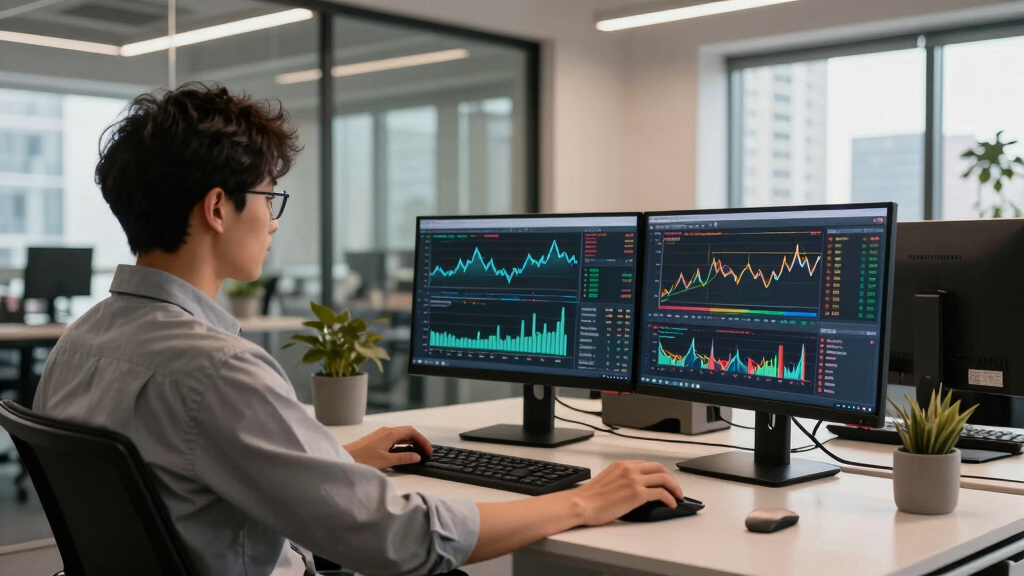
According to the source material from Thorsten Meyer AI, TradingAgents is built around separate roles rather than a single model making a market call. Specialized analyst agents collect different kinds of market signals, including fundamentals, news and sentiment, and technical price action. A bull researcher then builds the strongest case for action, while a bear researcher argues against it.
The framework then passes the debate to a trader agent, which proposes an action, and a risk manager, which reviews the proposal and can veto it. The described default posture is conservative: many decisions may result in no trade, while any allowed action is described as small, risk-capped and recorded with its reasoning.
The project is developed privately and is not publicly available. The source material says it completes Forezai’s Markets family by combining Polybot, described as a lone forecaster, with TradingAgents, described as a simulated firm of debating agents.
TradingAgents — a firm made of agents
A single model is an overconfidence machine. So this isn’t one AI — it’s a whole desk: analysts, a bull and a bear who argue, a trader, and a risk manager who can say no.
Not financial, investment, legal or tax advice; not a recommendation or solicitation to trade, invest or use any software. Forezai · TradingAgents is an experimental research framework, provided “as is” without warranty of accuracy or profitability. Trading and automated trading carry a substantial risk of loss including total loss of capital; past or backtested performance does not indicate future results. Market and trading-software access is regulated or restricted in some jurisdictions — you are solely responsible for compliance with applicable law. Consult a licensed professional before any financial decision. Produced with AI assistance under human editorial oversight; independent commentary, the author’s own views. Product and company names are trademarks of their respective owners; mention does not imply endorsement.
Agent Debate Targets Overconfidence
The release matters because it points to a different approach to AI-assisted market research: using structured disagreement and risk review instead of relying on one model’s answer. The source frames the project around the risk that a language model can produce a confident-sounding market view even when its reasoning is weak or wrong.
For readers following AI tooling, the project is also part of a wider shift toward multi-agent systems that divide work into roles and record the reasoning behind decisions. For readers interested in markets, the warning is just as central as the architecture: the material states that the framework is not financial, investment, legal or tax advice and is not a recommendation to trade, invest or use the software.
As an affiliate, we earn on qualifying purchases.
Markets Family Reaches Two Parts
TradingAgents follows a prior Forezai Markets project, Polybot, which the source describes as a single AI forecaster comparing one estimate with one market price. TradingAgents changes the model from a lone forecast to a simulated desk that forces competing cases before an action can be proposed.
The release appears in Thorsten Meyer AI’s Built in Public series as Day 14 of 19. The portfolio is described as local-first and provider-agnostic, meaning the author says the tools are intended to run on owned compute and allow different roles to use swappable models rather than one fixed provider.
The source also links TradingAgents to an earlier “council” idea from IdeaClyst, applying structured disagreement to market research. That comparison is an interpretation from the author’s material, not independent evidence that the framework improves trading outcomes.
As an affiliate, we earn on qualifying purchases.
Performance Claims Remain Unproven
It is not yet clear how TradingAgents performs under live market conditions, whether its multi-agent debate improves decisions, or how often the risk manager vetoes proposed trades. The source material does not provide audited live results, verified profitability data or a record of real-money performance.
The announcement also leaves open which model providers work best for each agent role, how users should configure risk limits, and how the framework handles market data access in regulated jurisdictions. The source says market and trading-software access may be regulated or restricted, and that users are responsible for compliance with applicable law.
As an affiliate, we earn on qualifying purchases.
Users Can Inspect The Code
The next step is public inspection and experimentation. The framework is developed privately and is not publicly available.
Any use involving trading would still carry financial and legal risk. The source advises consulting a licensed professional before financial decisions and says the framework is provided as experimental software without warranty of accuracy, profitability or fitness for any purpose.
As an affiliate, we earn on qualifying purchases.
Key Questions
What is Forezai TradingAgents?
TradingAgents is a research framework that simulates a trading desk with multiple AI agents, including analysts, bull and bear researchers, a trader and a risk manager.
Is TradingAgents financial advice?
No. The source material states that it is not financial, investment, legal or tax advice and is not a recommendation to trade, invest or use the software.
What makes it different from Polybot?
Polybot is described as a single forecaster. TradingAgents is described as a multi-agent framework where opposing researchers debate a decision before a trader proposes action and a risk manager reviews it.
Has TradingAgents been proven profitable?
No verified profitability record is provided in the source material. The project is described as experimental, with no guarantee of accuracy or profit.
Where can developers find it?
The source material says TradingAgents is available at forezai.com/tradingagents.html.
Source: Thorsten Meyer AI
Fall Picks
fall essentials
As an affiliate, we earn on qualifying purchases.