


Mindful consumption helps you see the hidden costs of fast fashion, like ethical violations and environmental harm. Fast fashion may offer low prices, but these savings often mask worker exploitation and massive waste. By choosing sustainable brands and second-hand clothing, you support fair labor practices and reduce waste. Opting for high-quality items can also lessen your environmental footprint. Understanding these choices can empower you to promote a healthier planet and society, as you’ll discover further.
Key Takeaways
- Fast fashion exploits workers and compromises ethics for profit; mindful consumption can help support fair labor practices.
- The environmental impact of fast fashion includes high pollution levels and significant waste; choose sustainable brands to reduce your footprint.
- Opt for high-quality, durable clothing to minimize waste and promote a culture of longevity over disposability.
- Thrift shopping and purchasing second-hand items can extend the life of garments and reduce demand for new production.
- Educate yourself on brands’ practices and support those committed to transparency and sustainability for a more informed shopping experience.
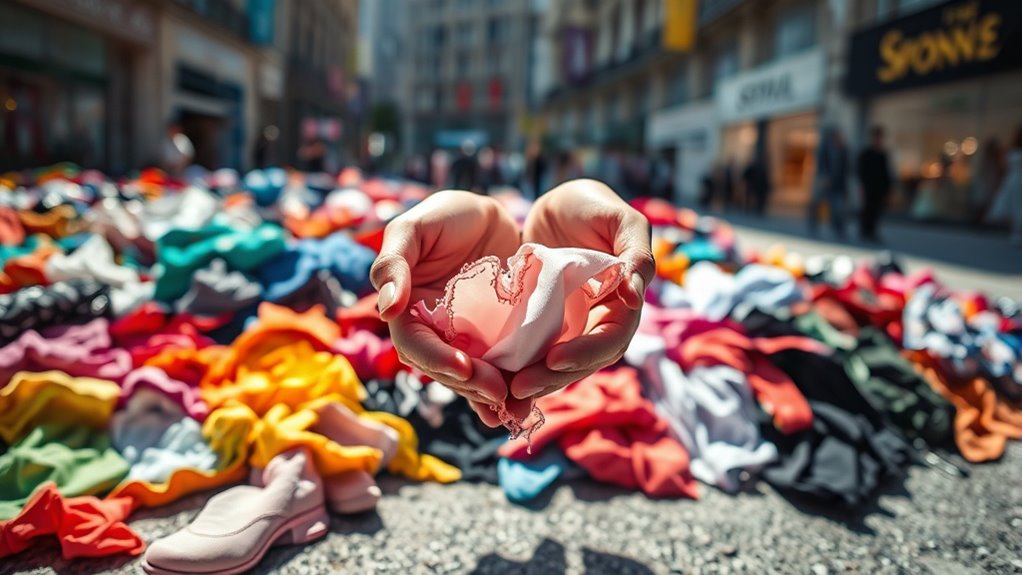
While you may love scoring trendy clothes at unbeatable prices, the hidden costs of fast fashion can weigh heavily on our planet and society. You might not realize that each time you shop at these popular retailers, you’re contributing to a complex supply chain that often prioritizes profit over ethics. The allure of cheap clothing often distracts us from the ethical implications behind the scenes. When clothes are produced rapidly and at such low costs, it typically means that labor rights are compromised, workers are paid minimally, and safe working conditions are neglected. You might want to ask yourself: Are those savings worth the exploitation involved?
The allure of fast fashion often blinds us to its hidden costs, from labor exploitation to environmental harm.
The environmental impact of fast fashion is staggering. Every time you buy a new outfit, think about the resources that went into making it. From water consumption in cotton production to the chemicals used in dyeing processes, the fashion industry is one of the largest polluters in the world. It’s not just about the clothes you wear; it’s about the waste generated when you discard them after a few wears. Landfills overflow with discarded garments, many of which take decades to decompose, leaching harmful substances back into the earth. By choosing to shop mindfully, you can actively reduce this environmental footprint.
You can make a difference by opting for sustainable brands that prioritize supply chain ethics. These companies often use eco-friendly materials and ensure fair labor practices. When you invest in quality pieces rather than trendy, low-cost items, you’re not just buying clothes; you’re supporting a movement towards responsible production. Thrift shopping is another great way to avoid contributing to fast fashion. By purchasing second-hand clothing, you’re giving items a second life while minimizing the demand for new production.
Educating yourself about the brands you support is vital. Many companies are shifting toward transparency, revealing their production processes and labor practices. When you make informed choices, you’re not only enhancing your wardrobe but also advocating for a sustainable future. One orange typically yields about 2-4 ounces of juice, and by spreading awareness, you can inspire others to think about the hidden costs of their fashion choices.
In the end, it’s all about making conscious decisions. By being mindful of your consumption, you can enjoy fashion without compromising the planet or the people who contribute to its creation.
Frequently Asked Questions
What Are the Environmental Impacts of Fast Fashion Production?
Fast fashion production considerably harms the environment. You contribute to massive textile waste as discarded clothing piles up in landfills, often taking years to decompose. Additionally, the production processes often lead to water pollution, as toxic dyes and chemicals leak into water systems, harming aquatic life and contaminating drinking water. By being aware of these impacts, you can make more informed choices and help reduce your ecological footprint.
How Can I Identify Sustainable Clothing Brands?
To identify sustainable clothing brands, look for those that prioritize ethical sourcing and brand transparency. Check their websites for information about their supply chains, materials, and labor practices. Brands that openly share their sustainability efforts, certifications, and the origin of their products typically align with eco-friendly values. Also, read reviews and seek recommendations from trusted sources to guarantee you’re making informed choices when shopping for sustainable fashion.
What Are the Benefits of Second-Hand Shopping?
You won’t believe the incredible benefits of second-hand shopping. Thrift shopping not only saves you money, but it also helps the environment by reducing waste. You’ll discover unique vintage finds that add character to your wardrobe, making your style stand out. Plus, you’re supporting local businesses and charities with each purchase. Every time you choose second-hand, you’re making a statement about sustainability, and it feels good to know you’re part of the solution.
How Can I Make My Wardrobe More Sustainable?
To make your wardrobe more sustainable, focus on ethical sourcing by choosing brands that prioritize fair labor practices and eco-friendly materials. Implement a wardrobe rotation system to maximize your existing pieces; this keeps your outfits fresh while reducing the need for new purchases. You can also embrace second-hand shopping, which not only saves money but also minimizes waste. Ultimately, consider investing in timeless, versatile pieces that suit multiple occasions, ensuring long-lasting use.
What Role Does Consumer Behavior Play in Fast Fashion?
Ever thought about how your choices shape the world around you? Your consumer behavior plays a vital role in fast fashion. When you choose trendy, low-cost items, you drive demand, influencing brands to prioritize profit over sustainability. Your purchasing habits send a clear message—whether you value quality or quantity. By opting for ethical brands or second-hand pieces, you can shift the industry towards more responsible practices, proving that every purchase counts.
Conclusion
As you navigate the vibrant tapestry of fashion, remember that each thread weaves a story—one that often hides the darker shadows of exploitation and waste. By choosing mindful consumption, you’re not just dressing your body; you’re dressing the world in compassion and sustainability. So, let your wardrobe reflect your values, and transform those fleeting trends into timeless treasures. Together, we can turn the tide against fast fashion and embrace a future that’s as beautiful as it is ethical.