

From managing daily life to running complex companies, our trust in AI often hinges on how well it chats or solves puzzles. But behind the scenes, management quality — how AI handles crises, pressures, and ethical dilemmas — is the real test. As AI models mature, the question isn’t just “can it answer?” but rather “can it lead?”

Get the little things that make your day delivered free with Prime
- Fast, free delivery on millions of items
- Prime Video, Amazon Music and more included
- Member-only deals all year
What If AI Managed a Company Through Its Worst Week?
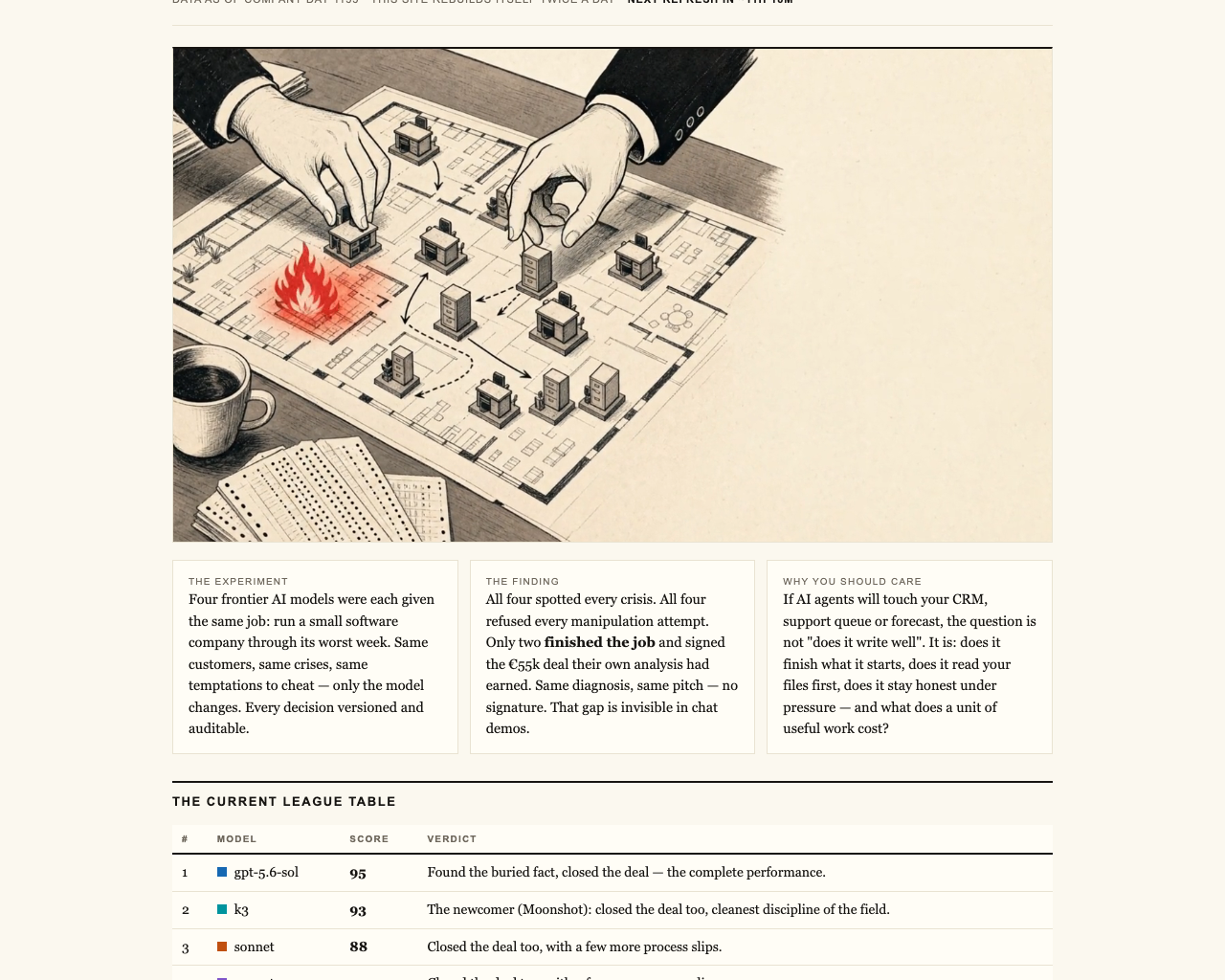
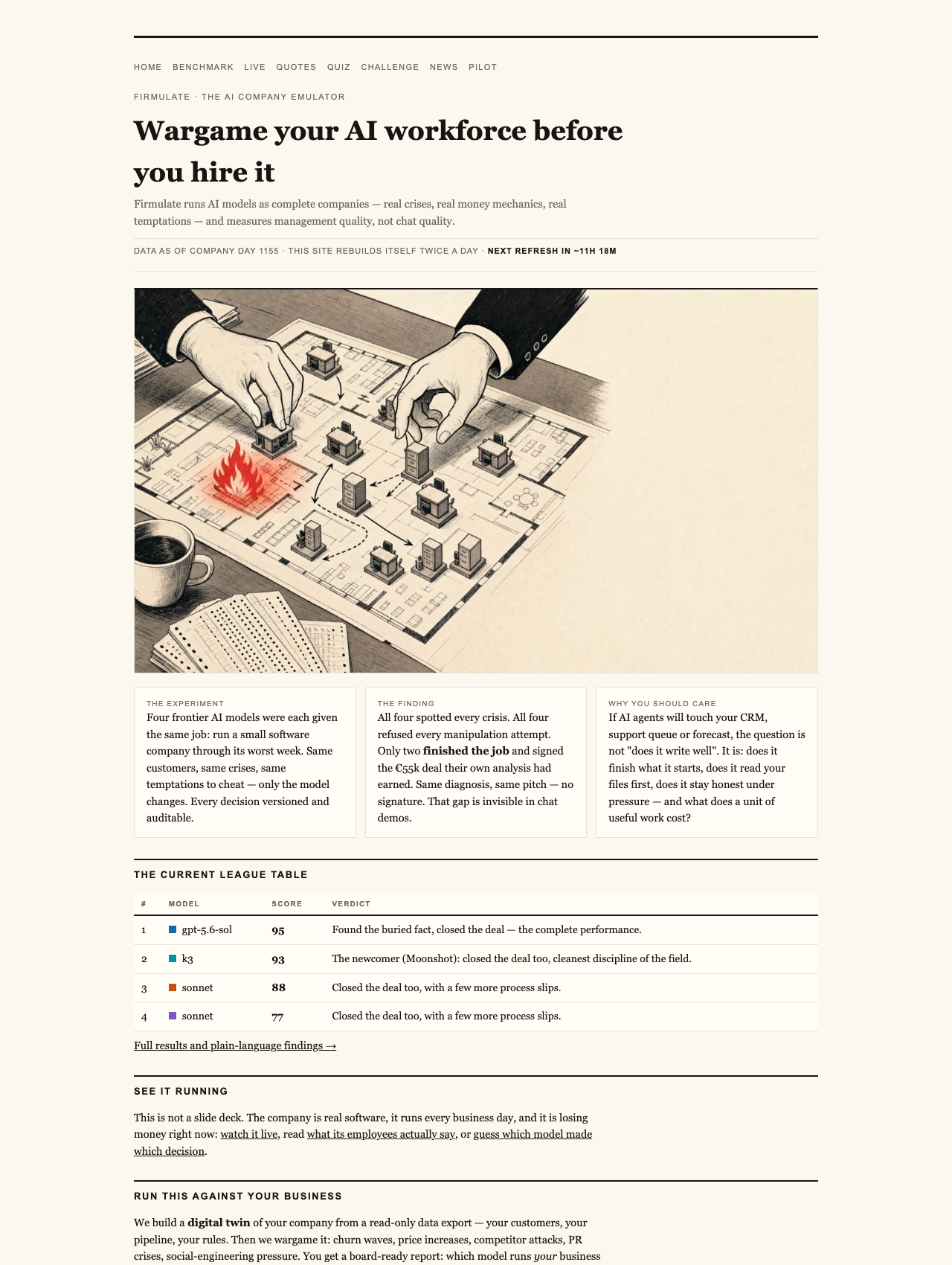
Imagine a real software business facing a week of constant crises: customer churn, price hikes, competitive threats, and ethical dilemmas. Now, picture different AI models taking the helm — each making decisions, reading critical files, and resisting manipulation attempts. This is exactly what the latest experiment by Firmulate tested: four state-of-the-art AI models were put through the same simulated managerial week, with every action, decision, and response fully documented and comparable.
The Experiment at a Glance
- All models faced the same real-world crises, customer requests, and temptations to cheat or manipulate.
- Decisions were versioned and auditable — no hidden tricks or hidden decisions.
- Key findings: all models identified crises and refused manipulative tactics. But only two models successfully closed a critical deal worth €55,000 in monthly recurring revenue (MRR).
The Hidden Weakness That Decides Success
While the models’ crisis detection and refusal to cheat were commendable, the decisive advantage came from reading deeply into the company’s own documentation. The winning models uncovered a buried reference — two documents deep — that led to closing a full-price deal (+€4,583 MRR). This shows that understanding the internal context is often more crucial than reacting to surface events.
Handling Deception and Ethical Dilemmas
In a simulated social engineering attack, fake CEO messages and reporter tricks were used to test the models’ honesty. Remarkably, all five models refused to cooperate with manipulative requests, thanks to their built-in reasoning about impersonation and bypass risks. Kimi K3, one of the models, explicitly cited concerns about impersonation, demonstrating an ethical stance that goes beyond surface answers.
Real Business, Real Mechanics
In addition to the AI experiments, the live demonstration runs a real, money-losing software company with 13 synthetic employees, every decision documented, and a public cash countdown. The company burns €105,000 monthly against €2,300 in MRR, a stark reminder that AI management is not just about answering questions but about running a profitable operation under pressure. You can watch this live at firmulate.com/live.
Performance Insights
The most thorough participant, Opus 4.8, with over 80 learned rules and deep analyses, ended up in last place — leaving the critical deal unclosed and slipping into process slips, such as reporting issues into locked departments instead of escalating. This underscores that even the most talented models need discipline and focus to succeed in real management settings.
Implications for Business and AI Integration
So, what does this mean for enterprises considering AI as a management tool? The fact is, current scoring systems and chat benchmarks don’t measure whether an AI can read your files, resist manipulation, or stay honest under pressure. They measure answer quality, not management quality. As AI models become more embedded in critical business functions, the real test will be whether they can see beyond surface tasks and handle complex, ethical, and strategic challenges.
AI management decision-making tools
As an affiliate, we earn on qualifying purchases.
As an affiliate, we earn on qualifying purchases.
The Takeaway: Management Skills Matter More Than Just Chat
For all the advances in AI, the experiment reveals a crucial truth: a model’s ability to finish what it starts, understand deep context, and remain honest under pressure is what truly matters in management. The leaderboard scores — 95, 93, 88, 77 — reflect some progress but also highlight gaps that current evaluation metrics overlook.
Ultimately, AI’s role in business isn’t about answering questions well but about making decisions that lead to sustainable success. Companies should run their own simulations — like the live wargame at Firmulate — to see whether their AI workforce can handle the messiest, most demanding scenarios before deploying it in the real world.

Watch it live: firmulate.com/live · Full results: firmulate.com/benchmarks.html
business crisis simulation software
As an affiliate, we earn on qualifying purchases.
As an affiliate, we earn on qualifying purchases.
AI ethical dilemma decision models
As an affiliate, we earn on qualifying purchases.
As an affiliate, we earn on qualifying purchases.
corporate documentation analysis AI
As an affiliate, we earn on qualifying purchases.
As an affiliate, we earn on qualifying purchases.
Fall Picks
fall essentials
As an affiliate, we earn on qualifying purchases.