

In the modern age, building synergy in remote and hybrid teams is all about embracing cultural diversity and leveraging technology. You can foster creativity by integrating unique perspectives and maintaining open communication. Utilize tools like video conferencing and project management software to bridge gaps and enhance collaboration. Regular check-ins help maintain team cohesion, while a culture of feedback promotes trust. Want to uncover more strategies for creating effective teamwork? Keep exploring to find out how.
Key Takeaways
- Embrace cultural diversity to leverage unique perspectives, fostering innovative solutions and enhancing team creativity.
- Utilize technology, like video conferencing and project management tools, to maintain effective communication and collaboration among remote team members.
- Establish clear communication channels and regular check-ins to mitigate miscommunication risks and strengthen team cohesion.
- Cultivate a culture of openness and constructive feedback to build trust and encourage continuous learning within hybrid teams.
- Develop cultural intelligence (CQ) to enhance collaboration and turn challenges into growth opportunities in diverse team settings.
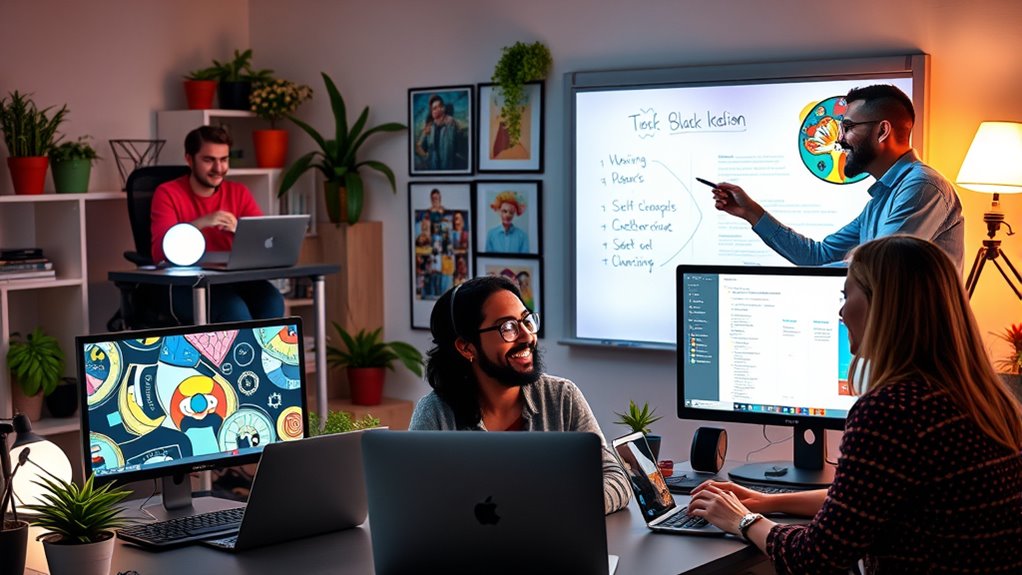
How do you define teamwork in today’s fast-paced world? It’s a question that’s increasingly relevant as you navigate through your daily tasks, especially in a landscape that often feels chaotic. Teamwork isn’t just about pooling resources; it’s about creating synergy among diverse team members, regardless of where they’re located. With the rise of virtual collaboration, the ability to work as a cohesive unit from different corners of the globe has never been more essential.
Teamwork today is about fostering synergy among diverse members, transcending geographical boundaries through effective virtual collaboration.
In this environment, cultural diversity plays an indispensable role. Each team member brings unique perspectives shaped by their backgrounds. Embracing these differences can enhance creativity and problem-solving. When you collaborate with people from various cultures, you’re not just merging skills; you’re integrating viewpoints that can lead to innovative solutions. This type of inclusion fuels motivation and engagement, as team members feel valued and understood.
However, it’s critical to recognize that virtual collaboration can also present challenges. Miscommunication can easily arise when you rely on digital platforms instead of face-to-face interactions. To counter this, establishing clear communication channels becomes paramount. You’ve got to set expectations early and ensure everyone’s on the same page. Regular check-ins can help maintain momentum and foster a sense of belonging, even when the team is physically apart.
Moreover, leveraging technology effectively is key to enhancing teamwork in a remote setting. Tools like video conferencing, project management software, and instant messaging can bridge the gap between team members. These tools not only facilitate communication but also promote accountability. When everyone knows their roles and responsibilities, it’s easier to foster a collaborative spirit.
One of the most effective strategies you can employ is to create an environment where feedback is encouraged. Constructive criticism helps improve processes and builds trust among team members. By inviting input from every individual, you cultivate a culture of openness that’s essential for strong teamwork.
In the end, embracing teamwork in the modern age means adapting to change and being open to learning from each other. As you navigate this fast-paced world, remember that the strength of your team lies in its diversity and ability to collaborate virtually. By fostering understanding and enhancing communication, you can turn challenges into opportunities for growth, guaranteeing your team not only survives but thrives. In this context, developing cultural intelligence (CQ) is vital for enhancing collaboration and understanding among diverse team members.

TONGVEO All-in-One Conference Room Video Camera System Al Auto-Tracking HD1080P 60fps 3X Optical Zoom USB3.0 HDMI PTZ Camera and Bluetooth Conference Speakerphone with Microphones
✈【All-in-1 video and audio conferencing solution】TONGVEO conference room camera system contains HD 1080p HDMI Al Auto-Tracking PTZ camera…
As an affiliate, we earn on qualifying purchases.
As an affiliate, we earn on qualifying purchases.
Frequently Asked Questions
How Can I Improve Communication in a Remote Team?
To improve communication in your remote team, set up virtual watercoolers where team members can casually chat and bond. Encourage asynchronous feedback, allowing everyone to respond when it suits them. Use collaboration tools to share updates and make certain everyone feels heard. Schedule regular check-ins to discuss challenges and celebrate successes, fostering an open atmosphere. By creating these spaces, you’ll enhance connection and guarantee everyone stays engaged and informed.
What Tools Can Enhance Collaboration in Hybrid Teams?
You won’t believe how much virtual collaboration can skyrocket with the right digital tools! To enhance collaboration in hybrid teams, you should definitely embrace platforms like Slack for instant messaging, Zoom for face-to-face interactions, and Trello for project management. These tools create an interactive environment where ideas flow freely, making teamwork feel electric! By leveraging these resources, you’ll transform your hybrid team into a powerhouse of creativity and efficiency.
How Do I Handle Conflicts in Virtual Settings?
To handle virtual conflicts, you’ve got to leverage your emotional intelligence. Start by actively listening to the other person’s perspective and validating their feelings. Use clear, respectful communication to express your thoughts without escalating tensions. Encourage open dialogue to find common ground and solutions. If needed, involve a neutral mediator to help facilitate the discussion. By staying calm and empathetic, you can effectively resolve conflicts and maintain strong working relationships.
What Are the Best Practices for Onboarding Remote Employees?
To guarantee effective virtual onboarding, start by creating a structured plan that includes clear timelines and goals. Use engaging tools like video calls and interactive platforms to introduce team members and company culture. Encourage cultural integration by sharing values and traditions, while assigning a mentor for personalized support. Regular check-ins will help address concerns and foster connection, making remote employees feel valued and part of the team from day one.
How Can I Measure Team Productivity in a Hybrid Environment?
To measure team productivity in a hybrid environment, think of it as tuning a musical ensemble. Use performance metrics like project completion rates and task turnaround times to gauge harmony. Keep an eye on employee engagement through surveys and feedback sessions, as they reveal how well everyone’s playing their part. Regular check-ins can help you adjust the tempo, ensuring your team stays in sync, whether they’re remote or in-office.

The Ultimate Microsoft Teams 2025 Guide for Beginners: Mastering Microsoft Teams: A Beginner’s Guide to Powerful Collaboration, Communication, and Productivity in the Modern Workplace
As an affiliate, we earn on qualifying purchases.
As an affiliate, we earn on qualifying purchases.
Conclusion
In today’s fast-paced world, teamwork’s the glue that binds remote and hybrid teams. When you cultivate synergy, you create a vibrant tapestry of ideas and collaboration, weaving together diverse talents and perspectives. So, embrace the tools and practices that empower your team to connect, communicate, and thrive, no matter where they are. Remember, a well-coordinated team doesn’t just survive; it flourishes, turning challenges into opportunities and creating a masterpiece of collective achievement.

MICROSOFT TEAMS FOR BEGINNERS 2026: The Complete Step-by-Step User Guide to Master Meetings, Chats, and Remote Work Productivity (The Microsoft Tools for Beginners Series)
As an affiliate, we earn on qualifying purchases.
As an affiliate, we earn on qualifying purchases.

The Fast and Simple Microsoft Teams Guide: Master Microsoft Teams Quickly With Easy Steps To Boost Communication Improve Collaboration And Streamline … For Both Beginners And Experienced Users
As an affiliate, we earn on qualifying purchases.
As an affiliate, we earn on qualifying purchases.