
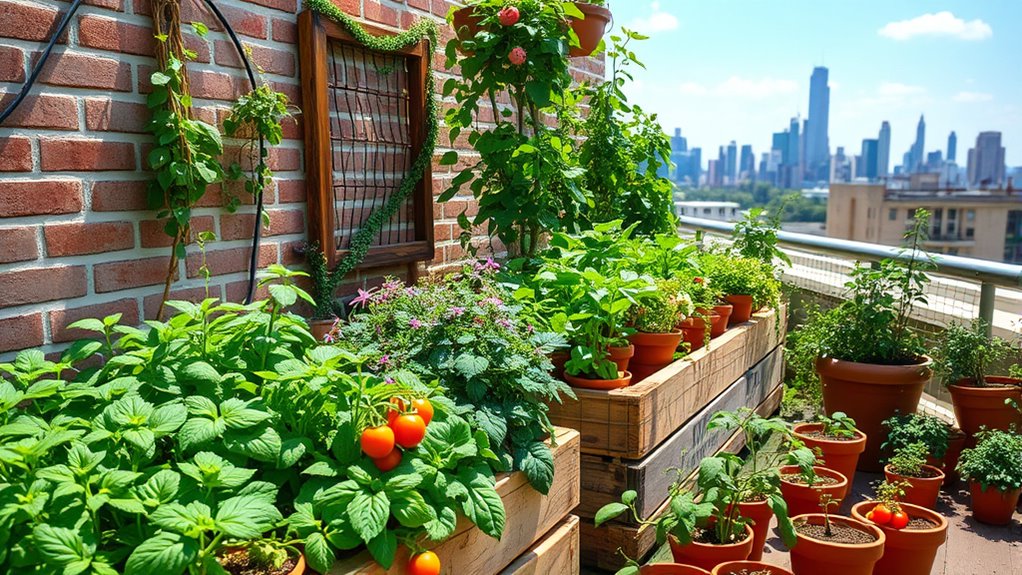

Urban gardening lets you transform small spaces into productive green areas for growing fresh food. You can use vertical planting methods—like hanging planters and trellises—or container gardening techniques with pots or recycled materials. Focus on quality soil and proper drainage to keep your plants healthy. This practice not only beautifies your surroundings but also enhances your well-being and promotes sustainability. If you’d like to discover more about the benefits and techniques, keep exploring!
Key Takeaways
- Urban gardening transforms limited spaces into productive areas for growing fresh produce, herbs, and flowers.
- Vertical planting techniques maximize space by utilizing walls and vertical structures for growing plants.
- Container gardening allows flexibility in plant choice and easy movement to optimize light and shelter.
- Quality soil and proper watering practices are essential for healthy growth in containers.
- Urban gardening enhances aesthetic appeal, promotes sustainability, and improves mental well-being through a connection to nature.

Have you ever wondered how to transform your concrete surroundings into a lush green oasis? Urban gardening offers an exciting solution, allowing you to grow your own fresh produce, herbs, and flowers, even when space is limited. With techniques like vertical planting and container gardening, you can make the most of your small area and enjoy the many benefits of nurturing plants right in your home or balcony.
Vertical planting is a fantastic way to maximize your space. It involves using walls, fences, or specially designed structures to grow plants upwards instead of outwards. You can hang planters, use trellises, or even build vertical garden systems that allow you to stack pots. Think about using a simple wooden ladder or repurposing old pallets to create a stunning living wall. Not only does this save ground space, but it also adds a unique aesthetic element to your environment. Plus, the plants get better light exposure, which can lead to healthier growth.
Maximize your space with vertical planting—grow upwards for stunning aesthetics and healthier plants.
Container gardening is another excellent method to bring greenery into your urban life. All you need are pots, containers, or even recycled materials like buckets or old tires. The versatility of container gardening allows you to choose plants that suit your taste and lifestyle. Whether you’re growing tomatoes, herbs, or ornamental flowers, containers make it easy to manage your plants. You can move them around to find the perfect spot that offers adequate sunlight or shelter from harsh weather.
When selecting containers, think about the size and drainage. Make sure each pot has holes at the bottom to prevent waterlogging, which can harm your plants. You can also get creative with your containers, using vibrant colors or interesting shapes to enhance your urban space.
Don’t forget about the soil! Quality potting mix is essential for container gardening. It provides the right nutrients and retains moisture, ensuring your plants thrive. Watering is also indispensable; since containers dry out faster than garden beds, you’ll need to check them regularly.
Incorporating vertical planting and container gardening into your urban lifestyle doesn’t just beautify your surroundings; it also promotes sustainability and self-sufficiency. You’re not just growing plants; you’re cultivating a connection to nature and enjoying the rewards of fresh produce. Additionally, engaging in urban gardening can also enhance your mental well-being by reducing stress and improving mood, thanks to the benefits of nurturing plants. So, roll up your sleeves, grab some pots, and start your urban gardening journey today!
Frequently Asked Questions
What Are the Best Vegetables to Grow in Containers?
The best vegetables to grow in containers include tomatoes, peppers, lettuce, and radishes. You’ll love how easy they are to manage! Try companion planting by pairing tomatoes with basil or peppers with onions to enhance growth and flavor. Don’t forget about crop rotation; it helps maintain soil health. By changing the type of crops you grow each season, you’ll keep your container garden thriving and productive all year round.
How Can I Prevent Pests in My Urban Garden?
Did you know that nearly 50% of urban gardeners face pest issues? To prevent pests in your garden, start by choosing pest-resistant plants like marigolds and basil. They can naturally repel harmful insects. You can also implement organic pest control methods, such as using neem oil or insecticidal soap. Regularly inspect your plants for any signs of pests and maintain healthy soil to keep your garden thriving and less susceptible to infestations.
What Type of Soil Is Ideal for Small Space Gardening?
The ideal soil for small space gardening is a well-draining mix, often composed of potting soil combined with soil amendments like compost or peat moss. This blend retains moisture without becoming waterlogged. Make sure to prioritize container drainage by using pots with holes at the bottom. This helps prevent root rot and ensures your plants get the nutrients they need. With the right soil, your small garden can thrive beautifully!
Can I Grow Herbs Indoors Year-Round?
Absolutely, you can grow herbs indoors year-round! While sunlight may be scarce, you can use indoor lighting to provide the brightness your herbs need. Think of the contrast between a thriving plant and one wilting in darkness; it’s all about proper herb maintenance. Regular watering and occasional pruning will keep them healthy. With the right setup, your indoor garden can flourish, bringing fresh flavors to your kitchen, even in the depths of winter.
How Much Sunlight Do Urban Gardens Typically Need?
Most urban gardens need at least 6 to 8 hours of sunlight daily for ideal growth. However, if you’re working with shaded areas, some plants have great shade tolerance and can thrive with just a few hours of indirect light. Be sure to check the sunlight requirements of each plant you choose, balancing your garden’s layout to maximize sun exposure while accommodating those that can handle less light.
Conclusion
As you step out onto your balcony, a world of possibility awaits. Imagine plucking fresh tomatoes, fragrant herbs, and vibrant peppers, all grown right at your fingertips. The sun sets, casting a golden hue on your little garden oasis, and you realize you’ve transformed a small space into a thriving sanctuary. But just as you reach for that ripe tomato, a gentle breeze whispers secrets of what else you could grow. What will you plant next?