
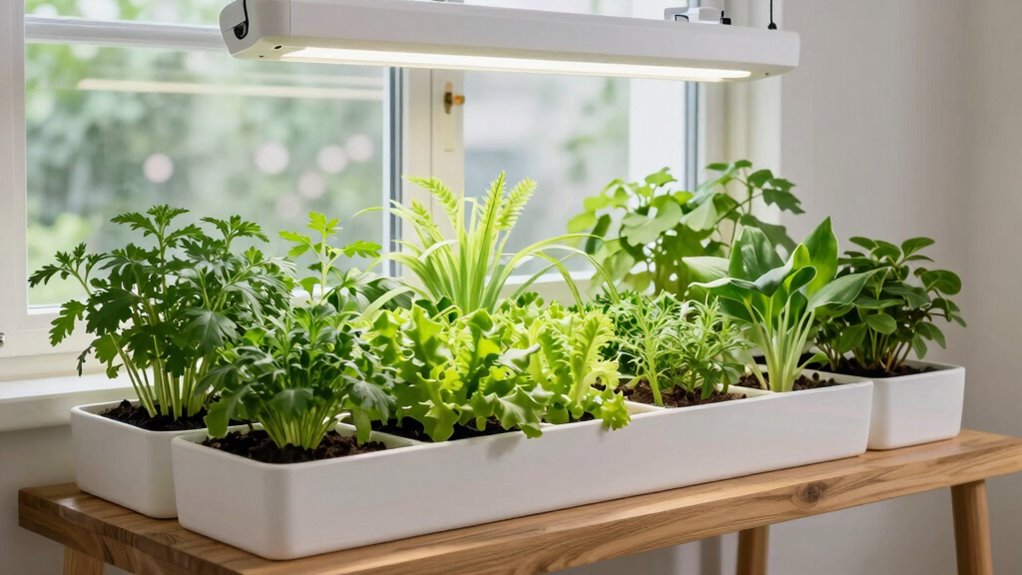

A smart indoor garden is perfect for beginners without a patio, letting you grow fresh herbs and greenery effortlessly. Focus on choosing easy-to-maintain plants and position them near south-facing windows or use grow lights to make sure they get 4-6 hours of direct sunlight daily. Consistent lighting schedules and proper placement support healthy growth and flavor. Keep your plants healthy, and you’ll enjoy a lush space indoors—if you keep exploring, you’ll discover how to optimize your garden even further.
Key Takeaways
- Choose low-maintenance, space-efficient herbs suitable for indoor growth, like basil, mint, and cilantro.
- Use grow lights that mimic sunlight and set on a 12-16 hour schedule to ensure proper plant development.
- Position plants near south-facing windows or supplement with grow lights for adequate light exposure.
- Regularly adjust lighting based on each herb’s needs to promote healthy growth and flavor.
- Maintain consistent lighting routines and proper placement to create a thriving, lush indoor garden without a patio.
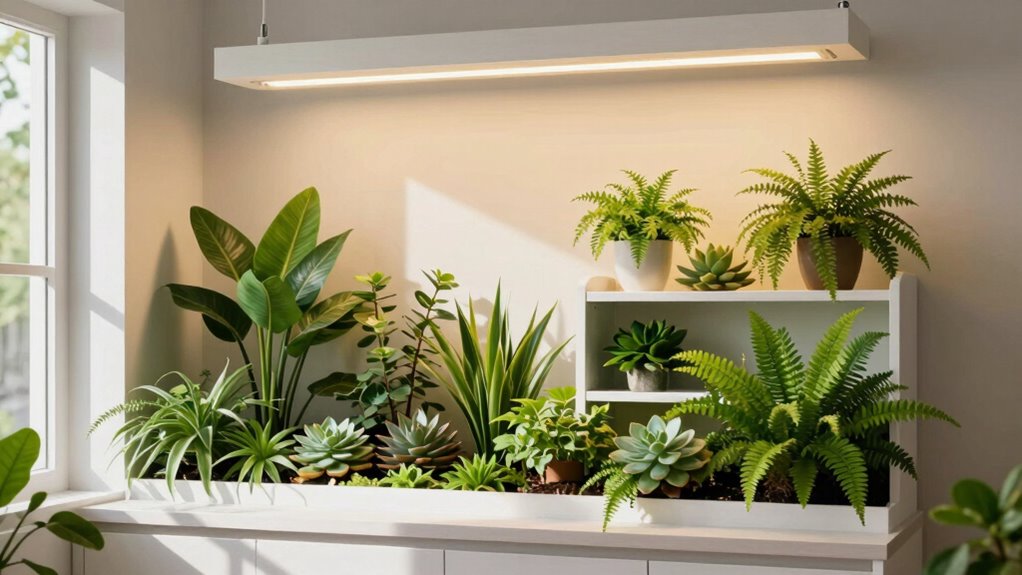
Starting an indoor garden might seem intimidating at first, but with a few simple tips, you can create a lush, thriving space right inside your home. Whether you’re limited on space or don’t have a patio, you can still grow herbs and other plants successfully indoors. The key is understanding how to optimize your environment, especially when it comes to indoor lighting and choosing the right plants. Growing herbs is a popular choice for indoor gardens because they’re easy to maintain and can be used in your cooking, making your efforts both functional and rewarding.
Create a thriving indoor garden with simple tips—maximize light, choose easy plants, and enjoy fresh herbs year-round.
For growing herbs indoors, you’ll want to prioritize good lighting. Most herbs need at least 4-6 hours of direct sunlight daily to thrive. If your home doesn’t get enough natural light, don’t worry—you can supplement with indoor lighting. Invest in grow lights designed specifically for plants, which provide the spectrum of light needed for photosynthesis. Position your grow lights close to your plants, but not so close that they cause heat stress. Set a schedule to keep your herbs under the lights for about 12-16 hours a day, mimicking natural sunlight. This ensures they grow strong and healthy, even in a room that doesn’t receive much sunlight.
You’ll also want to think about the placement of your indoor garden. Place your herbs near south-facing windows if possible, as these tend to get the most sunlight. If natural light is limited, use grow lights consistently to simulate the sun’s rays. Keep in mind that different herbs have different light requirements; for example, basil and cilantro flourish with plenty of light, while mint is more adaptable. Adjust your indoor lighting based on the needs of each plant, and you’ll notice faster growth and better flavor. A well-planned indoor environment can also help support plant health, making your gardening efforts more successful. Incorporating adequate lighting is essential for thriving indoor plants, especially when natural sunlight is scarce. Additionally, understanding the importance of biodiversity in your indoor garden can help you select a variety of plants that support each other’s health and growth.
With a little effort and the right setup, you can enjoy fresh herbs all year round, right inside your home. Focus on providing ample indoor lighting tailored to your plants’ needs, and your indoor garden will flourish, offering a beautiful and practical addition to your living space.
As an affiliate, we earn on qualifying purchases.
Frequently Asked Questions
Can Indoor Gardens Grow Vegetables Year-Round Indoors?
Yes, you can grow vegetables year-round indoors using hydroponic systems. These systems provide ideal conditions, allowing continuous growth regardless of outdoor weather. To keep your indoor garden thriving, practice pest management to prevent infestations. With proper lighting, temperature control, and regular monitoring, you’ll enjoy fresh vegetables all year without worrying about seasonal changes. It’s a convenient way to maintain a steady supply of healthy produce indoors.
What Are the Best Low-Light Plants for Indoor Gardening?
You can turn your dim corner into a lush oasis by choosing shade-tolerant plants like pothos, snake plants, or ZZ plants, which thrive in low light. These resilient beauties require minimal low-light care, making them perfect for indoor gardening with limited sunlight. Picture a vibrant, easy-to-care-for space where these plants flourish effortlessly, transforming your indoor environment into a green sanctuary—even without bright windows or direct sunlight.
How Often Should I Water Indoor Plants?
You should water your indoor plants when their moisture levels dip, which generally means checking the top inch of soil. A good watering schedule is once a week, but this varies based on the plant type, pot size, and indoor conditions. Always guarantee proper drainage, and avoid overwatering, as it can lead to root rot. Adjust your watering routine as you observe how quickly your plants dry out.
Do Indoor Gardens Require Special Fertilizers?
Did you know that plants need over 17 essential nutrients to thrive? Indoor gardens do require special fertilizers, especially since nutrient requirements can differ from outdoor plants. Using the right fertilizer guarantees your plants get crucial nutrient supplements, promoting healthy growth. Opt for balanced, water-soluble fertilizers designed for indoor use, and follow recommended application instructions. This way, your indoor garden stays vibrant and lush without risking over-fertilization.
Can Indoor Gardens Help Improve Indoor Air Quality?
Yes, indoor gardens can improve air quality through air purification. By carefully selecting plants known for their air-cleaning abilities, like pothos or snake plants, you actively enhance your indoor environment. These plants absorb toxins and release oxygen, making your space healthier. Regular care and proper plant selection are key to maximizing the air-purifying benefits of your indoor garden, creating a fresher, more inviting atmosphere.
full spectrum LED grow lights for herbs
As an affiliate, we earn on qualifying purchases.
As an affiliate, we earn on qualifying purchases.
Conclusion
Think of your indoor garden as a delicate symphony waiting to be played. With patience, care, and a little bit of knowledge, you’ll create a vibrant melody of thriving plants right inside your home. Remember, each leaf and blossom is a note in your personal masterpiece. Embrace the journey, stay attentive, and soon your space will flourish like a lush, living canvas—proof that even without a patio, your green thumb can truly blossom.
As an affiliate, we earn on qualifying purchases.
As an affiliate, we earn on qualifying purchases.