


Smart wearables empower you to take charge of your health by delivering real-time insights and tracking essential metrics like heart rate and activity levels. These devices make self-care easier by enabling quick access to health information, helping you monitor trends over time. However, it’s important to manage privacy settings and understand data accuracy to make informed decisions. By exploring your device options further, you can enhance your self-care journey even more.
Key Takeaways
- Smart wearables provide real-time health insights, aiding users in making informed decisions about their personal health management.
- These devices track critical metrics like heart rate, sleep patterns, and physical activity to support individual wellness goals.
- Users must be aware of privacy concerns, as wearables collect sensitive data that may be shared without explicit consent.
- Data accuracy can vary; users should validate wearable readings with healthcare professionals to avoid misguided health decisions.
- Proactively managing privacy settings and understanding device policies empowers users to safeguard their health data while enjoying the benefits of technology.
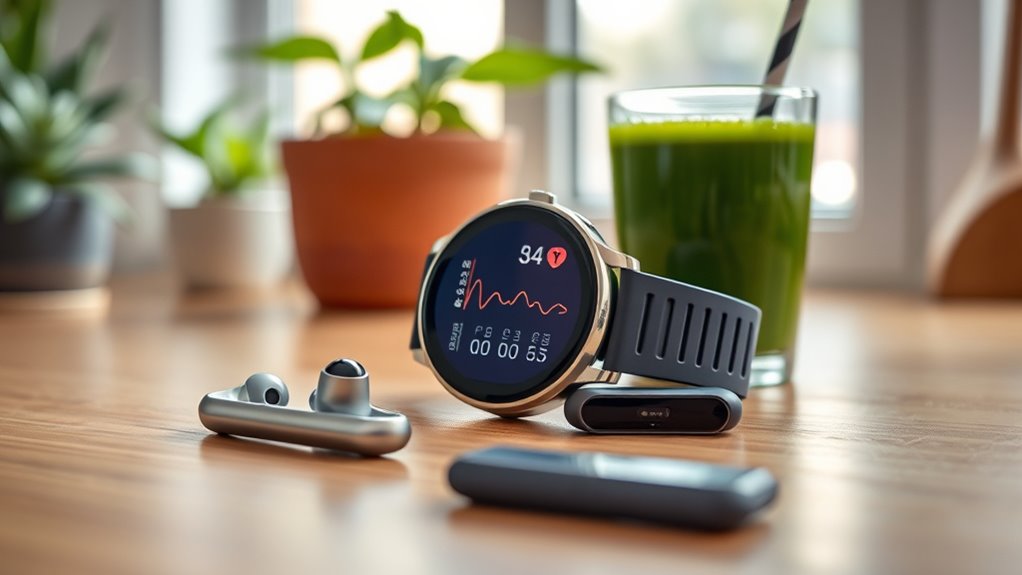
As technology evolves, smart wearables have become essential tools for monitoring health data in real-time. You may find that these devices, like fitness trackers and smartwatches, help you keep tabs on your heart rate, sleep patterns, and physical activity levels. With the ability to access this information at your fingertips, you can make informed decisions about your health. However, while these devices offer many benefits, they also raise significant privacy concerns and questions about data accuracy that you should consider.
Smart wearables provide real-time health insights, but it’s crucial to consider privacy and data accuracy concerns.
When you wear a smart device, it’s collecting a wealth of personal information. This includes not just your physical metrics but also your location, daily habits, and even your emotional state. With data flowing from your wearable to various apps and companies, you might wonder how secure that information really is. Are you comfortable with your health data being shared, and who has access to it? It’s essential to read privacy policies and understand how your data will be used. Knowing the risks helps you make informed choices about which devices to trust.
On top of privacy issues, data accuracy is another critical aspect to think about. While these wearables can provide real-time insights, they’re not infallible. There have been instances where users reported discrepancies in heart rate readings or inaccurate step counts. If you rely heavily on this data to monitor your health, inaccuracies can lead to misguided decisions. You wouldn’t want to think you’ve hit your fitness goals when, in reality, your device miscounted your steps. It’s essential to approach the information your wearable provides with a critical eye, validating it through additional sources or consultative discussions with healthcare professionals.
Moreover, you should aim for a balance between leveraging the benefits of smart wearables and safeguarding your privacy. Being proactive about data management can empower you to take control of your health. Regularly review your settings, customize your sharing preferences, and stay informed about updates or changes that might affect your data. In addition, understanding grocery savings strategies can help you allocate your budget better for health-related purchases, including wearable technology.

pixtlcoe Fitness Smart Trackers with 24/7 Health Monitoring,Heart Rate Sleep Blood Oxygen Monitor/Calorie Steps Counter Pedometer Activity Tracker/Smart Notifications for Men Women
24H Accurate Heart Rate Monitoring: Go beyond basic tracking. Our watch automatically monitors your heart rate, blood oxygen…
As an affiliate, we earn on qualifying purchases.
As an affiliate, we earn on qualifying purchases.
Frequently Asked Questions
How Do Smart Wearables Track Health Data Accurately?
Smart wearables track health data accurately through advanced sensors that monitor various metrics like heart rate and activity levels. These sensors undergo regular calibration to guarantee precision, adapting to your body’s unique signals. You can trust that your data remains private, as many devices employ encryption methods to protect your information. By using these technologies, you gain valuable insights into your health while maintaining control over your personal data.
What Types of Health Data Can Wearables Monitor?
Wearables can monitor a variety of health data, including fitness tracking and sleep monitoring. You’ll find features that track your heart rate, steps taken, calories burned, and even sleep quality. By analyzing this data, you’ll gain insights into your daily activity levels and overall wellness. Plus, some devices offer reminders to keep you active, helping you maintain a balanced lifestyle and improve your sleep patterns for better overall health.
Are Smart Wearables Safe for All Users?
Smart wearables can be safe for most users, but it’s crucial to take into account privacy concerns and device compatibility. You should make sure that the wearable you choose has robust security features to protect your health data. Additionally, check if it’s compatible with your devices and operating systems. Always read reviews and consult with healthcare professionals if you have specific health issues, as individual needs may affect the overall safety and effectiveness of the technology.
Can Wearables Integrate With Existing Healthcare Systems?
Yes, wearables can integrate with existing healthcare systems, but you’ll face interoperability challenges. Different devices and platforms often use varying data formats, making seamless communication tough. Additionally, data privacy concerns arise when sharing sensitive health information between wearables and healthcare providers. It’s vital to guarantee that the systems you’re using comply with regulations and prioritize your privacy. Keeping these factors in mind can help you navigate the integration process more effectively.
What Is the Cost Range for Quality Smart Wearables?
Quality smart wearables typically range from $50 to over $500. Did you know that around 30% of users rely on these devices for daily health tracking? When considering pricing options, remember that brand reputation plays a vital role—well-known brands often offer higher-priced models, but they usually come with better accuracy and support. So, weigh your choices carefully to find the right balance between cost and quality for your needs.

Smart Watches for Men Women, 1.83" HD Touchsreen, Bluetooth Calling, 5 ATM Water-Resistance, 130+ Sports Modes, Health, Fitness & Sleep Tracker, Timer, Pedometer, Fitness Watch for Android/iOS, Pink
1.83-inch HD Full-View Display: Featuring a 1.83-inch square screen with a 240×284 HD resolution and IPS full-viewing angle…
As an affiliate, we earn on qualifying purchases.
As an affiliate, we earn on qualifying purchases.
Conclusion
In a world where your health data is like a compass guiding you through uncharted waters, smart wearables empower you to take charge of your well-being. By tracking essential metrics in real-time, these devices help you make informed decisions about your lifestyle. Embracing this technology means you’re not just a passive observer of your health; you’re an active participant in your self-care journey. So strap on that wearable and navigate your path to a healthier you!

Fitness Tracker with Heart Rate/Blood Oxygen/Sleep Monitor, 20+ Sports Modes Smart Watches for Women/Men, Activity & Step Tracker Smart Watch for Android/iOS Phones (Bordeaux)
【24/7 Heart Rate Monitor 】This blood pressure watch supports real-time dynamic heart rate, blood oxygen, blood pressure ,Sleep…
As an affiliate, we earn on qualifying purchases.
As an affiliate, we earn on qualifying purchases.

Advanced Health Smartwatch for Women Men with Real-Time Monitoring of Heart Rate, Blood Oxygen, Body Temperature, Blood Pressure, Sleep Auality and Stress Levels.Always-On Display, for Android & iOS
【Your True Companion for Health Monitoring!】The blood pressure smart watch for men and women is equipped with a…
As an affiliate, we earn on qualifying purchases.
As an affiliate, we earn on qualifying purchases.