
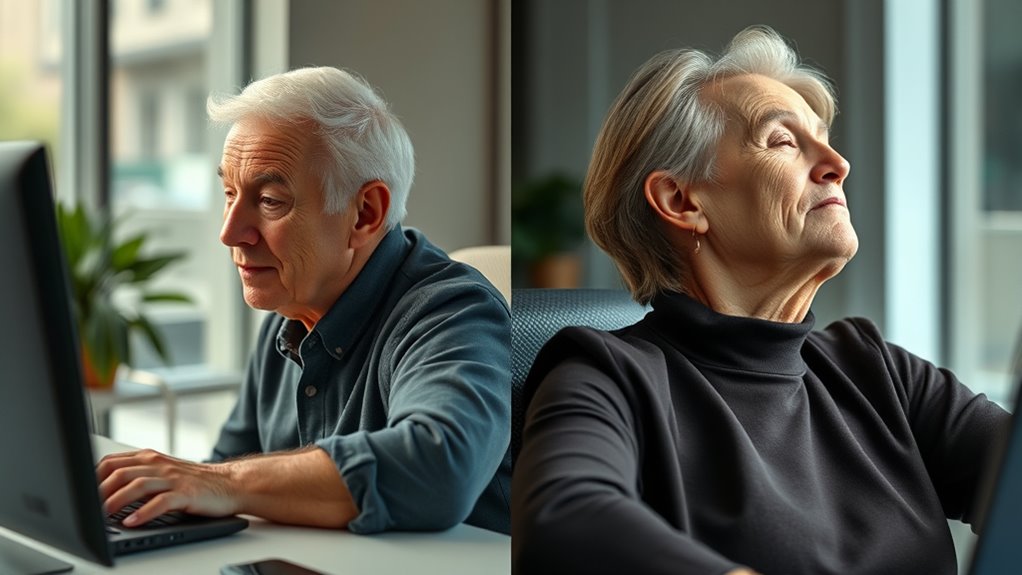

Sitting for eight hours a day speeds up aging in your muscles, joints, and metabolism, raising your risk of chronic health problems over time. Extended inactivity weakens muscles, causes joint degeneration, and hampers circulation. But there’s a quick fix: stand, stretch, or walk for just five minutes every hour. Small movements can markedly slow down aging effects and improve your health, and you’ll discover more easy tips to stay active if you keep going.

Get the little things that make your day delivered free — and shop member deals
- Fast, free delivery on millions of items
- Access to Prime Big Deal Days deals on October 6–7
- Prime Video, Amazon Music and more included
Key Takeaways
- Prolonged sitting accelerates muscle and joint aging, increasing risks of degeneration and stiffness.
- Extended sedentary periods can cause postural issues, leading to chronic discomfort and long-term health problems.
- Sitting for eight hours without movement speeds up physical aging processes and weakens muscles.
- Incorporating 5-minute active breaks every half-hour boosts circulation and counters aging effects.
- Using ergonomic chairs and taking short movement breaks can significantly reduce the aging impact of long sitting hours.

Spending long hours sitting at a desk or in front of a screen can take a serious toll on your health, often leading to discomfort, poor posture, and increased risk of chronic conditions. If you’re spending most of your day seated, investing in ergonomic chairs can make a significant difference. These chairs are designed to support your body’s natural curves, reduce pressure points, and promote better alignment. When you use an ergonomic chair, you’re giving your body the support it needs to avoid slouching or hunching over, which often results in back and neck pain. But even the best chair can’t undo the effects of remaining seated for extended periods without breaks. That’s where active breaks come into play.
Active breaks are simple, effective ways to counteract the negative effects of prolonged sitting. Every 30 to 60 minutes, stand up, stretch, or walk around for five minutes. These mini-movements stimulate circulation, reduce muscle stiffness, and help reset your posture. Incorporating active breaks into your work routine doesn’t require much time or effort but can drastically improve your physical health over time. It’s easy to get caught up in work and forget, but setting a timer or using reminders can help you stay consistent. During these breaks, consider doing light stretches or quick exercises like leg lifts or shoulder rolls. These small actions prevent your muscles from tightening and promote blood flow, reducing the risk of developing conditions like deep vein thrombosis or lower back pain. Additionally, choosing an ergonomic office chair that encourages proper support can help maintain good posture during your seated hours. Research shows that sitting for long hours accelerates aging processes in muscles and joints, highlighting the importance of movement. Incorporating movement throughout the day can also enhance overall energy levels and focus. Pairing ergonomic furniture with regular active breaks is a winning strategy. Your chair should encourage proper posture, but it’s not enough on its own. Moving regularly keeps your muscles engaged and prevents stiffness. If possible, incorporate standing desks or sit-stand options, which allow you to switch positions throughout the day. These adjustments help break the cycle of sitting, especially during long work hours. Recognizing the importance of muscle health can motivate you to stay active during the day. Remember, the goal isn’t just about comfort but about safeguarding your long-term health. Sitting for hours without movement ages your body faster, leading to joint degeneration, muscle weakness, and metabolic issues. Making small changes—like choosing an ergonomic chair and taking active breaks—can dramatically reduce these risks. When you prioritize these habits, you’re not only improving your comfort now but also investing in your health for years to come.
ergonomic office chair with lumbar support
As an affiliate, we earn on qualifying purchases.
As an affiliate, we earn on qualifying purchases.
Frequently Asked Questions
Does Sitting Affect Mental Health or Cognitive Function?
Sitting for long periods can negatively impact your mental health and lead to cognitive decline. When you sit too much, you may feel more anxious, stressed, or depressed, and your brain’s sharpness can decrease over time. To protect your mental well-being and maintain cognitive function, try taking short breaks, standing up, and moving around regularly. These small habits can make a big difference in keeping your mind healthy.
Can Standing Desks Completely Negate Sitting-Related Aging Effects?
Standing desks can substantially reduce the aging effects linked to prolonged sitting, but they don’t completely negate them. To maximize standing desk benefits, you should incorporate ergonomic accessories like anti-fatigue mats and supportive footwear. Regular movement and stretching are essential, too. By combining these strategies, you minimize health risks, boost energy, and support better posture, helping you stay healthier and more vibrant as you reduce the negative impacts of extended sitting.
Are There Specific Exercises to Counteract Sitting’S Damage?
You can counteract sitting’s damage with specific exercises focused on posture correction and ergonomic seating. Incorporate stretches that open your hips and strengthen your back, like seated spinal twists or shoulder rolls. Regularly practicing ergonomic seating habits helps maintain good posture, reducing strain. These exercises and adjustments work together to combat the negative effects of prolonged sitting, keeping your body healthier and more resilient over time.
How Does Sitting Impact Different Age Groups Differently?
You might notice that sitting impacts different age groups uniquely. For younger people, a sedentary lifestyle can slow development and cause early fatigue. As you age, sitting accelerates age-related decline, weakening muscles and reducing flexibility. Older adults are more vulnerable to joint issues and balance problems. No matter your age, staying active helps combat these effects, but recognizing how sitting affects you can motivate better movement habits.
What Are the Long-Term Health Risks of Prolonged Sitting?
Imagine sitting in a Victorian parlor—your sedentary behavior stacks up over time, risking serious health decline. Prolonged sitting increases your chances of heart disease, diabetes, and obesity. Long-term, it weakens muscles and hampers circulation, accelerating aging. If you overlook these risks, your health could suffer greatly, making it crucial to break up long periods of sitting. Small changes now can safeguard your future well-being.
height adjustable sit-stand desk
As an affiliate, we earn on qualifying purchases.
As an affiliate, we earn on qualifying purchases.
Conclusion
So, are you ready to break up those long sitting stretches with just a few quick moves? Remember, sitting for hours ages you faster than you think. Incorporate simple stretches or brief walks into your day—your body will thank you. Why not start today? Small changes can make a big difference in keeping you youthful and energized. Don’t wait until it’s too late—your health is worth that five-minute investment.
desk exercise equipment for small spaces
As an affiliate, we earn on qualifying purchases.
As an affiliate, we earn on qualifying purchases.
reminder timer for active breaks
As an affiliate, we earn on qualifying purchases.
As an affiliate, we earn on qualifying purchases.
NFL season / tailgating Picks
team gear
As an affiliate, we earn on qualifying purchases.