
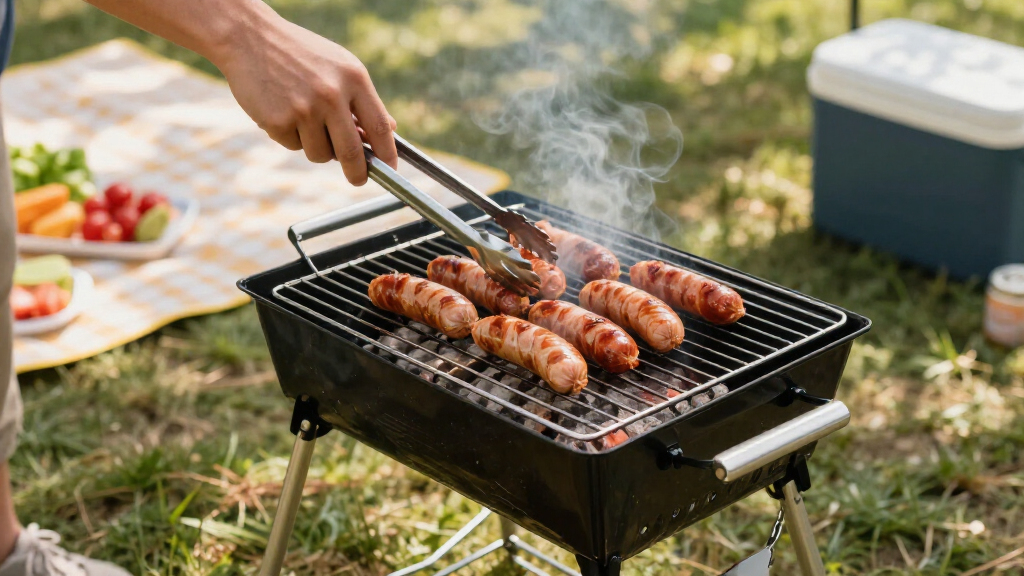

The best portable tailgating grill has to do two jobs at once: cook like a real grill and travel like luggage. After comparing 14 of the most popular options for the 2026 season, the Weber Traveler stands out as my top overall pick for its exceptional heat control and fold-down design that fits a sedan trunk, while the Coleman RoadTrip 285 makes the most sense for tailgaters who want full stand-up cooking without hauling a cart, and the Royal Gourmet GT1001 is the value play for budget-minded fans. The core tradeoff in this category is cooking power versus packed size — high-BTU two-burner models like the Pit Boss 75275 feed a crowd but weigh a ton, while sub-15-pound singles burn burgers beautifully but struggle with a full pre-game spread. Scissor-stand grills, tabletop models, and griddle combos each solve different tailgating problems, and picking the wrong format is the most common mistake buyers make. Keep reading for the full breakdown of what separated the winners from the rest.
Complete the kit


Key Takeaways
- Fold-and-go convenience beat raw BTU output in this comparison — the Weber Traveler and RoadTrip 285 topped the list because setup speed and stable stands matter more in a parking lot than an extra 5,000 BTUs.
- The RoadTrip 285 appears three times in this lineup across sellers and bundles, which signals strong availability but means buyers should compare what’s included (stand, griddle plates, cover) rather than just the price.
- Every grill under 12,000 BTUs — the Cuisinart 8,000 BTU model, the Char-Broil convective single, and the Royal Gourmet GT1001 — is best treated as a two-to-four-person grill, not a crowd feeder.
- Griddle combos like the Royal Gourmet PD1305H and PD3001 were the biggest differentiators in the lineup: nobody else does breakfast-for-the-lot cooking, but they give up flame-grilled flavor and grill marks entirely.
- Weight crept upward across the category — half of these models exceed 40 pounds, so buyers without a truck or SUV should filter hard on packed dimensions before falling for burner counts.


| portable tailgating grill | Fuel |
|---|---|
| Coleman RoadTrip 285 Portable | — |
| Pit Boss Grills 75275 Stainles | Propane |
| Cuisinart Outdoor Gas Grill | Propane |
| Weber Traveler Compact Portabl | — |
| Royal Gourmet PD1305H 3-Burner | Propane |
| Cuisinart Portable Gas Grill w | — |
| Coleman RoadTrip 225 Portable | 1-pound propane cylinder (sold separately) |
| Coleman RoadTrip 285 Portable | Propane |
| Charbroil Grill2Go X200 Portab | — |
| Charbroil Portable Convective | — |
| Royal Gourmet GT1001 Stainless | — |
| Royal Gourmet PD3001 3-Burner | Propane |
| Bestfire Tabletop 2-Burner Gas | Propane |
| Coleman RoadTrip 285 Portable | Propane (16.4 oz. cylinder, sold separately) |
More Details on Our Top Picks
Coleman RoadTrip 285 Portable Stand-Up Propane Grill
The RoadTrip 285 earns the top spot because it solves the core tailgating problem: cooking for a crowd without hauling a full-size grill. Three independently adjustable burners across 285 square inches let you park burgers over high heat while sausages simmer on low — something two-burner portables like the Pit Boss 75275 can’t manage as precisely. The foldable legs and wheels mean you roll it from trunk to tailgate instead of carrying it, a real advantage over tabletop models that demand a stable surface.
The tradeoffs are real: you’ll buy propane cylinders separately, and at stand-up size it’s overkill for solo picnics. But for groups, it hits the sweet spot between capacity and portability.
Pros:- 20,000 BTUs across three adjustable burners for true zonal cooking
- Wheels and folding legs make transport genuinely easy
- 285 sq. in. of cooking space handles crowd-sized batches
- Instastart ignition means no matches at a windy tailgate
Cons:- Propane cylinders sold separately, adding to real cost
- Stand-up frame is bulkier than tabletop rivals for compact cars
Best for: Tailgaters cooking for 4-8 people who want push-button setup and zonal heat control without a full-size grill
Not ideal for: Solo campers or couples — the stand-up frame is heavier and bulkier than tabletop units like the Cuisinart 8,000 BTU portable
- BTUs:20,000
- Burners:3 adjustable
- Cooking Area:285 sq. in.
- Ignition:Instastart push-button
- Frame:Foldable legs with wheels
- Warranty:3 years
Our verdict“If your tailgate regularly feeds more than four people, this is the portable grill to beat on balance of capacity, control, and mobility.”
Pit Boss Grills 75275 Stainless Steel Two-Burner Portable Grill
Matched against the Coleman RoadTrip 285, the Pit Boss 75275 gives you the same 20,000 BTU output for noticeably less money, and its stainless steel construction shrugs off the trunk abuse that cheaper painted-steel grills can’t. At 22 pounds with folding legs, it lands in true carry-anywhere territory where the RoadTrip’s wheeled frame can’t go.
What you give up is refinement rather than power: 274 square inches across two burners means less zonal flexibility than the RoadTrip’s three-burner setup, and there’s no wheeled stand — you’ll need a table or tailgate lip to rest it on. For buyers who want durable performance per dollar and don’t need a rolling cart, this is the smartest spend in the lineup.
Pros:- 20,000 BTUs matches pricier rivals at a lower price point
- Stainless steel body resists rust and transport damage
- 274 sq. in. fits multiple burgers at once
- Folding legs pack flat for trunk storage
Cons:- Requires a table or surface — no stand included
- Two burners limit heat zoning compared to the RoadTrip 285
Best for: Budget-minded tailgaters who want full-size heat output and stainless durability without the premium price
Not ideal for: Cooks who want built-in mobility or three-zone heat — you’ll need to supply your own table and juggle two burners instead of three
- Cooking Space:274 sq. in.
- Burners:2 stainless steel
- BTU:20,000
- Fuel:Propane
- Dimensions:22.9″L x 18.5″W x 14.7″H
- Weight:22 lb
Our verdict“The best performance-per-dollar pick here if you can live without a wheeled stand and third burner.”
Cuisinart Outdoor Gas Grill, 20,000 BTU, Portable, 2-Burner
Where the Weber Traveler Compact asks you to think about lid locks and grate seasoning, the Cuisinart keeps the tailgating experience simple: tool-free setup, twist the knobs, and you’re grilling. The built-in thermometer in the lid is a genuine advantage over the Weber, which omits one — first-timers can actually see what their heat is doing instead of guessing.
Its 22-pound frame with folding legs splits the difference between the heavier RoadTrip 285 and ultralight tabletop units, so it works for both car camping and lot cookouts. The honest limitation is capacity: two burners and a modest grate mean you’re cooking in shifts once the group passes five or six people. For a first portable grill, that’s a fair trade for the price and simplicity.
Pros:- Tool-free setup gets you grilling in minutes
- Built-in lid thermometer takes the guesswork out of heat control
- Lightweight 22 lb frame with folding legs
- Stainless grates distribute heat evenly
Cons:- Small cooking surface versus full-size and even mid-size portables
- Two burners cap your heat zoning options
Best for: First-time grill buyers who want simple setup, visible temperature readings, and reliable two-burner performance
Not ideal for: Large tailgating groups — the small grate forces batch cooking once you’re feeding more than about five people
- BTU:20,000
- Burners:2 stainless steel
- Weight:22 lb
- Material:Stainless steel
- Setup:Tool-free
- Fuel:Propane
Our verdict“The easiest entry point into tailgating grills — buy it if simplicity matters more than maximum capacity.”
Weber Traveler Compact Portable Gas Grill
Weber’s porcelain-enameled cast-iron grates deliver the kind of sear and heat retention that stainless grates on the Cuisinart 2-Burner or Pit Boss 75275 simply can’t match — that’s the premium you’re paying for, and steak lovers will taste the difference. The one-handed operation and automatic lid lock make it the most thoughtfully engineered transport experience in this roundup, and a 32-inch wide cooking surface handles meals for four without batch cooking.
The compromises are worth weighing. A single 3.2 KW burner means no zonal cooking at all — less flexible than even budget two-burner units — and there’s no built-in thermometer, which feels stingy at this price. It also requires initial assembly. This pick makes sense for buyers who prioritize cooking quality and build polish over versatility.
Pros:- Cast-iron porcelain grates give superior searing and heat retention
- One-handed operation with automatic lid lock for easy carrying
- 32-inch wide grate cooks for four in a single pass
- Fits in most car trunks despite the wide cook surface
Cons:- Single burner eliminates zonal cooking flexibility
- No built-in thermometer despite the premium price
- Requires assembly before first use
Best for: Quality-focused tailgaters who want restaurant-grade searing and refined build quality for a group of up to four
Not ideal for: Buyers who want multi-zone cooking or a thermometer at this price — cheaper three-burner options out-flexible it
- Width:34 inches
- Depth:21.5 inches
- Height:34.75 inches
- Weight:37 lb
- Fuel Type:Gas (propane)
- Heating Power:3.2 KW
- Burners:1
- Grates:Porcelain-enameled cast iron
Our verdict“The splurge pick for sear quality and transport polish — skip it if burner versatility matters more to you than crust.”
Royal Gourmet PD1305H 3-Burner Propane Gas Grill and Griddle Combo
This is the only pick in the batch that replaces three appliances: the griddle top handles bacon and breakfast at a morning tailgate, the grill grate covers burgers, and the pot rack plus 12,000 BTU side burner boils chili or corn. Neither the RoadTrip 285 nor the Weber Traveler can touch that range, and with 29,000 total BTUs it also out-powers everything else here.
That versatility comes with friction. Ignition is battery-free and can demand manual effort, and the flat-top-focused design means you won’t get the smoky char of the Weber’s cast iron. Still, for all-day lots where the menu spans breakfast through dinner, nothing else in this lineup adapts like it does.
Pros:- 3-in-1 griddle, grill, and pot rack covers any menu
- 29,000 BTU total output leads this roundup
- Removable grease cups speed post-game cleanup
- 364 sq. in. combined cooking space feeds crowds
Cons:- Battery-free ignition can require manual lighting effort
- Griddle-centric design delivers less traditional char
- No fine temperature controls mentioned for precision cooking
Best for: All-day tailgaters and camp cooks whose menus span breakfast, burgers, and boiled or simmered dishes
Not ideal for: Purists chasing classic grill char — the griddle-heavy design can’t match cast-iron grates for smoky searing
- Total Cooking Area:364 sq. in.
- Griddle Area:211 sq. in.
- Grill Area:153 sq. in.
- Total BTU:29,000
- Side Burner:12,000 BTU
- Fuel:Propane
- Lid Load Capacity:10 lbs
Our verdict“Choose this if your tailgate menu changes by the hour — it’s the Swiss Army knife of the group at the cost of some grilling purism.”
Cuisinart Portable Gas Grill with Locking Lid, 8,000 BTU, 10 lbs.
At just 10 pounds, this Cuisinart is the easiest grill in the lineup to carry one-handed from the trunk to the tailgate, and its locking lid means you can grab it by the handle without worrying about the grates sliding out. It arrives fully assembled, so there is nothing to bolt together before the first cookout — a real advantage over the Charbroil Convective, which still needs some assembly. The tradeoff is raw capability: at 146 square inches and 8,000 BTU, it holds about four burgers at a time and can struggle with searing. Compared with the Coleman RoadTrip 225, you give up half the cooking area and a second burner to shed weight and cost.
Pros:- Featherlight at 10 lbs with a locking lid for one-hand carrying
- No assembly — ready to cook straight out of the box
- Quick, even heating from the 8,000 BTU burner
- Compact footprint stores easily in a car trunk or RV compartment
Cons:- Smallest cooking surface in the roundup at 146 sq. inches
- Not powerful enough for heavy searing or large meat cuts
- No thermometer or side tables
Best for: Solo tailgaters or couples who prioritize grab-and-go convenience over cooking capacity
Not ideal for: Groups of four or more — the 146-square-inch surface means grilling in slow, frustrating batches
- Cooking Surface:146 sq. inches
- BTU:8,000
- Weight:10 lbs
- Dimensions:19 x 11.5 x 10 inches
- Assembly:None required
- Lid:Locking lid for transport
Our verdict“Buy this if you want the lightest, simplest tailgating grill here; skip it if you’re feeding a crowd.”
Coleman RoadTrip 225 Portable Tabletop Grill
The RoadTrip 225 hits a sweet spot the Cuisinart can’t reach: 225 square inches of cooking space and two independently adjustable burners at a price that undercuts the Weber Traveler and Charbroil Grill2Go X200. Those dual burners matter more than they sound — you can keep burger heat on one side while toasting buns on the other, something no single-burner model in this roundup can do. The Instastart push-button ignition removes the fumbling with matches, and removable grease catchers make post-game cleanup faster than on the Charbroil Convective. The catch is the accessory trap: the interchangeable griddle and stove grates that make this grill genuinely versatile are sold separately, and the propane cylinder is too.
Pros:- Two adjustable burners enable true two-zone cooking
- 225 sq. in. of space handles small-group meals in one round
- Removable grease catchers speed up cleanup
- Expandable with interchangeable griddle and stove cooktops
Cons:- Interchangeable cooktops sold separately
- Propane cylinder not included
- Tabletop design requires a tailgate, table, or flat surface
Best for: Budget-minded tailgaters feeding 3-5 people who want real two-zone cooking without a stand-up grill’s bulk
Not ideal for: Buyers who want everything included — cooktop accessories and the propane cylinder add hidden cost
- BTUs:11,000
- Cooking Area:225 sq. in.
- Number of Burners:2 (adjustable)
- Ignition:Instastart matchless ignition
- Fuel:1-pound propane cylinder (sold separately)
- Cleanup:Removable grease catchers
Our verdict“The smartest price-to-capability balance in this batch for small groups, provided you budget for the add-ons.”
Coleman RoadTrip 285 Portable Stand-Up Propane Grill
When the tailgate party grows beyond a few friends, the RoadTrip 285 is the grill that keeps up. With 285 square inches, 20,000 BTUs, and three independently adjustable burners, it nearly doubles the output of the RoadTrip 225 and triples the control of any single-burner option here. The foldable legs and wheels mean you roll it rather than lift it — which is good, because at 46.7 pounds it’s the heaviest model in this batch and a different beast entirely from the 10-pound Cuisinart. Setup is genuinely fast thanks to quick-fold legs and push-button ignition, but the added power and capacity come at the cost of trunk space and a higher price.
Pros:- 285 sq. in. grilling area with 20,000 BTUs for real throughput
- Three adjustable burners for multi-zone cooking
- Wheels and quick-fold legs make setup and moves manageable
- Backed by a 3-year warranty
Cons:- Heaviest grill in this batch at 46.7 lbs
- Propane cylinder sold separately
- Stand-up footprint consumes significant vehicle cargo space
Best for: Tailgaters regularly cooking for 6 or more who want full-size performance in a rolling package
Not ideal for: Anyone with a small trunk or who grills for two — 46.7 pounds and stand-up dimensions are overkill
- BTUs:20,000
- Number of Burners:3 (adjustable)
- Grilling Area:285 sq. in.
- Fuel:Propane
- Dimensions:32.1 x 18.5 x 15.45 inches
- Weight:46.7 lbs
- Material:Stainless steel with powder-coated finish
- Warranty:3 years
Our verdict“The crowd-pleaser of this lineup — worth its bulk only if you’re regularly grilling for a big group.”
Charbroil Grill2Go X200 Portable Gas Grill
The Grill2Go X200 is built like gear, not like a grill. Its cast-aluminum firebox and lid shrug off the bumps and drops of truck-bed transport far better than the thin steel you’ll find on the Charbroil Convective, and the secure latches plus carry handles make it feel closer to a toolbox than cookware. The patented Amplifire cooking system is the real differentiator — it’s designed to reduce flare-ups and retain moisture, producing juicier results than the standard open-flame burners on both Coleman RoadTrip models. You pay for that toughness in weight and size: at 200 square inches it sits between the Cuisinart and RoadTrip 225 but lacks the second burner, so zone cooking is off the table.
Pros:- Cast-aluminum construction handles rough transport better than steel rivals
- Amplifire system reduces flare-ups for juicier food
- Secure latches and integrated handles for tool-case portability
- Strong warranty: 5 years on burner and lid
Cons:- Heavier than comparable tabletop grills due to cast aluminum
- Single burner with no two-zone capability
- 200 sq. in. is tight for groups larger than four
Best for: Rugged-use tailgaters and truck owners who need a grill that survives rough transport and delivers moist results
Not ideal for: Buyers who want multi-zone cooking — the single burner can’t split heat like the RoadTrip models
- Cooking Area:200 sq. inches
- Cooking System:Patented Amplifire technology
- Construction:Cast aluminum firebox and lid
- Ignition:Push-button
- Color:Dark Grey
- Warranty:5 years burner/lid; 1 year grate and parts
Our verdict“The tank of the bunch — choose it when durability and food quality matter more than burner count.”
Charbroil Portable Convective 1-Burner Propane Gas Grill
This is the cheapest entry point in the batch, and it plays a specific role: an inexpensive, no-frills grill you won’t mourn if it takes a beating in the truck bed. The porcelain-coated grates resist rust and wipe clean more easily than bare steel, which is a genuine perk at this price — but it’s the only strong one. Compared with the Coleman RoadTrip 225, you get slightly less cooking area (190 vs. 225 sq. in.), a single burner with no zoning, and no matchless ignition. The 90-day warranty is the shortest here by a wide margin; the Charbroil Grill2Go X200 covers its burner for five years. Budget for some assembly time as well.
Pros:- Lowest-cost option in this batch
- Rust-resistant porcelain-coated grates clean up easily
- Compact 12.3-inch depth stores almost anywhere
Cons:- 90-day warranty is the shortest in the roundup
- Single burner offers no temperature zoning
- Assembly required and no matchless ignition
Best for: First-time tailgaters or occasional grillers who want a low-cost entry point or a spare grill
Not ideal for: Frequent tailgaters — the 90-day warranty and single burner won’t hold up to weekly use
- Cooking System:Liquid propane, convective
- Cooking Area:190 sq. inches
- Number of Burners:1
- Grates:Porcelain coated
- Construction:Steel with high-temperature finish
- Dimensions:15″ H x 24.1″ W x 12.3″ D
- Warranty:90 days
Our verdict“A fair cheap grill for occasional use, but regular tailgaters should spend up for the RoadTrip 225.”
Royal Gourmet GT1001 Stainless Steel Portable Grill
This pick makes the most sense for tailgaters who want a no-frills stainless tabletop grill at a price well below the Weber Traveler or Coleman RoadTrip 285. The 285 sq. in. of cooking space is generous for a single-burner unit — the warming rack alone adds serving flexibility the Bestfire 2-burner lacks — and the removable grease tray makes post-game cleanup a five-minute job instead of a chore. Compared with the Coleman RoadTrip 225, the lid-mounted temperature gauge gives you better heat awareness for slower items like sausages. The tradeoff is raw power: at 10,000 BTU, it recovers heat slowly when you load it with cold burgers, so it is better suited to a group of four than a whole parking-lot crowd.
Pros:- 285 sq. in. total cooking area with a warming rack — roomy for a single-burner tabletop
- Folding legs and lockable lid make it genuinely car-trunk friendly
- Removable grease tray simplifies post-tailgate cleanup
- Stainless steel body shrugs off parking-lot weather better than painted steel
Cons:- 10,000 BTU output is half the Bestfire’s power, so heat recovery is slow under heavy loads
- Tabletop-only design means you need a tailgate, table, or flat surface to cook on
- Assembly instructions are vague and can turn a quick setup into a frustrating one
Best for: Budget-minded tailgaters feeding a small group who value easy cleanup over raw power
Not ideal for: Crews cooking for eight or more — the single burner and modest BTU output can’t keep pace with high-volume demand
- BTU:10,000
- Cooking Area:285 sq. in.
- Cooking Grate:214 sq. in.
- Warming Rack:71 sq. in.
- Material:Stainless Steel
- Burner:U-shape single burner
- Portability:Folding legs, lockable lid
- Extras:Lid-mounted temperature gauge, removable grease tray
Our verdict“A solid low-cost tabletop for small tailgating crews who prioritize portability and cleanup speed over searing power.”
Royal Gourmet PD3001 3-Burner Propane Gas Griddle with Collapsible Stand
Not every tailgate revolves around burgers — and that is exactly where this griddle earns its spot. The 314 sq. in. ceramic-coated flat top opens up eggs, bacon, cheesesteaks, and smash burgers that a grated grill like the Royal Gourmet GT1001 simply cannot handle well. Compared with the Royal Gourmet PD1305H combo, this model trades the grill half for a collapsible stand with wheels-free portability, meaning you don’t need a pickup tailgate to cook at a comfortable height. The side shelf and tool hooks are genuinely useful when your prep space is a folding chair. The catch: the ceramic top needs seasoning before first use, and the assembled unit is heavier than any tabletop option here — this is a roll-it-from-the-trunk cooker, not a carry-under-your-arm one.
Pros:- Flat-top versatility covers breakfast, stir-fry, and smash burgers that grates can’t handle
- Collapsible stand means no crouching over a truck tailgate to cook
- Ceramic coating resists scratches and holds up to high heat
- Side shelf and hooks give you real prep space at a tailgate
Cons:- Requires seasoning the griddle top before first use and regular maintenance to prevent rust
- Heavier and bulkier to transport than tabletop picks like the GT1001 or Bestfire
- Propane-only fuel limits flexibility
Best for: Early-morning tailgaters and camp cooks who want restaurant-style breakfasts and smash burgers at a full standing height
Not ideal for: Anyone cooking out of a sedan or hauling gear on foot — the weight and folded footprint are more than a tabletop grill demands
- Burners:3
- Cooking Area:314 sq. in.
- Cooking Surface:Ceramic-coated griddle top
- Stand:Collapsible
- Fuel:Propane
- Safety:FDA and PFAS tested, lid latch buckles
- Extras:Side shelf, tool hooks
Our verdict“The pick for tailgaters who think pancakes and bacon matter as much as brats, and who have the cargo space to haul a standing griddle.”
Bestfire Tabletop 2-Burner Gas Grill, 20,000 BTU
If the Royal Gourmet GT1001 is the budget pick, this is the value-with-teeth pick: 20,000 BTU across two burners at a similar price point, which means real two-zone cooking — sear burgers over one side, keep chicken warm over the other. That independent burner control is something the GT1001’s single U-burner can’t replicate, and it matches the output of pricier units like the Coleman RoadTrip 285 without the stand-up premium. The removable legs are a clever touch, letting you set it on the ground or a table depending on your setup. Be realistic about what’s missing, though: no side shelves, no storage, and a compact cooking surface mean your prep space and capacity are whatever you brought alongside it.
Pros:- 20,000 BTU dual burners enable genuine two-zone cooking at a budget price
- Removable legs give flexible placement on a table or the ground
- Push-button ignition and stainless construction keep setup and cleanup simple
- Built-in thermometer helps you track heat without lifting the lid
Cons:- Tabletop footprint limits how much food fits at once
- No side shelves or prep surfaces unlike the PD3001 griddle
- Requires a separate propane tank, adding to the true cost
Best for: Value hunters who want two-zone cooking power without paying stand-up grill prices
Not ideal for: Tailgaters who need workspace — the bare-bones design has no shelves or storage, so it’s grates and nothing else
- BTU:20,000
- Number of Burners:2
- Material:Stainless Steel
- Ignition:Push-button
- Removable Legs:Yes
- Thermometer:Yes
- Fuel:Propane
Our verdict“The most cooking power per dollar in this lineup — as long as you don’t need workspace or a large grilling surface.”
Coleman RoadTrip 285 Portable Stand-Up Propane Grill
This option stands out for one reason above all: you cook standing up. The quick-fold legs and wheels mean you roll it from trunk to spot in one trip, and once deployed the three independently adjustable burners give you more temperature zoning than the Bestfire 2-burner or the single-burner GT1001 — direct searing, indirect finishing, and a warming middle all at once. The integrated thermometer makes lid-down cooking predictable, and the three-year warranty reflects a brand pedigree most budget portables can’t match. The tradeoffs are real though: it only runs on 16.4 oz. propane cylinders, which means modest runtime and ongoing cylinder costs, and folded it’s bulkier than any tabletop option — this is a crossover-SUV tailgater, not a sedan-camper tool.
Pros:- Stand-up cooking height with quick-fold legs and wheels for one-person setup
- Three adjustable burners allow true multi-zone grilling
- 20,000 BTU output handles a full parking-lot crowd
- 3-year warranty and Instastart push-button ignition add convenience and confidence
Cons:- Limited to 16.4 oz. propane cylinders — short runtime and recurring cylinder cost
- Bulkier to store and transport than tabletop grills like the Bestfire
- Propane sold separately, so the true out-of-box cost is higher
Best for: Frequent tailgaters who want full-size grill ergonomics — standing height, wheels, and multi-zone burners — in a portable package
Not ideal for: Minimalist campers or sedan owners — the folded bulk and cylinder-only fuel make it overkill for compact trips
- BTUs:20,000
- Number of Burners:3
- Grilling Area:285 sq. in.
- Ignition:Instastart push-button
- Fuel:Propane (16.4 oz. cylinder, sold separately)
- Design:Stand-up with quick-fold legs and wheels
- Extras:Integrated thermometer
- Warranty:3 years
Our verdict“The closest thing to a full-size tailgating experience you can fold up and roll away — if cylinder fuel and folded bulk fit your situation.”

How We Picked
I evaluated every grill through the tailgating lens specifically: how fast it deploys from a trunk, how evenly it cooks burgers and dogs for a group, and how much cleanup and repacking it demands when the game starts in twenty minutes. Portability covered packed size, weight, and whether the grill needs a table, cart, or carries its own stand. Cooking performance meant total BTUs judged against cooking surface area — a number that matters far less without context — plus burner adjustability and lid clearance for thicker cuts. Usability covered ignition reliability, grease management, and tool-free setup, because fiddly latches and stubborn igniters are exactly what ruins a tailgate.
Ranking was driven by fit-for-purpose rather than spec sheets. Models that fold into a single carried unit ranked above similarly priced grills that need separate hauling, and grills with proven parts availability ranked above cheaper rivals with weak support. I also weighed crowd capacity honestly: several small tabletop models are marketed like party grills but realistically serve two to four people, and I scored them accordingly rather than repeating manufacturer claims. Value was judged per use — a pricier grill that survives five seasons of weekly tailgates beats a bargain that warps by season two.
Factors to Consider When Choosing Portable Tailgating Grills
Before locking in a pick, it helps to understand the bigger patterns in this category — the mistakes I see repeated in parking lots every fall, and the tradeoffs no spec sheet will tell you about.Match the Format to Your Vehicle First
The single biggest mistake tailgaters make is buying a grill their vehicle can’t handle gracefully. A 50-pound stand-up grill with a wheeled cart sounds convenient until it needs to ride in a hatchback next to coolers and chairs. Tabletop models solve the space problem but assume you’ll have a tailgate, picnic table, or folding table to cook on — a poor assumption at crowded lots where table space disappears by 8 a.m. Scissor-stand designs split the difference by carrying their own legs, collapsing into a suitcase profile that slides behind a seat. My rule of thumb: measure your actual cargo area with coolers loaded, then shop. The best grill in this roundup is the one you’ll actually bring every week rather than the one you leave home because it’s a hassle.
Read BTUs Against Cooking Area, Not in Isolation
Manufacturers love advertising big BTU numbers, but raw output without surface context is misleading. A 20,000 BTU grill spread across 300 square inches heats evenly; the same output crammed onto a tiny grate creates hot spots that burn burgers at the edges while the center stays raw. What matters is BTUs per square inch — roughly 80 to 100 is the sweet spot for solid searing in outdoor conditions. Wind is the hidden factor here: open parking lots rob smaller burners of effective heat, which is why under-powered tabletop models underperform at real tailgates despite looking adequate on paper. Also check whether burners adjust independently, because a single dial across multiple burners makes zone cooking — searing hot on one side, warming buns on the other — impossible. That flexibility is what separates a grill you grow into from one you outgrow.
Griddle or Grate: Pick Your Menu Before Your Grill
Combo units and dedicated griddles have surged in popularity, and they’re genuinely great — for the right menu. If your tailgate revolves around smash burgers, bacon, eggs, and stir-fry, a griddle like the Royal Gourmet PD3001 will outperform any grate grill in this list. But if flame-kissed hot dogs, marked steaks, and that smoky char are non-negotiable, a griddle will disappoint, and no accessory changes that. Hybrid models with interchangeable plates split the difference but demand more storage and cleaning time, and swapping hot cast iron mid-cook in a parking lot is nobody’s idea of fun. Honestly inventory what you cook most weekends before choosing. The families I see happiest bought the format matching their actual menu, not the most versatile-sounding one.
Fuel Type and Tank Logistics
Nearly every grill here runs on propane, but the tank expectations differ sharply and buyers get burned by this constantly. Some portable models include a regulator for a full 20-pound tank — economical and long-running, but the tank itself weighs nearly 40 pounds and dominates your cargo plan. Others run exclusively on 16.4-ounce disposable canisters, which travel beautifully but cost far more per hour of cooking and die mid-bratwurst with no warning. The most flexible grills accept both, and I’d weight that flexibility heavily if you tailgate weekly. One more logistics point: check whether your lot allows propane at all, since some stadiums have moved to charcoal-only or restricted open-flame policies, and verify hose length if you plan to keep the tank away from foot traffic.
Build Quality: What Survives a Season of Trunk Life
Portable grills live hard lives — rattling in trunks, getting dragged across asphalt, and enduring temperature swings that warp thin steel. The telltale signs of a grill built to last are cast-iron or cast-aluminum fireboxes, stainless or porcelain-coated grates, and latches that close with authority rather than a hopeful snap. Thin painted steel lids are the first casualty; once the coating chips, rust follows within a season of outdoor storage. Grease management deserves more attention than buyers give it, too — removable drip trays turn a ten-minute mess into a thirty-second job, which matters when you’re repacking at kickoff. Finally, check parts availability before buying. A grill from a brand with replaceable burners and igniters is a five-year purchase; a no-name equivalent is disposable, whatever its price.
Realistic Capacity: Cook for Who Actually Shows Up
Manufacturer serving counts assume optimistically small portions and cooperative weather. A grill advertised for eight will comfortably feed five hungry fans on a cold day when everything needs to be hot at once. Before buying, multiply your typical crowd by about 1.5 when estimating the cooking area you need, or plan to cook in shifts — which, honestly, many tailgaters do happily with a smaller, better grill. Bigger isn’t automatically better anyway: a huge griddle takes longer to preheat, burns more fuel, and doubles cleanup compared with a compact model. The capacity decision should also account for your cook window. If your lot opens four hours before kickoff, a modest grill cooking in rounds works fine; if you roll in ninety minutes before, prioritize raw surface area.
Frequently Asked Questions
How many BTUs do I realistically need for tailgating?
For two to four people, anything from 8,000 to 12,000 BTUs gets the job done, especially on a compact cooking surface where that output concentrates effectively. For feeding six or more, look for 15,000 to 20,000 BTUs spread across two or three independently controlled burners. The number matters less than the ratio of output to grate area — aim for roughly 80 to 100 BTUs per square inch. Also budget for weather: wind and cold in a stadium parking lot can sap effective heat by a noticeable margin, so if you tailgate in November, buying slightly more power than you think you need pays off. A grill that struggles to hold a sear outdoors will frustrate you every single weekend.
Is a stand-up grill or tabletop grill better for tailgating?
It depends on your vehicle and your lot. Stand-up models with built-in legs, like the RoadTrip 285, deploy anywhere without hunting for table space, and they save your back during hours of cooking — but they’re heavier and bulkier to transport. Tabletop models weigh less, pack smaller, and cost meaningfully less, yet they depend on a tailgate or table being available, which isn’t guaranteed at crowded lots. If you drive a truck and cook for groups, stand-up wins on comfort and capacity. If you’re a sedan-driving duo, a tabletop with folding legs is the smarter call. Hybrid designs with removable or scissor legs split the difference and are worth the modest price premium if your situation varies week to week.
Should I use a 20-pound propane tank or the small 16.4 oz canisters?
Small canisters win on convenience and cargo flexibility — they weigh a pound, tuck into any bag, and swap in seconds, which is why most compact grills here are designed around them. But they’re expensive per hour of cooking and a single canister can run dry during a long cook, so always carry a spare. A 20-pound tank costs pennies per hour and runs a two-burner grill all season, but it weighs nearly 40 pounds and dictates your cargo arrangement. If your grill accepts both — many in this roundup do — that’s the ideal setup: the big tank for home-base tailgates near the vehicle, canisters for away games and hikes to remote spots. Whatever you choose, never store a tank in a hot parked car all day.
Are grill and griddle combos worth it, or should I buy separate units?
Combos like the Royal Gourmet PD1305H make sense if your menu genuinely spans both worlds — burgers and dogs some weeks, pancakes and smash burgers other weeks — and if you have the storage space for extra plates. Swapping between grates and griddle tops takes a few minutes and requires careful handling of hot cast iron, so it’s not something you’ll do mid-cook. Dedicated griddles such as the PD3001 outperform combos on griddle tasks and are cheaper than buying two grills, but they can never produce grill marks or flare-up flavor. My honest take: if flame-grilled char matters to you even occasionally, buy a grate grill first and add a budget griddle later. If 80 percent of your cooking is breakfast and smash burgers, go griddle and don’t look back.
What’s a reasonable price to pay for a grill I’ll only use on game days?
Six to ten tailgates a year is light usage, and a solid $100 to $180 tabletop model will handle it for years — spending $400+ only makes sense if cooking performance itself is part of your pre-game ritual or you also use the grill camping and at home. Where cheap grills actually cost you money is fuel efficiency and durability: thin fireboxes warp, igniters fail, and a bargain grill that dies mid-season-two has a worse cost-per-use than a premium one that lasts five years. The sweet spot for most tailgaters in this roundup sits between $150 and $300, where you get cast-iron grates, reliable ignition, and parts support without paying for features you’ll never use at a tailgate. Reserve true premium spending for frequent cookers — ten-plus uses per season — where build quality pays itself back.
Conclusion
After comparing all 14, the decision really comes down to how you tailgate. Best overall goes to the Weber Traveler Compact for buyers who want restaurant-level heat control and one-motion folding in a package that fits any car. Best value belongs to the Royal Gourmet GT1001, which delivers dependable 10,000 BTU tabletop cooking at a price that leaves room in the budget for coolers and meat. Best premium is the Coleman RoadTrip 285 — its adjustable burners, Instastart ignition, and stand-up design justify the cost for serious weekly tailgaters, and its wide availability across sellers means you can shop the best bundle.
For beginners, the Coleman RoadTrip 225 is the gentlest entry point: matchless ignition, forgiving temperature control, and a price that won’t sting if tailgating turns out to be a one-season experiment. Specific needs split a few ways — the Royal Gourmet PD3001 for griddle-first crowds feeding breakfast to a lot, the Char-Broil Grill2Go X200 for truck-bed durability on a budget, and the Pit Boss 75275 for groups that prioritize maximum stainless-steel cooking power over packed size. Match the pick to your vehicle, your crowd, and your menu, and you’ll be the grill everyone gathers around before kickoff.