
TL;DR

Get the little things that make your day delivered free with Prime
- Fast, free delivery on millions of items
- Prime Video, Amazon Music and more included
- Member-only deals all year
Anthropic has introduced dynamic workflows in Claude Code, letting Claude write task-specific orchestration code that spawns and coordinates multiple subagents. The company frames the feature as useful for complex, high-value work, while warning that it can consume far more tokens than a single-agent task.
Anthropic has introduced dynamic workflows in Claude Code, allowing Claude to write its own task-specific orchestration code and coordinate multiple subagents for complex work. The development matters because it moves Claude Code beyond a single-agent model and toward temporary, specialized agent teams that can divide work, review outputs, and merge results.
The feature was described by Anthropic in a Claude blog post titled “A harness for every task: dynamic workflows in Claude Code”, attributed to Thariq Shihipar and Sid Bidasaria. According to the source material, Claude can generate a small JavaScript harness that spawns and coordinates subagents, with each subagent given a focused brief and its own working context.
The confirmed mechanism is orchestration: Claude can route tasks, fan work out across agents, wait for their outputs, run separate checks, and synthesize the results. The source material lists patterns including classify-and-act, fan-out-and-synthesize, adversarial verification, generate-and-filter, tournament-style judging, and loop-until-done workflows.
Anthropic’s framing includes an important limit: dynamic workflows are meant for complex, high-value tasks, not routine edits. The source material says the approach uses meaningfully more tokens and can scale into many subagents, making cost and boundaries part of the design decision.
When one agent isn’t enough: Claude now builds its own team on the fly
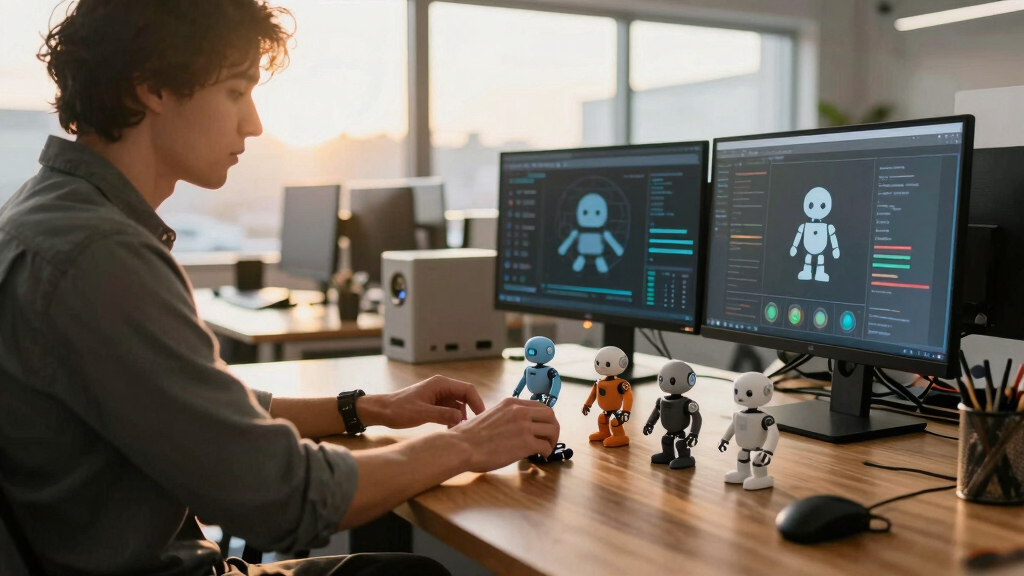
Skills package what you know; loops decide how far you delegate over time. Dynamic workflows are the third axis — within a single task, Claude writes its own harness and assembles a temporary team of subagents. Think of it as Claude drawing an org chart for one job.
The shift is from prompting a worker to commissioning a team — more output, more cost, and a manager’s judgment required. Reach for a workflow when a task is big, parallel, adversarial, or judgment-heavy — and when you can feel a single agent getting lazy, grading its own homework, or losing the plot. Bound it (token budgets, pilot first) — workflows can spawn hundreds of agents and burn far more tokens. For everything else, don’t hire five people to change a lightbulb.
Single Agents Get Oversight
The feature targets known weaknesses in long-running agent work. The source material identifies agentic laziness, self-preferential bias, and goal drift as common problems when one agent handles a large task alone. In practical terms, that can mean work stops before all items are finished, an agent grades its own output too favorably, or a project’s original constraints fade across turns.
Dynamic workflows matter because they add division of labor and independent review to agentic work. A research task can be split among several agents, a separate checker can challenge each result, and a synthesis step can merge structured findings. That could be useful for large code migrations, deep research reports, fact-checking, ticket triage, security reviews, and post-mortem analysis.
As an affiliate, we earn on qualifying purchases.
Claude Code’s Third Axis
The source material places dynamic workflows as the third part of a broader Claude Code arc. Skills package organizational knowledge, loops determine how long delegation continues over time, and dynamic workflows let Claude assemble a temporary team within a single task.
The approach is not limited to software work, according to the source material. While Claude Code is a coding product, the listed use cases include ranking large backlogs, research with citations, design or naming by rubric, and model routing. The common thread is not coding alone, but work that is large, parallel, judgment-heavy, or better checked by a separate process.
As an affiliate, we earn on qualifying purchases.
Cost And Control Questions
Several details remain developing. The source material says workflows can spawn many agents and use far more tokens, but it does not give a fixed cost range, a standard token budget, or a universal rule for when a task should be escalated from one agent to many.
It is also not clear from the supplied material how widely the feature is available across Claude Code users, which plans or environments support every pattern, or how teams will set governance for agents that read untrusted public content. The source material highlights a security pattern called quarantine, in which agents that inspect untrusted material are kept away from privileged actions, but implementation details may vary by workflow.
As an affiliate, we earn on qualifying purchases.
Teams Test Boundaries
The next step is likely practical adoption: teams will need to decide which jobs justify multi-agent orchestration, how to cap costs, and how to verify results before relying on them. The source material recommends starting with bounded pilots, using token budgets, and reserving workflows for tasks where parallel work, adversarial checking, or structured judgment improves the outcome.
Readers should watch Anthropic’s Claude Code documentation and future product notes for availability, limits, and recommended patterns. For now, the confirmed shift is clear: Claude Code can move from executing as one agent to coordinating a temporary task-specific team.
As an affiliate, we earn on qualifying purchases.
Key Questions
What did Anthropic announce for Claude Code?
Anthropic detailed dynamic workflows, a Claude Code capability that lets Claude create orchestration code and coordinate multiple subagents for a single complex task.
Is this meant for everyday coding edits?
No. The source material says dynamic workflows use more tokens and are intended for complex, high-value work, not simple changes such as fixing a typo.
What kinds of tasks could benefit?
Reported examples include large refactors, deep research, claim checking, security review, ticket ranking, and other tasks that benefit from parallel work or independent verification.
What remains unclear?
The supplied material does not specify exact cost ranges, full availability, or standard governance rules. Teams will still need to set limits for token use, agent permissions, and review standards.
Source: Thorsten Meyer AI
NFL season / tailgating Picks
team gear
As an affiliate, we earn on qualifying purchases.