

TL;DR

Get the little things that make your day delivered free with Prime
- Fast, free delivery on millions of items
- Prime Video, Amazon Music and more included
- Member-only deals all year
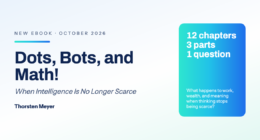
U.S. government actions in June limited access to Anthropic’s Fable 5 and OpenAI’s GPT-5.6, showing that model availability can change because of policy, not just outages. Thorsten Meyer AI’s July 1 Dispatch argues companies should use gateways, tested fallbacks and self-hosted open-weight models so one blocked API does not take down production systems.
U.S. government actions in June 2026 curtailed access to two leading AI systems, with Anthropic’s Fable 5 disabled under export controls and OpenAI’s GPT-5.6 released only to a limited group, prompting a new Thorsten Meyer AI playbook on building AI stacks that can fail over. The development matters because products standardized on a single frontier model can be disrupted by policy decisions outside their control.
According to Business Insider and The New York Post, the U.S. Department of Commerce lifted controls on Anthropic’s Fable 5 and Mythos 5 on June 30 after restrictions that had blocked access for foreign nationals. Anthropic said it would begin restoring access on July 2.
Separately, Axios and Business Insider reported that OpenAI’s GPT-5.6 launched in a limited preview at the U.S. government’s request, with partners shared with federal officials before wider release. OpenAI has said broader access is expected in the coming weeks, but no public date has been confirmed.
The Thorsten Meyer AI Dispatch argues that companies should treat model choice as a configuration decision, not a code dependency. Its recommendations include a model gateway, primary-to-fallback routing, portable evaluation tests, pinned model versions and an owned open-weight tier using systems such as Qwen3, GLM or Kimi via vLLM.
Kill-switch-proof: build so Washington can’t take your AI stack down
In June, the US government switched off the market’s most capable model — twice, in three weeks. You can’t stop the gate. You can decide whether it takes you down. The difference is entirely architectural — and buildable.
You can’t control the gate — Washington will keep deciding which frontier models ship, and both labs are pushing to make review permanent. What you control is your exposure to it. Kill-switch-proofing isn’t predicting the next directive — it’s making the next one a config change instead of an outage, a routing rule that fails over to a model no one can pull while your users notice nothing. The question stops being “will they take my model away?” and becomes the boring one you can answer: “which one do I route to next?”
Model Access Becomes Stack Risk
For developers and AI buyers, the message is that frontier model access can now depend on policy review as much as uptime. A product hard-coded to one model may face degraded service when a regulator, lab or cloud provider changes access rules.
The Dispatch also frames resilience as a cost question. It says right-sized models, quantization and self-hosted steady load can lower token costs while creating backup capacity. Those figures are point-in-time estimates, so readers should treat them as workload-dependent rather than guaranteed savings.
open-source AI model hosting platform
As an affiliate, we earn on qualifying purchases.
As an affiliate, we earn on qualifying purchases.
June Controls Set The Pattern
The Anthropic action centered on export-control concerns over Fable 5 and Mythos 5, with reports saying the order barred access by foreign nationals, including some employees and enterprise users. That matters for mixed-nationality teams because U.S. export rules can treat access by a non-U.S. person as a deemed export.
The OpenAI case was different: GPT-5.6 was not pulled from general availability because broad public access had not begun. Instead, its preview started behind a limited partner list shared with the government while officials work on testing and release processes for frontier systems.
“You can’t stop the gate. You can decide whether it takes you down.”
— Thorsten Meyer AI Dispatch
As an affiliate, we earn on qualifying purchases.
Resilience Claims Need Testing
It is not yet clear how long GPT-5.6 will remain limited, how broadly Fable 5 will return after restoration begins, or whether similar reviews will apply to future frontier models. It is also unclear whether self-hosted open-weight systems can match restricted frontier models on each enterprise task.
The Dispatch’s architecture advice is a mitigation strategy, not a proven shield against every policy action. Gateways can fail, open-weight licenses can change, and on-premise operation adds security, hardware and staffing costs.
As an affiliate, we earn on qualifying purchases.
Teams Face Failover Drills
The next marker is Anthropic’s restoration process, expected to begin July 2, 2026, and OpenAI’s promised broader GPT-5.6 availability in the coming weeks. Companies dependent on either model will be watching whether access returns cleanly and whether new approval steps attach to enterprise use.
For AI buyers, the practical next step is to review model inventories, test gateway routing, benchmark fallback outputs and write contingency terms into vendor contracts. The question is no longer only which model performs best, but which service can keep running when the primary model is unavailable.
As an affiliate, we earn on qualifying purchases.
Key Questions
What changed in June 2026?
Anthropic’s Fable 5 was restricted under U.S. export controls, while OpenAI’s GPT-5.6 began with a limited preview tied to a government request. Together, the cases showed that AI model access can be affected by policy decisions as well as technical outages.
Does this mean Washington can shut off any AI model?
The confirmed cases involve specific frontier models and specific release decisions. The broader claim from the playbook is that companies should plan for government-gated access, but the scope of future controls remains unsettled.
How does a model gateway help?
A model gateway puts one endpoint between an application and multiple providers. If tested in advance, it can let teams change from a primary model to a fallback through routing and configuration rather than rewriting production code.
Are open-weight models fully protected from policy risk?
No. A self-hosted open-weight model is harder for a provider to switch off because the company runs it directly, but it still depends on licenses, hardware, staff, security controls and local law.
Source: Thorsten Meyer AI
Fall Picks
fall essentials
As an affiliate, we earn on qualifying purchases.