


Journaling as art therapy lets you creatively express your emotions and navigate personal growth. By blending writing and visuals, you can enhance self-awareness and explore feelings more deeply. Using prompts, you discover insights and make journaling an engaging adventure. Regular practice builds emotional resilience and promotes well-being, clarifying struggles and triumphs in your life. You’ll find that this unique approach can be a powerful tool for healing and transformation. There’s so much more to uncover!
Key Takeaways
- Journaling combines writing and visual elements, promoting emotional exploration and self-discovery as a form of art therapy.
- It provides a liberating outlet for emotional release, helping individuals confront and articulate their feelings.
- Visual storytelling through doodles and sketches deepens emotional expression, enhancing the journaling experience.
- Creative prompts engage users, turning journaling into an interactive adventure that fosters personal growth and healing.
- Regular journaling practice builds emotional resilience and promotes overall well-being through consistent self-reflection and insight discovery.
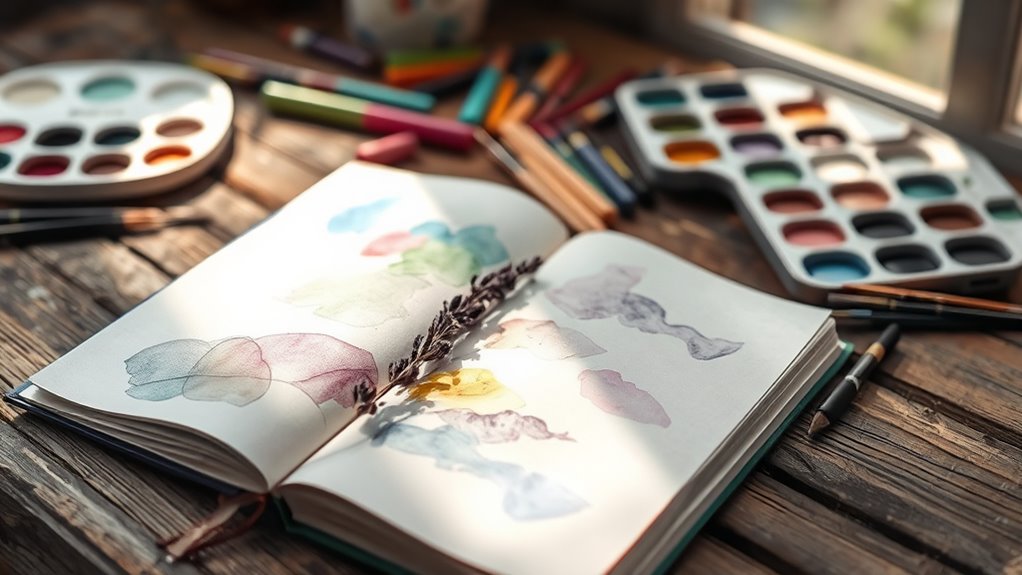
While many people think of art therapy as painting or sculpting, journaling can be just as powerful in expressing emotions and processing experiences. You might be surprised to learn how writing can serve as a form of visual storytelling, allowing you to explore your feelings and thoughts in a creative way. When you put pen to paper, you create a unique narrative that not only captures your experiences but also helps you gain insight into your emotional landscape.
Journaling is a powerful form of visual storytelling that helps you express emotions and gain insight into your experiences.
As you write, you’re not just recording events; you’re actively engaging with your emotions. This form of emotional expression can be incredibly liberating. You might find that jotting down your thoughts helps you confront feelings you’ve been avoiding. By articulating what’s inside, you create a tangible connection between your emotions and your words. This connection can lead to revelations about yourself that you might not have uncovered through traditional forms of therapy or even casual conversation.
In your journaling practice, consider incorporating visual elements. Doodles, sketches, or even collages can enrich your written narrative and deepen your emotional expression. By blending words with images, you enhance your storytelling, transforming your journal into a more dynamic space for self-exploration. You’ll discover that visual storytelling isn’t limited to art supplies; it can thrive in the pages of your journal, where creativity knows no bounds.
You may also want to experiment with different prompts to guide your journaling sessions. Questions like “What colors represent my current mood?” or “How would I illustrate my feelings today?” can spark a deeper level of engagement. These prompts encourage you to think outside the box, making your journaling not just a task but a creative adventure that invites healing and growth. Engaging with your emotions through journaling can lead to personal development that enhances your overall well-being.
As you write regularly, you may notice a shift in your emotional state. Journaling can serve as a mirror, reflecting your internal struggles and triumphs. You’ll likely find that the act of writing brings clarity, helping you to process complex emotions and experiences more effectively. Over time, this practice can build resilience, allowing you to approach challenges with a newfound perspective.
Ultimately, journaling isn’t just about recording daily events; it’s a powerful tool for emotional expression and personal growth. So grab your journal, and let your thoughts flow freely. You might just be amazed at what you uncover along the way.

102Pcs Vision Board Stickers for Women, Motivational Stickers Inspirational Faith Sticker Pack, Spiritual Goal Setting Affirmation Decal for Journaling Planner Use Vision Board Supplies Kits
Inspire Your Healing Path – This set of 102 premium stickers features uplifting affirmations, serene yoga & meditation…
As an affiliate, we earn on qualifying purchases.
As an affiliate, we earn on qualifying purchases.
Frequently Asked Questions
What Supplies Do I Need for Art Journaling?
For art journaling, you’ll need a sturdy journal, mixed media paper, and a variety of art supplies. Grab some paints, markers, and colored pencils in your favorite color palettes. Don’t forget glue, scissors, and collage materials like magazine clippings or fabric scraps. You might also want stencils, washi tape, and stamps to enhance your pages. With these supplies, you can unlock your creativity and express yourself freely in your journal!
Can Children Benefit From Art Journaling?
Absolutely, children can benefit from art journaling. For instance, imagine a shy child named Mia, who struggles to express her feelings. Through art journaling, she discovers a safe space to explore emotional expression, using colors and shapes to convey her thoughts. This not only nurtures her creativity but also supports her cognitive development, enhancing problem-solving and critical thinking skills as she articulates her emotions visually. It’s a powerful tool for growth and healing.
How Do I Overcome Writer’s Block in My Journal?
To overcome writer’s block in your journal, try incorporating mindfulness techniques. Start by taking a few deep breaths to center yourself, then write without judgment. Allow your thoughts to flow freely, focusing on emotional expression rather than perfection. If you’re still stuck, consider doodling or using prompts to spark creativity. Remember, the goal isn’t to produce a masterpiece but to connect with your feelings and let your thoughts unfold naturally.
Is There a Specific Format for Art Journaling?
There’s no strict format for art journaling, which is part of its charm! In fact, studies show that 70% of people find creativity in mixed media techniques enhances their visual storytelling. You can start with a blank page, adding layers of paint, collage, or sketches. Don’t worry about perfection; let your emotions guide you. Explore different materials and styles, and most importantly, have fun expressing yourself freely in your journal!
How Often Should I Practice Art Journaling?
You should practice art journaling regularly for ideal benefits. Aim for at least a few times a week, but it’s important to find a frequency that feels right for you. Consistency is key, so set aside dedicated time—whether it’s daily or every few days—to immerse yourself in the process. Listen to your feelings and adjust the timing as needed to keep the practice enjoyable and fulfilling, rather than a chore.

One Color a Day Sketchbook: A Daily Art Practice and Visual Diary
As an affiliate, we earn on qualifying purchases.
As an affiliate, we earn on qualifying purchases.
Conclusion
So, if you think scribbling in a notebook is just child’s play, think again! Who knew that doodling your deepest feelings could be the secret recipe for emotional healing? Forget therapy sessions; just grab a crayon and release your inner Picasso. After all, what could be more effective than splattering paint and pouring your heart out on paper? You might just find that turning your angst into art is the best way to avoid adulting—at least for a little while!

Stuff I'd Only Tell God: A Guided Journal of Courageous Honesty, Obsessive Truth-Telling, and Beautifully Ruthless Self-Discovery (Creative Self-Care for Women, Men + Teens with Prompts, Lists + More)
As an affiliate, we earn on qualifying purchases.
As an affiliate, we earn on qualifying purchases.

Art Therapy Journal for Adults
As an affiliate, we earn on qualifying purchases.
As an affiliate, we earn on qualifying purchases.