TL;DR
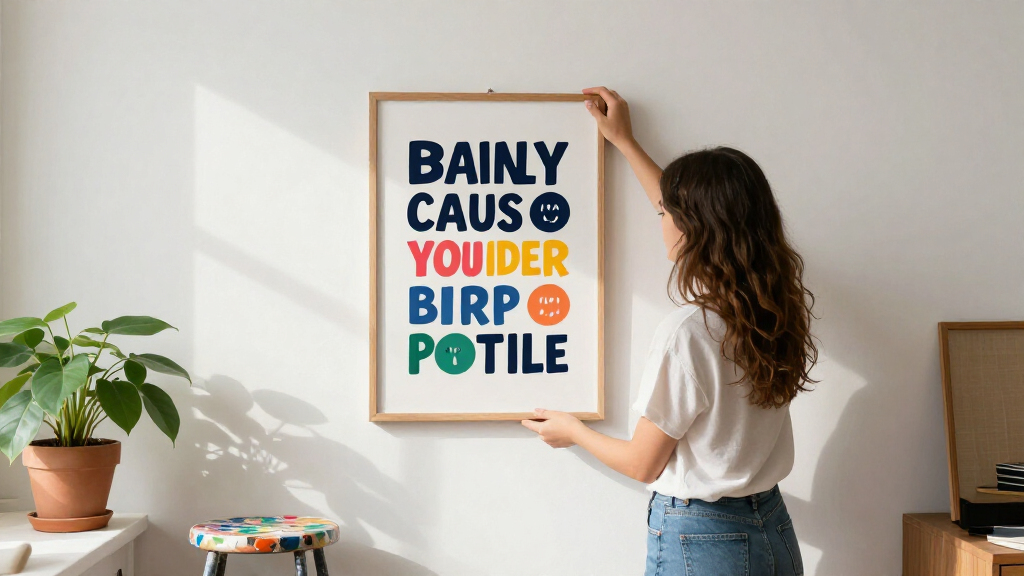
Motivational quote wall art pairs encouraging words with visual design to add personality and a reminder that suits your space. Choose a phrase that means something to you, test its size and readability with a paper mock-up, and pick a material suited to the room. A print can prompt reflection, but it cannot guarantee a change in behavior.
A quote can sound wise on your phone and feel like wallpaper when it’s printed three feet wide. Motivational quote wall art works best when the words, design, and room feel like they belong together.

Get the little things that make your day delivered free with Prime
- Fast, free delivery on millions of items
- Prime Video, Amazon Music and more included
- Member-only deals all year
This guide will help you choose a phrase that fits your life, make sure it’s readable from where you’ll see it, and compare prints, canvas, framed posters, and decals. You’ll also learn how to check a quote’s attribution and test a layout before putting holes in the wall.
The right piece does not need to shout. A quiet reminder above your desk or a bright phrase near the gym mat can make a room feel more like yours. Think of it as a nudge you choose—not a promise that a poster will change your day.
Choose wording you would actually say to yourself, and match its tone to the room and the people who use it.
Use short text, clear contrast, and a readable typeface when you want to see the words from across a room.
Test the artwork’s scale with a paper template in the room’s usual lighting before you hang it.
Pick prints, frames, canvas, or decals based on the wall, humidity, sunlight, and care needs.
Check both attribution and local copyright rules before crediting or selling art with a famous quote.
Choose words that sound like you, not a poster aisle
Motivational quote wall art feels personal when its words connect to your values, goals, or experience. A familiar slogan can work, but a phrase you would actually say to yourself is more likely to feel at home on your wall.
Start with the room’s mood. A bedroom might suit “Rest is part of the work,” while a home gym may call for “One more steady rep.” In a shared office, a line about patience or focus may feel more welcoming than a command to hustle. The best message depends on who uses the space and what they need from it.
Imagine Maya, who is setting up a desk beside a sunny window. She likes the idea of “dream big,” but the phrase feels generic to her. She chooses “Make room for the next draft” instead, a reminder tied to the writing project she has been putting off. The words feel less like an order and more like a note from someone who knows her.
Try writing five short phrases in your own voice, then read them aloud. If one sounds stiff or would embarrass you when a friend visits, cross it out. Custom wording can give a piece more personality, whether you print it yourself or order a design built around a name, date, or shared family phrase.
- For an office: choose focus, patience, or a small next step.
- For a bedroom: try rest, resilience, or a gentle reminder.
- For a gym: choose a short, energetic line you find encouraging.
Popular right now

KitchenAid Artisan 5-Qt Tilt-Head Stand Mixer, KSM150PS, Almond Cream

Ninja Flip Toaster Oven and Air Fryer SP151

Dyson V15 Detect Cordless Vacuum
As an affiliate, we earn on qualifying purchases.
Match the design to the room so the words feel at home
Typography, color, spacing, and scale determine whether quote art blends into a room or takes it over. A phrase does not live in isolation: it shares the wall with furniture, light, paint, and everything else you see each day.
Look at the room’s existing palette before choosing a design. A black-and-cream print can sit quietly above a pale wood desk, while large coral letters might bring energy to a workout corner. Neither choice is automatically better. A bright piece can enliven a muted room, but a very busy design may compete with a patterned rug or bookshelf. That competition matters because the eye has limited attention: if several elements demand it at once, the quote may be harder to notice and the room can feel unsettled. A restrained design lets the words recede into the room; a bolder one makes them a focal point, which is useful only if you want that emphasis.
Think about type as well as color. A clean, sturdy font can make a short phrase readable from across a room; fine script may suit a close-up spot beside a mirror, but it can disappear in low light. Short text is generally easier to read at a distance than a long passage. Imagine a hallway with a narrow wall: “Keep going” can read in a glance, while four lines of small text may turn the walk past it into squinting. High contrast helps the letters stand apart from the background, though stark contrast can feel harsher than a softer palette. The choice is a tradeoff between quick legibility and the gentler look you may want in a restful room.
Current design options range from minimalist typography and neutral palettes to oversized lettering, mixed-media work, and personalized pieces. Digital downloads and print-on-demand services make it easier to try different sizes and formats. These are broad design trends, though; their popularity varies by retailer, region, and audience. Treat them as options, not instructions: a popular style can date quickly, while a simpler design may keep feeling right as the room changes.
A useful test: If you have to step close to read the message, simplify the wording, increase the type size, or move the art.
Use a paper mock-up to find the right size and spot
A paper template helps you judge scale and placement before you hang your art. The wall may look enormous when it is empty, but a small print above a sofa can appear like a postage stamp once you step back.
Measure the space and cut paper to the artwork’s planned dimensions. Tape it where you think the piece should go, then check it from the doorway, your usual chair, and any spot where you’ll often see it. Look at it in both daylight and the room’s evening lighting. A glossy window reflection or a lamp’s shadow can make delicate lettering harder to read.
For example, if you’re choosing a print for a desk, sit down in your chair rather than judging it only while standing. A message positioned too high may vanish above your monitor; one placed directly in your eye line could distract you during video calls. For a family room, ask someone who regularly uses the space to check the mock-up too.
Give the piece room to breathe. A tightly packed wall gallery may suit a collection of small prints, but a single large phrase needs clear space around its edges. If you want to place the art over furniture, use the paper template to see how its width relates to the object below. You can shift it a few inches now without repairing a misplaced nail hole later.
- Measure the available wall and mark the planned artwork size on paper.
- Tape up the template and view it from the room’s normal entry and seating spots.
- Check readability in daylight and after dark, then adjust the position or dimensions.
Compare materials before you order
Prints, canvas, framed posters, and decals have different looks, costs, and care needs. Choose the format for the wall and room, not simply because one option is the most expensive.
A paper print can offer a crisp, lightweight look and suit a frame you already own. A framed poster arrives ready to hang and adds a finished border, though its frame may make the piece heavier. Canvas brings texture and depth, which can soften a plain room. A wall decal skips the frame and can work for a short phrase in a study nook, but it may not suit every paint finish or wall surface. These differences affect both the appearance and the effort involved: a frame gives the print protection and a defined edge, but adds weight and can reflect light; an unframed print is easier to swap, but may need separate framing to look finished. Canvas avoids glass glare, while its texture can make thin lettering less crisp. A decal keeps the wall visually light, but removal can be difficult if the paint or surface is incompatible.
Consider the conditions where the art will live. Steam, splashes, direct sun, and frequent bumps can wear some materials faster than others. A paper print in a humid bathroom may need protection and careful placement; a piece near a sunny kitchen window may fade over time. Check the maker’s material and care details, and use a format suited to that location. Protection often involves a compromise: glazing can shield paper from dust and handling, but may introduce glare; placing art farther from a window can reduce fading, though it may also make the piece less visible.
Picture two options for a narrow home office: a large canvas with a calm phrase adds a tactile focal point, while a small framed print keeps the wall light and leaves space for notes. The better choice depends on the room’s scale, your existing décor, and what you want to maintain. Price alone does not tell you whether a piece will suit the space. Consider the total cost too: a low-cost print may need a frame, while a ready-to-hang piece includes one but may be harder to move or replace.
| Format | Works well when | Check before buying |
|---|---|---|
| You want a lightweight piece or already own a frame | Paper finish, frame size, and sunlight | |
| Framed poster | You want a ready-to-hang finish | Frame weight, glass glare, and hanging hardware |
| Canvas | You want visible texture and depth | Edge finish, size, and room humidity |
| Wall decal | You want lettering directly on the wall | Paint compatibility and removal instructions |
A quote’s attribution should be checked before you print a famous name beneath it. Familiar sayings often circulate online with uncertain or incorrect credits, and repeating a popular attribution does not make it accurate.
Search for the wording in a reliable edition of the author’s work, a reputable archive, or a source that provides a clear citation. Watch for small changes in wording: a paraphrase may carry the same idea but should not appear in quotation marks as an exact sentence. If you cannot trace a saying to a dependable source, you can display the words without naming an author.
Imagine you find a quote credited to a well-known poet on three online shops. Before ordering a custom print, look for the line in the poet’s collected writing or on a trusted literary archive. If you find only repeated social posts, the source remains uncertain. You can still choose the phrase for its meaning, but skip the unverified credit.
Copyright is a separate question from attribution. Rules vary by country, and a quote’s age, length, and use can affect whether commercial reproduction is allowed. A line that appears widely online is not automatically free for you to sell on a poster. If you plan to sell quote art, check the law and licensing rules that apply where you operate; a short original phrase is often a simpler route.
- Verify exact wording in a reliable source before adding quotation marks.
- Leave out uncertain credits rather than presenting a guess as fact.
- Check local copyright rules before selling art that uses someone else’s words.
Treat the message as a reminder, not a guaranteed fix
Motivational wall art can serve as a personal reminder or help set a room’s mood, but a poster alone cannot guarantee a change in behavior. Its effect depends on what the words mean to you and how they fit into your daily life.
A short line beside your calendar may prompt you to pause before opening email. A phrase above a yoga mat might bring to mind the routine you wanted to restart. These small moments can matter to an individual, but they are not proof that a particular quote works for everyone. A phrase that gives one person a lift may feel generic, pressuring, or distracting to someone else.
Consider Sam, who hangs “Start where you are” beside a half-finished craft table. The line reminds Sam that the project does not need a perfect afternoon or a spotless room. It does not tidy the table or create free time; Sam still decides whether to sit down and work. The art acts like a friendly tap on the shoulder, not a substitute for the next action.
Keep the tone respectful of different needs and beliefs. “You’ve got this” may feel kind on an ordinary Monday, while a softer phrase about patience may fit better during a difficult week. Motivational does not have to mean loud or relentlessly upbeat. If a line makes you feel worse or adds pressure, you can replace it; the wall belongs to you.
Use a quote as a cue for reflection, and pair it with a practical next step you control.
Frequently Asked Questions
What makes a motivational quote good for an office, bedroom, or gym?
Choose a phrase that fits both the room and its users. A short line about focus may suit an office, a gentle reminder about rest may fit a bedroom, and an energetic phrase may work near a gym mat. Your own reaction matters more than whether the saying is popular.
How do I choose a quote that does not feel clichéd?
Write a few phrases in your own words and say them aloud. A personal line tied to a goal, value, or shared memory often feels more distinctive than a familiar slogan. For example, “Make room for the next draft” may mean more to a writer than a general call to dream big.
What size should quote wall art be?
Measure the wall and the furniture nearby, then test the artwork’s dimensions with a paper template. View the template from your normal seat or the doorway, and check whether the text is readable without leaning in. The right size depends on the wall, letter spacing, and viewing distance.
Does motivational wall art actually help with motivation?
It may serve as a personal reminder or help set a mood, but there is no guarantee that a poster will change your behavior. You might put a phrase beside a calendar as a cue to plan your next task. If the words feel pressuring or distracting, choose a different message or take the piece down.
Can I legally print or sell artwork featuring a famous quote?
Copyright rules vary by country, and a quote’s age, length, and use can affect whether commercial reproduction is permitted. A quote’s popularity online does not prove that it is free to use. Check the rules and any relevant license before selling the design, and avoid unverified author credits.
Conclusion
Choose a phrase that sounds like you, check that you can read it from where you’ll see it, and test its size with paper before you hang it. A small, well-placed reminder can give a familiar room a more personal feel.
Let the words meet you where you are: not as a promise painted on the wall, but as a gentle light left on for the next step.