


Minimalist parenting helps you simplify your journey by focusing on meaningful experiences and deeper connections with your children. By reducing distractions and clutter, you create a nurturing environment that fosters emotional growth and stability. You can set digital boundaries to prioritize face-to-face interactions, encouraging open communication within your family. By choosing quality over quantity, you teach your children to appreciate what they have and build cherished memories. Discover how these principles can transform your parenting approach.
Key Takeaways
- Embrace simplicity by reducing clutter and distractions, allowing for a more focused parenting journey that prioritizes meaningful experiences.
- Establish family traditions that foster connection, stability, and emotional growth, creating cherished memories for children.
- Set clear digital boundaries to limit screen time, promoting face-to-face interactions and deeper family connections.
- Focus on quality over quantity in toys and activities, helping children appreciate what they have and encouraging responsibility.
- Engage in intentional parenting by making deliberate choices that nurture emotional and social growth in children, emphasizing meaningful connections.
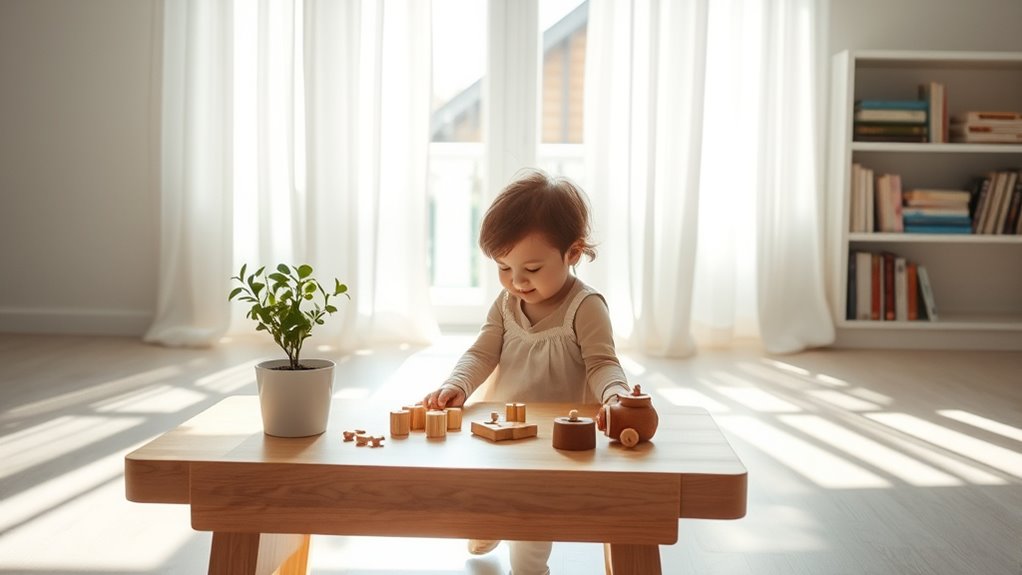
What if you could simplify your parenting journey while still nurturing your child’s growth? Embracing minimalist parenting isn’t just about decluttering your home; it’s about fostering a life filled with meaningful experiences. By focusing on what’s truly important, you can create a nurturing environment that encourages your child to flourish. The key lies in establishing family traditions and setting digital boundaries that promote quality time together.
Family traditions play a crucial role in minimalist parenting. They help you build a sense of identity and connection within your family unit. Think about what rituals you cherish and how they can become part of your family’s fabric. Whether it’s a weekly game night, cooking together on Sundays, or seasonal outings, these traditions give your child a sense of stability and belonging. Plus, they encourage open communication, allowing your children to express their thoughts and feelings in a safe space. As you simplify your parenting approach, these traditions will become cherished memories for your child, reinforcing their emotional development.
On the other hand, digital boundaries are vital in today’s tech-driven world. Setting limits on screen time can help you and your family prioritize face-to-face interactions over virtual ones. Consider implementing tech-free zones or times in your home, like during meals or family gatherings. This encourages deeper connections and guarantees that your child learns the value of real-life interactions. You’ll find that by reducing distractions, you create more opportunities for meaningful conversations, fostering a stronger bond between you and your child.
Minimalist parenting also allows you to focus on quality over quantity in every aspect of your life. Instead of overwhelming your child with numerous toys or activities, select a few that spark their interest. By curating their experiences, you can help them develop a sense of independence and responsibility. Your child will learn to appreciate what they have, rather than constantly seeking more. Additionally, night riding equipment can serve as a reminder to prioritize safety and preparedness in your family’s outdoor adventures.
Ultimately, minimalist parenting is about being intentional with your time and resources. By prioritizing family traditions and enforcing digital boundaries, you create a rich environment for your child to thrive. Simplifying your parenting approach doesn’t mean sacrificing your child’s development; instead, it allows you to nurture their growth in a purposeful way. As you set out on this journey, you’ll find joy in the simplicity and connection it brings to your family.
Top picks for "minimalist parent rais"
Open Amazon search results for this keyword.
As an affiliate, we earn on qualifying purchases.
Frequently Asked Questions
How Do I Involve My Partner in Minimalist Parenting Practices?
To involve your partner in minimalist parenting practices, start by discussing your shared values about simplicity and intentional living. Encourage open conversations about what’s important to both of you regarding your children’s upbringing. Make decisions together about decluttering toys and organizing activities, fostering partner collaboration. Set goals as a team, and regularly check in on your progress. This way, you’ll create a unified approach that reflects both your beliefs and parenting styles.
What Are Some Common Challenges of Minimalist Parenting?
You’ll often find yourself steering a sea of challenges when embracing minimalist parenting. Picture a home filled with clutter, where your child’s overeating habits emerge from boredom. Screen time management can become a daily battle, as those glowing devices pull them in like moths to a flame. You’ll need to combat societal pressures and resist the urge to accumulate more, all while fostering simplicity and connection in your family life.
How Can I Declutter My Child’s Toys Effectively?
To declutter your child’s toys effectively, start by implementing a toy rotation system. Take inventory of all the toys and separate them into categories. Keep a few favorites accessible while storing the rest out of sight. Every few weeks, swap toys to keep things fresh. For toys your child no longer plays with, consider donation strategies. Involve your child in the process to teach them about sharing and letting go of unused items.
Are There Specific Resources for Minimalist Parenting?
You know how a cluttered desk can drown your creativity? Similarly, a cluttered parenting approach can stifle your joy. For minimalist parenting, check out digital resources like blogs and podcasts that offer practical tips. You’ll find community groups on social media where like-minded parents share their experiences and advice. Connecting with others can inspire you to embrace simplicity and purpose in your family life, making the journey feel less overwhelming and more fulfilling.
How Do I Maintain a Minimalist Lifestyle as Kids Grow?
To maintain a minimalist lifestyle as your kids grow, focus on fostering child independence and establishing minimalist routines. Encourage your children to take responsibility for their belongings, which helps them learn organization and self-sufficiency. Simplify daily tasks by creating consistent schedules for chores and activities. Regularly declutter together, making it a fun family activity. Remember, it’s about quality over quantity, so prioritize experiences and meaningful interactions over material possessions.
Conclusion
You might think that minimalist parenting means depriving your kids of experiences, but it’s quite the opposite. By focusing on what truly matters, you’re giving them the gift of intentionality and deeper connections. When you simplify your family life, you create space for meaningful moments, allowing your children to flourish in an environment rich with love and understanding. Embrace the beauty of less, and watch as your family thrives in ways you never imagined.