
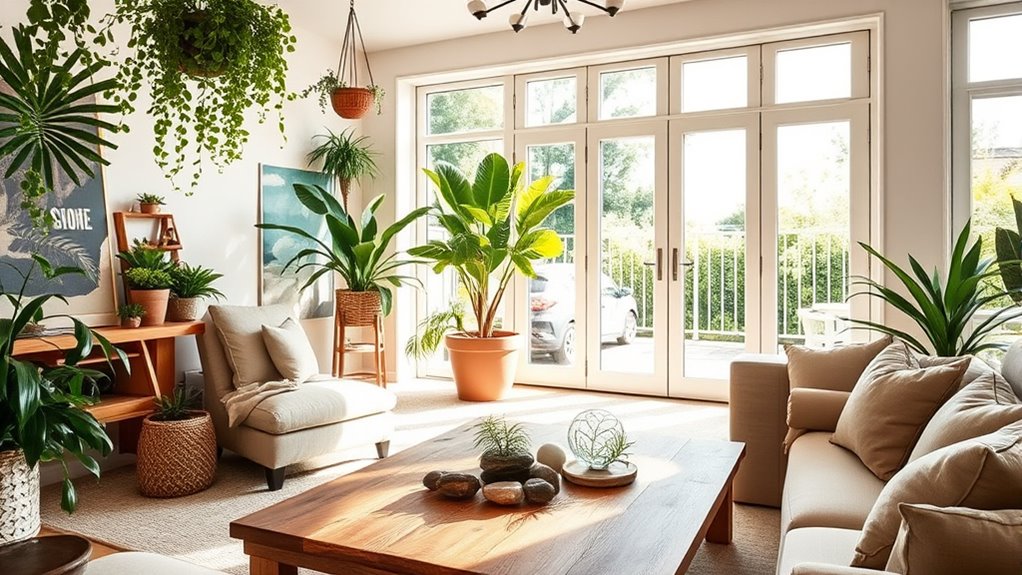

Biophilic design at home lets you connect with nature, creating a tranquil sanctuary that boosts your well-being. By incorporating indoor plants, optimizing natural light, and using natural materials, you can enhance your space and elevate your mood. Imagine adding soothing water features or arranging furniture to capture sunlight. Each of these elements not only beautifies your home but also makes it a healthier environment. Discover how simple changes can transform your living space into a rejuvenating haven.
Key Takeaways
- Incorporate indoor plants to purify air and add vibrancy, tailored to your space’s lighting conditions.
- Maximize natural light by evaluating window placements and using sheer curtains for privacy without sacrificing brightness.
- Utilize natural materials like wood and stone to create a seamless transition between indoor and outdoor environments.
- Add small water features, such as tabletop fountains, to introduce soothing sounds and enhance tranquility in your home.
- Gradually integrate these elements to transform your living space into a rejuvenating sanctuary that promotes well-being.

As you seek to create a more inviting and harmonious living space, biophilic design offers an invigorating approach that connects you with nature. This design philosophy emphasizes the integration of natural elements into your home, enhancing your overall well-being. By incorporating indoor plants and maximizing natural lighting, you can transform your space into a sanctuary that promotes relaxation and rejuvenation.
Indoor plants are a fantastic way to introduce life and vibrancy into your home. They not only purify the air but also add a splash of color and texture to your environment. Choose a variety of plants that suit your style and the lighting conditions of your rooms. For instance, succulents or snake plants are excellent options for low-light areas, while ferns and peace lilies thrive in brighter spaces. By strategically placing these plants around your home, you create a visual connection to the outdoors, fostering a sense of calm and tranquility.
Indoor plants bring life and color to your home, purifying the air and creating a tranquil connection to nature.
Natural lighting plays a vital role in biophilic design. It’s no secret that sunlight boosts your mood and energy levels, so maximizing it is key. Start by evaluating your windows and opening them up as much as possible. If privacy is a concern, consider sheer curtains that allow light to filter through while maintaining your space’s openness. You might also want to arrange your furniture to take full advantage of the sunlight streaming in. Positioning a cozy reading nook near a window creates a perfect spot for relaxation while embracing the warmth of natural light.
Incorporating biophilic design elements doesn’t just stop at plants and light; you can also bring in natural materials like wood, stone, and water features. A wooden coffee table or stone accents can seamlessly blend the outdoors with your indoor space. Small water features, such as a tabletop fountain, can add soothing sounds that evoke a sense of nature. These elements together create a more cohesive and harmonious environment. Additionally, consider using high contrast ratios in your decor to enhance visual depth and create a more dynamic atmosphere.
Ultimately, biophilic design is about creating a space that nurtures your well-being. By thoughtfully incorporating indoor plants and maximizing natural lighting, you’ll not only enhance your home’s aesthetic but also improve your mental and physical health. Make these changes gradually, and you’ll soon feel the invigorating influence of nature in your everyday life, transforming your home into a true haven.
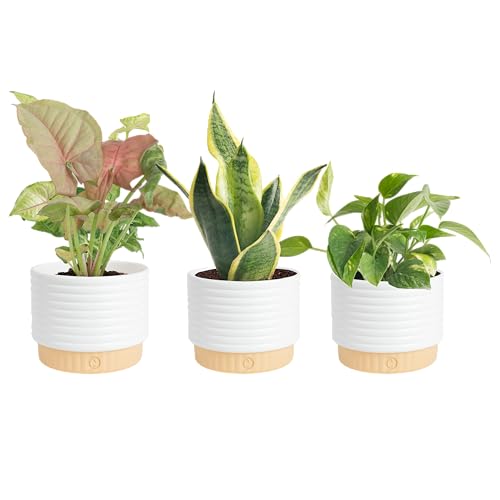
Costa Farms Live Indoor House Plants, Live Indoor Plant, Easy Care
- Decor-Ready Indoor Plants: 3-pack for gifting or decorating
- Varieties Include: Peace Lily, Snake Plant, Fern, Pothos
- Beginner-Friendly Plants: Easy to grow and maintain
As an affiliate, we earn on qualifying purchases.
As an affiliate, we earn on qualifying purchases.
Frequently Asked Questions
What Materials Are Best for Biophilic Design in Home Decor?
For biophilic design in home decor, you’ll want to focus on natural textures and sustainable materials. Consider using wood, bamboo, and stone to create a warm, inviting atmosphere. Textiles made from organic cotton or linen can add comfort while maintaining an eco-friendly approach. Incorporating plants not only enhances aesthetics but also purifies the air. Remember, the goal is to connect with nature and create a calming space that promotes wellness.
How Can I Incorporate Biophilic Design on a Budget?
You can incorporate biophilic design on a budget by focusing on DIY projects and budget-friendly plants. Start by creating your own planters using recycled materials or nature-inspired decor. Choose low-maintenance plants like snake plants or pothos, which are often inexpensive and enhance indoor air quality. Adding natural textures with wood accents or stone can also elevate your space without breaking the bank. Get creative and enjoy the process of bringing nature indoors!
Are There Specific Plants Recommended for Indoor Biophilic Spaces?
You’ll want to fill your space with plants that practically scream “fresh air!” Snake plants and peace lilies are top contenders for improving indoor air quality. Position them strategically near windows to soak up sunlight, and watch your space transform! Spider plants and pothos are also fantastic choices, thriving in low light. With the right plant placement strategies, you’ll create a lush, inviting atmosphere that feels like a gust of fresh air every day!
How Does Biophilic Design Impact Mental Health?
Biophilic design profoundly impacts your mental health by promoting stress reduction and cognitive enhancement. When you incorporate natural elements into your space, you’re likely to feel more relaxed and focused. Studies show that being around plants and natural light can lower cortisol levels, reducing stress. Additionally, exposure to nature can boost your creativity and problem-solving skills, making it easier for you to think clearly and manage daily challenges effectively.
Can Biophilic Design Be Implemented in Small Apartments?
Absolutely, you can implement biophilic design in small apartments! You might think it’s tough with limited space, but there are plenty of small space solutions. Consider using budget-friendly greenery like potted plants, vertical gardens, or hanging planters. These options not only save space but also create a calming atmosphere. By incorporating natural elements, you’ll enhance your living area and promote a sense of well-being, even in the coziest of homes.

Homedics Tabletop Water Fountain, Home Décor Soothing Sound Machine
- Decorative Zen Tabletop Fountain: Adds calming ambiance to any space
- Automatic Pump & On/Off Switch: Easy to operate and maintain
- Tranquil Water Sound: Creates soothing spring-like sounds
As an affiliate, we earn on qualifying purchases.
As an affiliate, we earn on qualifying purchases.
Conclusion
By embracing biophilic design at home, you’re not just decorating; you’re weaving nature into the fabric of your daily life. Imagine your space blossoming with greenery, sunlight streaming in like an artist’s brush painting warmth and comfort. As you fill your home with natural elements, you’ll invite tranquility and wellness, transforming your surroundings into a haven. So go ahead, let nature’s beauty whisper to your soul and nurture your well-being right where you are.

LAMIT Cream Ivory Linen Semi Sheer Curtains 84 inch Length for Bedroom
- Package Includes: 2 ivory linen curtains, 52×84 inches each
- Material Composition: 20% Linen, 80% Polyester
- Design Style: Linen textured, natural look
As an affiliate, we earn on qualifying purchases.
As an affiliate, we earn on qualifying purchases.

Bring the Outside In: Biophilic design for a naturally beautiful home
As an affiliate, we earn on qualifying purchases.
As an affiliate, we earn on qualifying purchases.