


The best hearing aids for hearing loss depend on the kind of support you need, how comfortable you are with app-based adjustments, and whether easy charging matters most. My best overall pick is the ELEHEAR Beyond 2 Pro, which stands out among this lineup for its advanced feature set; the EarCentric EasyCharge is a strong choice for straightforward behind-the-ear wear, while the Audien Atom X is worth a look if you want a touchscreen charging case. The main tradeoff is between compact in-ear designs and easier-to-handle behind-the-ear styles, with controls and speech support varying across models. These over-the-counter products are not a substitute for a hearing evaluation or prescription devices when those are needed. Continue reading for the full breakdown and help matching a device to your hearing and daily routine.

Get the little things that make your day delivered free with Prime
- Fast, free delivery on millions of items
- Prime Video, Amazon Music and more included
- Member-only deals all year
Complete the kit


Key Takeaways
- ELEHEAR Beyond 2 Pro is the leading feature-focused option in this group, while buyers who value simpler handling may prefer the EarCentric EasyCharge behind-the-ear design.
- The lineup splits between discreet in-ear models such as Audien Atom One and Flaygo options, and behind-the-ear designs that can be easier to place, remove, and manage.
- Several products highlight noise reduction, but that feature alone does not confirm how well a device will handle speech in a particular setting; fit, adjustment options, and hearing profile matter too.
- Rechargeable cases and straightforward controls appear across many picks, so buyers should compare how each device is adjusted and charged rather than treating rechargeability as a differentiator by itself.
- Products described as amplifiers or earbuds should not automatically be treated as equivalent to OTC hearing aids; check the product’s intended use and consult a hearing professional if your needs are unclear.
| Rechargeable Hearing Aids with Noise Reduction and 5-Level Volume Control |  | Best for Battery Flexibility | Technology: 16-channel noise reduction and RIC | Volume levels: 5 | Sound amplification: Up to 40 dB ± 5 dB | VIEW LATEST PRICE | See Our Full Breakdown |
| Oricle Hearing Aids for Seniors – Advanced Noise Cancellation, Easy Volume Control, Portable Charging Case |  | Best for Long Single-Charge Use | Fit: In-ear | Controls: Button control | Volume settings: 5 sound levels | VIEW LATEST PRICE | See Our Full Breakdown |
| Rechargeable In-Ear Hearing Amplifier with Noise Cancellation | 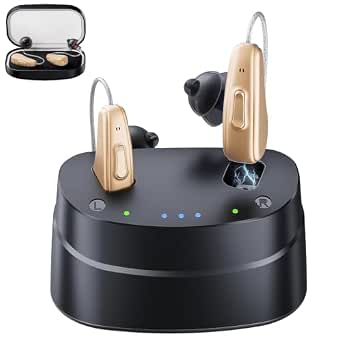 | Best for a Simple, Familiar Fit | Brand and model: nvdskn M2219 | Fit: In-ear | Controls: Button control; 5 volume levels with memory | VIEW LATEST PRICE | See Our Full Breakdown |
| Qnmittry JH-A260 Rechargeable Hearing Amplifiers with Charging Case, Blue and Red |  | Best for Automatic Case Handling | Brand and model: Qnmittry JH-A260 | Fit: In-ear | Controls: Button control; 5 volume levels | VIEW LATEST PRICE | See Our Full Breakdown |
| ELEHEAR Beyond 2 Pro OTC Hearing Aids |  | Best for Bluetooth and App Features | Fit: Behind-the-ear, receiver-in-canal | Connectivity: Bluetooth 5.3; Auracast in supported venues | Compatible devices: iPhone with iOS 15 or later; Android 8.0 or later | VIEW LATEST PRICE | See Our Full Breakdown |
| ELEHEAR-Beyond Rechargeable OTC Hearing Aids for Seniors |  | Best for Speech Clarity | Style: Behind-the-ear | Intended hearing loss: Mild to moderate | Amplification: 50 dB | VIEW LATEST PRICE | See Our Full Breakdown |
| Rechargeable Bluetooth Behind-the-Ear Hearing Aids | 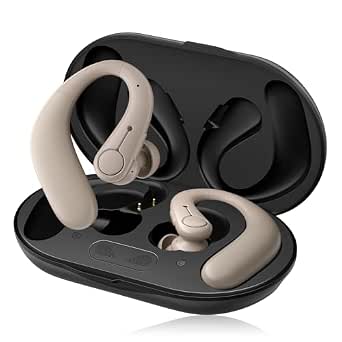 | Best for Bluetooth Streaming | Style: Behind-the-ear | Weight: 3.5 g | Sound processing: 16-channel digital chip | VIEW LATEST PRICE | See Our Full Breakdown |
| Audien Atom X OTC Rechargeable Hearing Aids with Touchscreen Charging Case |  | Best for App-Free Controls | Fit: In-ear | Control: Touchscreen charging case | Listening modes: Conversation, Crowd, TV, Comfort | VIEW LATEST PRICE | See Our Full Breakdown |
| Flaygo Rechargeable Hearing Aids for Seniors, Beige | 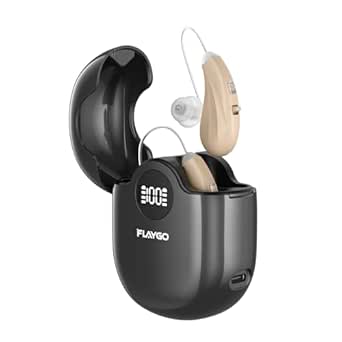 | Best for Simple Behind-the-Ear Use | Fit: Behind-the-ear | Weight: 3.5 g | Sound processing: 16-channel digital chip with noise reduction and whistling suppression | VIEW LATEST PRICE | See Our Full Breakdown |
| Flaygo Rechargeable In-Ear Hearing Aids with Noise Reduction |  | Best Compact In-Ear Pick | Fit: In-ear | Sound processing: 16-channel digital chips with adaptive noise reduction | Use time per charge: Up to 16 hours | VIEW LATEST PRICE | See Our Full Breakdown |
| Audien Atom One OTC Hearing Aids |  | Best for Simple, App-Free Controls | Fit: In-ear | Controls: Analog volume and frequency dials | Battery: Rechargeable lithium-ion | VIEW LATEST PRICE | See Our Full Breakdown |
| TTQ Rechargeable Bluetooth Hearing Aids with Earbuds |  | Best for Hearing Support and Bluetooth Audio | Model: F-aid8 | Fit: In-ear | Connectivity: Bluetooth | VIEW LATEST PRICE | See Our Full Breakdown |
| ELEHEAR Beyond OTC Hearing Aids with AI Speech Enhancement |  | Best for Speech-Focused Customization | Technology: VocClear AI | Design: Receiver-in-the-canal | Maximum gain: Up to 50 dB | VIEW LATEST PRICE | See Our Full Breakdown |
| EarCentric EasyCharge Rechargeable OTC Behind-the-Ear Hearing Aids, Beige (Pair) |  | Best for Extended Time Away from an Outlet | Fit: Behind-the-ear (BTE) | Battery: Rechargeable lithium-polymer, 3.7 V | Battery life: Up to 3 days per charge; up to 12 days with portable case | VIEW LATEST PRICE | See Our Full Breakdown |
| Karthus Hearing Aids for Seniors – Noise Reduction, Rechargeable In‑Ear |  | Best for Straightforward In-Ear Listening Modes | Fit: In-ear | Volume levels: 6 | Listening modes: 2: Noise Reduction and Quiet | VIEW LATEST PRICE | See Our Full Breakdown |
| hearing aids for hearing loss | Fit | Battery life |
|---|---|---|
| Rechargeable Hearing Aids with | — | Up to 25 hours per charge; up to 100 hours with charging case |
| Oricle Hearing Aids for Senior | In-ear | Up to 60 hours on a single charge |
| Rechargeable In-Ear Hearing Am | In-ear | — |
| Qnmittry JH-A260 Rechargeable | In-ear | Up to 60 hours per charge |
| ELEHEAR Beyond 2 Pro OTC Heari | Behind-the-ear, receiver-in-canal | Up to 20 hours per charge |
| ELEHEAR-Beyond Rechargeable OT | — | Up to 20 hours per charge; up to 100 hours with charging case |
| Rechargeable Bluetooth Behind- | — | — |
| Audien Atom X OTC Rechargeable | In-ear | Up to 16 hours per charge; up to 48 hours with charging case |
| Flaygo Rechargeable Hearing Ai | Behind-the-ear | — |
| Flaygo Rechargeable In-Ear Hea | In-ear | — |
| Audien Atom One OTC Hearing Ai | In-ear | Up to 24 hours |
| TTQ Rechargeable Bluetooth Hea | In-ear | — |
| ELEHEAR Beyond OTC Hearing Aid | — | Up to 20 hours per charge; up to 100 hours with charging case |
| EarCentric EasyCharge Recharge | Behind-the-ear (BTE) | Up to 3 days per charge; up to 12 days with portable case |
| Karthus Hearing Aids for Senio | In-ear | — |
More Details on Our Top Picks
Rechargeable Hearing Aids with Noise Reduction and 5-Level Volume Control
I’d choose this model for its practical balance of speech-focused processing and extended power between outlets. Its 16-channel noise reduction and RIC design are intended to make voices easier to follow while limiting background noise and echoes; the stated amplification is up to 40 dB ± 5 dB. Compared with the nvdskn M2219, it offers similar case-supported listening time but adds an LED battery display, which makes it easier to check remaining charge at a glance. Five volume levels and memory for the last setting also reduce repeated adjustment. The tradeoff is hands-on control: operation relies on brief or long button presses, and a good seal depends on finding a comfortable tip size. I’d skip it if discreet fit or effortless controls matter more than battery flexibility.
Pros:- 16-channel processing is designed to distinguish voices from background sound and echoes.
- Up to 25 hours per charge and up to 100 hours with the case reduce charging interruptions.
- Volume memory recalls the last of five settings.
- Four silicone ear tips in three sizes allow some fit adjustment.
Cons:- Button operation requires brief or long presses that may take practice.
- In-ear comfort and sound quality can depend on getting a secure tip fit.
Best for: People who want rechargeable in-ear hearing amplifiers with several ear-tip sizes, simple volume choices, and a visible battery indicator.
Not ideal for: Buyers who need a very easy-to-operate control layout or who have trouble finding a comfortable in-ear fit.
- Technology:16-channel noise reduction and RIC
- Volume levels:5
- Sound amplification:Up to 40 dB ± 5 dB
- Battery life:Up to 25 hours per charge; up to 100 hours with charging case
- Charging case:Provides 3 to 4 full charges
- Ear tips:1 small, 2 medium, 1 large
- Other features:Volume memory, LED battery display, rechargeable
Our verdict“Choose this if you want long case-supported battery life and a battery display; skip it if you need the simplest controls or a fit that avoids in-ear tips.”
Oricle Hearing Aids for Seniors – Advanced Noise Cancellation, Easy Volume Control, Portable Charging Case
The Oricle’s strongest distinction is its stated up to 60 hours of use on a single charge, making it a fit for people who prefer fewer charging stops. Its soft silicone in-ear design and button control keep the setup straightforward, while noise reduction is intended to help speech stand out in busy surroundings. Compared with the Rechargeable Hearing Aids with Noise Reduction and 5-Level Volume Control, Oricle claims substantially longer use before returning to the charger, but that alternative provides clearer battery-life detail for the case and an LED display. Oricle’s five preset levels are easy to understand, though they offer less fine adjustment than a more flexible control system. The battery specifications also mention a C-size battery despite describing the unit as rechargeable, which could confuse buyers. I’d verify the power arrangement before choosing it.
Pros:- Stated battery life of up to 60 hours per charge.
- Soft silicone tips support a close-fitting in-ear style.
- Noise reduction is designed to support conversation in noisy settings.
- Portable charging case provides a way to recharge away from home.
Cons:- Product details list a C-size battery despite also describing the aids as rechargeable.
- Five preset sound levels limit adjustment options.
- The available specifications do not clarify how the stated battery life relates to case recharging.
Best for: People who prioritize long stated listening time between charges and want simple button-operated volume settings.
Not ideal for: Buyers who want clear, consistent battery information or more than five preset volume choices.
- Fit:In-ear
- Controls:Button control
- Volume settings:5 sound levels
- Battery life:Up to 60 hours on a single charge
- Battery information:Rechargeable listed; specifications also list 1 C-size battery included
- Battery cell composition:Lithium ion
- Material:Silicone
- Noise reduction:Yes
Our verdict“Pick Oricle for its stated long single-charge runtime and uncomplicated buttons, but choose a model with clearer power details if charging arrangements matter to you.”
Rechargeable In-Ear Hearing Amplifier with Noise Cancellation
The nvdskn M2219 suits buyers who want a conventional in-ear amplifier with a manageable set of controls rather than app-based adjustments. It offers five button-controlled volume levels, remembers the last setting, and lists active noise cancellation and feedback reduction to support clearer listening. Its up-to-25-hour runtime per charge and up-to-100-hour total with the case match the battery figures of the Rechargeable Hearing Aids with Noise Reduction and 5-Level Volume Control; that model adds an LED battery display, while the M2219 includes both a charging case and a separate carrying case. Three tip sizes help with fit, but a full charge takes three hours, and adjustments happen on the device itself. I’d favor this over a more connected option like ELEHEAR Beyond 2 Pro only if streaming and app tuning are not priorities.
Pros:- Five volume levels and memory make everyday adjustment straightforward.
- Up to 25 hours per charge and up to 100 hours with the charging case.
- Active noise cancellation and feedback reduction are included.
- Three ear-tip sizes and a separate carrying case support fitting and transport.
Cons:- A full charge takes about three hours.
- Volume must be changed using buttons on the device.
- The listed features do not include Bluetooth streaming or app control.
Best for: Buyers seeking a rechargeable in-ear amplifier with physical buttons, remembered volume, and multiple tip sizes.
Not ideal for: People who want Bluetooth streaming, app-based adjustments, or a faster-than-three-hour full charge.
- Brand and model:nvdskn M2219
- Fit:In-ear
- Controls:Button control; 5 volume levels with memory
- Noise control:Active noise cancellation and feedback reduction
- Volume gain:43 dB ± 5 dB
- Listening time:Up to 25 hours per charge; up to 100 hours with charging case
- Charging time:3 hours
- Included accessories:Charging case, carrying case, and 3 ear-tip sizes
Our verdict“Choose the M2219 for a button-operated in-ear design with useful case capacity, not for connected features or quick charging.”
Qnmittry JH-A260 Rechargeable Hearing Amplifiers with Charging Case, Blue and Red
The JH-A260 stands apart for a small convenience: its charging case supports automatic power on and off, reducing the number of steps involved in putting the aids away and taking them out. Adaptive noise cancellation is intended to emphasize speech, and the five button-controlled volume levels keep adjustments direct. Qnmittry claims up to 60 hours per charge plus over 110 hours of backup from the case—longer figures than the nvdskn M2219 lists, though the M2219 gives a specific three-hour charging time and detailed total listening estimate. Here, charging time is not provided, and the product information gives conflicting weight figures. Those gaps make its battery and portability claims harder to compare precisely. I’d shortlist it for automatic case operation, but not if precise weight or charging details are important to your choice.
Pros:- Adaptive noise cancellation is designed to prioritize speech.
- Five volume levels are controlled with physical buttons.
- Case supports automatic power on and off.
- The stated case backup exceeds 110 hours.
Cons:- No charging time is provided.
- Weight information conflicts between the description and item specifications.
- Stated battery life is difficult to compare without more detail on charging conditions.
Best for: People who want physical volume buttons and a case that automatically powers the amplifiers on and off.
Not ideal for: Buyers who need confirmed charging times, consistent weight details, or a fully documented battery specification.
- Brand and model:Qnmittry JH-A260
- Fit:In-ear
- Controls:Button control; 5 volume levels
- Noise control:Adaptive noise cancellation
- Battery life:Up to 60 hours per charge
- Charging case backup:Over 110 hours
- Weight:Listed as 2 g in description and 1 ounce in item specifications
- Color:Blue and red
Our verdict“Consider the JH-A260 if automatic case operation matters most, but choose a better-documented model if battery and weight specifications guide your decision.”
ELEHEAR Beyond 2 Pro OTC Hearing Aids
Unlike the simpler in-ear amplifiers elsewhere in this group, the ELEHEAR Beyond 2 Pro combines a behind-the-ear receiver-in-canal fit with Bluetooth streaming, hands-free calls, app controls, and remote fine-tuning. Speech enhancement and feedback suppression target listening in noisy settings, while the stated latency under 8.5 ms is intended to keep streamed audio closely aligned with video. It also adds an IP67 rating and Auracast support in compatible venues. Compared with the nvdskn M2219, it offers a much broader set of connected functions but less stated battery time per charge—up to 20 hours versus 25. The case adds four charges, and a recharge takes about 1.5 hours. This OTC model is intended for adults with perceived mild to moderate hearing loss, so I wouldn’t treat it as a fit for every degree or cause of hearing difficulty.
Pros:- Bluetooth 5.3 supports music, video, and hands-free calls.
- App controls and remote fine-tuning offer more adjustment options than the button-only models.
- IP67 rating adds water and dust resistance.
- Charging case provides four additional charges, with about 1.5 hours to recharge.
Cons:- Up to 20 hours per charge is less than the stated per-charge runtime of the in-ear alternatives.
- Intended for adults with perceived mild to moderate hearing loss, so it may not suit every hearing need.
- Auracast depends on compatible venues and equipment.
Best for: Adults with perceived mild to moderate hearing loss who want app adjustments, Bluetooth audio, and hands-free calling in an OTC device.
Not ideal for: People seeking an in-ear, button-only amplifier, those outside the stated mild-to-moderate use range, or buyers relying on Auracast where venues do not support it.
- Fit:Behind-the-ear, receiver-in-canal
- Connectivity:Bluetooth 5.3; Auracast in supported venues
- Compatible devices:iPhone with iOS 15 or later; Android 8.0 or later
- Audio latency:Under 8.5 ms
- Weight per aid:4.3 g
- Battery life:Up to 20 hours per charge
- Charging:Case provides 4 additional charges; recharge time about 1.5 hours
- Water and dust resistance:IP67
- Intended use:Adults with perceived mild to moderate hearing loss
Our verdict“Choose ELEHEAR Beyond 2 Pro if you want connected features and app-based fine-tuning for mild to moderate hearing loss; choose a simpler amplifier if streaming is unnecessary.”
ELEHEAR-Beyond Rechargeable OTC Hearing Aids for Seniors
I’d choose the ELEHEAR-Beyond when understanding conversation is the main goal and app-based tuning feels manageable. Its VocClear AI processing is designed to clarify speech and reduce background noise, while four scene modes let users adjust for different environments. Compared with the Rechargeable Bluetooth Behind-the-Ear Hearing Aids, this model gives clearer detail about its sound modes, amplification and fit options; nine dome sizes may also make it easier to find a comfortable seal. The tradeoff is that adjustments depend on a compatible app, and the provided details don’t spell out compatibility or prescription requirements. Battery life is a strong point, though its stated 20 hours per charge is less than the Flaygo behind-the-ear model’s case-supported 80-hour total.
Pros:- VocClear AI is designed to improve speech clarity and reduce background noise
- Four scene modes and app controls allow sound adjustments
- Nine dome sizes offer more ways to tailor the fit
- Up to 20 hours per charge, with up to 100 hours available from the case
Cons:- App-based adjustments require a compatible phone, but compatibility details are not provided
- Prescription requirements are unspecified
- Less stated total case listening time than the Flaygo behind-the-ear model
Best for: Adults with mild to moderate hearing loss who want speech-focused processing, several fit options and are comfortable adjusting settings in an app.
Not ideal for: People who prefer physical controls or need confirmed phone compatibility and prescription guidance before choosing a device.
- Style:Behind-the-ear
- Intended hearing loss:Mild to moderate
- Amplification:50 dB
- Noise reduction:Up to 24 dB
- Sound technology:VocClear AI
- Scene modes:4
- Battery life:Up to 20 hours per charge; up to 100 hours with charging case
- Quick charge:15 minutes provides up to 6 hours of runtime
- Dome sizes:9
Our verdict“Choose the ELEHEAR-Beyond if speech-focused AI processing and adjustable fit matter more to you than avoiding app controls.”
Rechargeable Bluetooth Behind-the-Ear Hearing Aids
For buyers who want hearing support that can also handle phone calls and streamed audio, this model puts Bluetooth connectivity alongside a lightweight behind-the-ear design. Its 16-channel chip, noise reduction and whistling suppression target common listening distractions, while four volume levels keep everyday adjustments simple. Compared with the Flaygo Rechargeable Hearing Aids for Seniors, this option explicitly lists Bluetooth streaming and calls, giving it a clearer role for people who want audio connectivity as well as amplification. The tradeoff is limited detail: the Bluetooth compatibility information is unspecified, and the description doesn’t give amplification or hearing-loss-range figures. Its case provides up to 80 hours of listening, but the two-hour charge time and four-step volume control may feel restrictive to users seeking finer tuning.
Pros:- Bluetooth supports audio streaming and phone calls
- Lightweight design weighs 3.5 g
- Noise reduction and whistling suppression address distracting sounds
- Charging case supports up to 80 hours of listening time
Cons:- Bluetooth compatibility details are unspecified
- Only four volume levels are listed, limiting adjustment granularity
- Amplification and intended hearing-loss range are not provided
Best for: People who want a lightweight behind-the-ear aid for everyday listening plus Bluetooth calls and audio streaming.
Not ideal for: Buyers who need clearly stated phone compatibility, detailed amplification guidance or more than four volume settings.
- Style:Behind-the-ear
- Weight:3.5 g
- Sound processing:16-channel digital chip
- Noise control:Active noise cancellation and whistling suppression
- Volume levels:4
- Connectivity:Bluetooth
- Charging:USB-C; 2-hour charge
- Listening time:Up to 80 hours with charging case
Our verdict“Pick this model if Bluetooth calls and streaming matter more than detailed fit or amplification information.”
Audien Atom X OTC Rechargeable Hearing Aids with Touchscreen Charging Case
The Audien Atom X suits buyers who want to adjust listening modes without handling an app or tiny buttons: its touchscreen charging case controls volume and switches among Conversation, Crowd, TV and Comfort modes. That makes setup and routine changes more direct than on the app-controlled ELEHEAR-Beyond, although you need the case nearby to make those adjustments. The in-ear fit keeps the aids compact, and the included expert-guided setup and multiple dome sizes offer useful support when getting started. Battery life is the main compromise: the aids run for up to 16 hours per charge, with up to 48 hours from the case, so they offer less reserve than either behind-the-ear option in this group. I’d also favor another pick if you want adjustments available directly on the aid.
Pros:- Touchscreen case adjusts volume and listening mode without an app
- Four modes cover conversation, crowds, TV and comfort
- Expert-guided setup and multiple ear dome sizes are included
- OTC product with no prescription required
Cons:- Up to 16 hours per charge may not cover every long day
- Personal adjustments depend on access to the touchscreen case
- Case-supported use is up to 48 hours, below the listed totals for the ELEHEAR-Beyond and Flaygo behind-the-ear models
Best for: First-time OTC hearing-aid buyers who want guided setup, an in-ear style and controls that don’t rely on a phone app.
Not ideal for: People who need longer per-charge runtime or want to change volume and modes without carrying the charging case.
- Fit:In-ear
- Control:Touchscreen charging case
- Listening modes:Conversation, Crowd, TV, Comfort
- Battery life:Up to 16 hours per charge; up to 48 hours with charging case
- Battery:Rechargeable lithium-ion
- Prescription:No prescription required
- Color:Beige
- Included accessories:Charging case, USB cable, wall adapter, extra ear domes, replacement wax guards and cleaning brush
Our verdict“Choose the Atom X if you want app-free mode and volume control and are comfortable making those changes at its case.”
Flaygo Rechargeable Hearing Aids for Seniors, Beige
I’d place the Flaygo Rechargeable Hearing Aids on the shortlist for buyers who value straightforward controls over phone features. The lightweight behind-the-ear aids use a one-button control to cycle through four volume levels, with a 16-channel chip, noise reduction and whistling suppression for everyday listening. Unlike the Bluetooth-equipped Rechargeable Bluetooth Behind-the-Ear Hearing Aids, this Flaygo model doesn’t list calls or streaming; in return, its description keeps the focus on simple operation and a case-supported listening total of up to 80 hours. That makes it a practical alternative for someone who wants fewer connected features, not a strong fit for a buyer seeking detailed sound customization. USB-C charging is convenient, but the listed two-hour charge time and lack of stated amplification figures leave some buying questions unanswered.
Pros:- Lightweight 3.5 g behind-the-ear design
- One-button controls offer four volume levels
- Noise reduction and whistling suppression are included
- Charging case provides up to 80 hours of listening time
Cons:- Bluetooth streaming and call support are not specified
- Amplification level and intended hearing-loss range are not provided
- Four volume levels offer less fine control than app-adjustable alternatives such as the ELEHEAR-Beyond
Best for: Older adults who want a lightweight behind-the-ear aid with one-button volume control and don’t need Bluetooth streaming.
Not ideal for: Buyers who want phone-call streaming, detailed amplification specifications or app-based sound tuning.
- Fit:Behind-the-ear
- Weight:3.5 g
- Sound processing:16-channel digital chip with noise reduction and whistling suppression
- Volume levels:4
- Charging:USB-C; 2-hour charge
- Listening time:Up to 80 hours with charging case
- Controls:One-button control
- Color:Beige
Our verdict“Choose Flaygo if you want simple button control and extended case-supported use without a need for Bluetooth features.”
Flaygo Rechargeable In-Ear Hearing Aids with Noise Reduction
This Flaygo model is the compact choice for buyers who prefer an in-ear fit and don’t want to manage manual controls. Its automatic on/off operation starts and stops the aids as they’re worn or removed, while adaptive noise reduction is intended to make speech easier to follow. Compared with the Audien Atom X, it puts less emphasis on selectable listening modes and touchscreen adjustments, but its charging case offers over 110 hours of use—more stated case-supported time than any other product in this batch. That figure doesn’t change the per-charge limit of up to 16 hours, so the case remains part of the routine. Fit and comfort can vary, and the description does not provide amplification or hearing-loss-range details; buyers who need those specifics may prefer the ELEHEAR-Beyond.
Pros:- Compact in-ear fit with automatic on/off operation
- Adaptive noise reduction is designed to support speech clarity
- Charging case provides over 110 hours of use
- One-year warranty is listed
Cons:- Up to 16 hours of use per charge may require a recharge during extended use
- Fit and comfort may vary between users
- Amplification and intended hearing-loss range are not specified
Best for: People who prefer compact in-ear aids with automatic operation and want a charging case that provides a large listening-time reserve.
Not ideal for: Buyers who need selectable listening modes, detailed amplification guidance or a fit they can assess before purchase.
- Fit:In-ear
- Sound processing:16-channel digital chips with adaptive noise reduction
- Use time per charge:Up to 16 hours
- Charging time:1–2 hours
- Charging case usage:Over 110 hours
- Controls:Automatic on/off
- Battery:Rechargeable lithium-ion
- Warranty:One year
Our verdict“Choose this Flaygo if you want a compact, automatically operated in-ear aid and value a long-use charging case over selectable modes.”
Audien Atom One OTC Hearing Aids
Audien Atom One suits buyers who want direct control without a phone app: its analog dials adjust volume and frequency, so changes can be made on the device. The rechargeable in-ear design is more discreet than the behind-the-ear EarCentric EasyCharge, while three dome sizes give buyers a few ways to refine the fit. A USB-C dock and up to 24 hours of use per charge also keep daily upkeep straightforward. The tradeoff is limited sound adjustment: unlike ELEHEAR Beyond, this model has no stated noise attenuation or speech-enhancement feature. Its mild-to-moderate hearing-loss suitability also rules it out for buyers who need stronger support. I’d choose it for uncomplicated amplification, not for managing noisy settings or tailoring sound through an app.
Pros:- Analog volume and frequency dials allow adjustment without a smartphone.
- Rechargeable battery offers up to 24 hours of use per charge.
- Three ear dome sizes help buyers find a more secure in-ear fit.
- USB-C charging dock and guided setup support are included.
Cons:- No noise-control feature is specified for reducing competing sounds.
- Designed for mild to moderate hearing loss, limiting suitability for more substantial needs.
Best for: Adults with mild to moderate hearing loss who prefer physical controls, a discreet in-ear fit, and rechargeable daily use without an app.
Not ideal for: People who often need to follow conversation in noisy environments, want app-based sound customization, or have hearing loss beyond the mild-to-moderate range.
- Fit:In-ear
- Controls:Analog volume and frequency dials
- Battery:Rechargeable lithium-ion
- Battery life:Up to 24 hours
- Charging time:About 3 hours
- Charging connector:USB-C
- Included ear dome sizes:Small, medium, and large
- Warranty:1 year
Our verdict“Choose the Audien Atom One if you want straightforward, app-free in-ear amplification and do not need noise management.”
TTQ Rechargeable Bluetooth Hearing Aids with Earbuds
TTQ Rechargeable Bluetooth Hearing Aids are the most audio-connected pick here: they combine amplification with Bluetooth earbuds for calls and music. Five volume levels and three noise-reduction modes give users more on-device adjustment than the simple dial-based Audien Atom One, and the flexible hooks plus three tip sizes may help keep the in-ear pieces in place. The charging case is another practical advantage, with capacity for up to 17 hearing-aid charges. But buyers should not mistake that case figure for a stated runtime per charge; the listing gives no individual battery-life estimate. Bluetooth compatibility details are also limited, so this is a less certain choice for anyone relying on a particular phone or streaming setup. I’d favor TTQ for combined listening functions, not for clearly documented all-day runtime.
Pros:- Combines hearing amplification with Bluetooth audio for calls and music.
- Five volume levels and three noise-reduction modes offer more adjustments than the Audien Atom One.
- Charging case can recharge the hearing aids up to 17 times.
- Flexible ear hooks and three ear-tip sizes support fit adjustments.
Cons:- Battery life for each hearing-aid charge is not specified.
- Bluetooth compatibility details are limited.
- Button controls and multiple modes may take more adjustment than a basic one-control design.
Best for: Adults seeking an in-ear hearing aid that also handles Bluetooth calls and music, with multiple volume and noise-reduction settings.
Not ideal for: Buyers who need a clearly stated runtime per charge or detailed confirmation that Bluetooth will work with their specific devices.
- Model:F-aid8
- Fit:In-ear
- Connectivity:Bluetooth
- Volume levels:5
- Noise-reduction modes:3
- Maximum volume increase:42 dB
- Maximum noise reduction:18 dB
- Charging case capacity:2000 mAh; up to 17 hearing-aid charges
- Ear-tip sizes:3
Our verdict“Pick TTQ if Bluetooth audio is a priority, but choose a better-documented option if predictable runtime matters most.”
ELEHEAR Beyond OTC Hearing Aids with AI Speech Enhancement
ELEHEAR Beyond is the strongest match in this group for buyers who want speech enhancement and adjustable settings rather than only basic amplification. Its VocClear AI technology, noise attenuation, and feedback control are aimed at making speech easier to follow, while the iOS and Android app lets users customize settings. That gives it a more tailored approach than the Audien Atom One, which uses physical dials and has no stated noise control. The receiver-in-canal style and up to 20 hours per charge make it a practical rechargeable option, with the case extending total use to up to 100 hours. Its main limit is hearing-loss range: it is specified for mild to moderate needs, not severe loss. Buyers who want simple controls without an app may find Audien easier to operate.
Pros:- VocClear AI, noise attenuation, and feedback control target speech clarity.
- Companion app for iOS and Android allows personalized settings.
- Up to 20 hours of use per charge and up to 100 hours with the case.
- Automatic power on and off when removed from or placed in the case.
Cons:- May not provide enough support for severe hearing loss.
- App-based customization may be less suitable for buyers who want device-only controls.
Best for: Adults with mild to moderate hearing loss who want app-adjustable sound and speech-focused features for conversations in varied settings.
Not ideal for: People with severe hearing loss or those who prefer basic physical controls over smartphone-based customization.
- Technology:VocClear AI
- Design:Receiver-in-the-canal
- Maximum gain:Up to 50 dB
- Noise attenuation:24 dB
- Battery life:Up to 20 hours per charge; up to 100 hours with charging case
- App compatibility:iOS and Android
- Hearing-loss suitability:Mild to moderate
- Fit options:Multiple dome sizes
Our verdict“Choose ELEHEAR Beyond for app-based speech-focused adjustments, provided your hearing needs fall within its mild-to-moderate range.”
EarCentric EasyCharge Rechargeable OTC Behind-the-Ear Hearing Aids, Beige (Pair)
EarCentric EasyCharge stands apart for buyers who want fewer charging interruptions: the aids are specified for up to three days per charge, and the portable case adds three more charges for up to 12 days total. That makes it a better fit for travel or irregular access to power than the Audien Atom One, which offers up to 24 hours per charge. Its behind-the-ear design also comes with regular and long tubes plus multiple domes, giving users more fit parts to work with than a straightforward in-ear option. The tradeoff is a less discreet form factor, and getting a comfortable fit may take adjustments. Noise reduction and adjustable volume are included, but the product data does not detail how those features compare with ELEHEAR Beyond’s speech-focused processing.
Pros:- Up to three days of use per charge, with up to 12 days total when using the portable case.
- Includes both a desktop charging dock and portable charging case.
- Regular and long tubes plus multiple domes offer fit options.
- Adjustable volume, noise reduction, and sweatproof construction are specified.
Cons:- Behind-the-ear styling may be less discreet than the Audien Atom One or Karthus in-ear designs.
- Finding a comfortable fit may require adjusting the included domes and tubes.
Best for: Adults who prefer a behind-the-ear fit and want long intervals between charges, particularly for travel or days away from a charging outlet.
Not ideal for: Buyers who want a discreet in-ear device or would rather avoid fitting and adjusting tubes and ear domes.
- Fit:Behind-the-ear (BTE)
- Battery:Rechargeable lithium-polymer, 3.7 V
- Battery life:Up to 3 days per charge; up to 12 days with portable case
- Features:Noise reduction, adjustable volume, and sweatproof
- Audio sensitivity:118 dB
- Weight:1.2 oz
- Dimensions:1.4 × 0.5 in
- Included:Desktop charger, portable charging case, USB-C cable, power adapter, domes, tubes, and tools
Our verdict“Choose EarCentric EasyCharge if long battery intervals matter more to you than a discreet in-ear profile.”
Karthus Hearing Aids for Seniors – Noise Reduction, Rechargeable In‑Ear
Karthus Hearing Aids keep operation simple: one-button controls switch between two listening modes and six volume levels, with no app or Bluetooth to configure. The charging case provides up to 96 hours of total use, a useful middle ground between the Audien Atom One’s stated 24-hour per-charge runtime and EarCentric EasyCharge’s longer multi-day charging setup. A 16-channel digital chip and noise-reduction mode offer more listening adjustment than a bare-bones amplifier, though the product lists only two modes. That makes Karthus less adaptable than the app-customizable ELEHEAR Beyond, especially for buyers who want to tune sound across different environments. I’d consider it for uncomplicated rechargeable use, but not for Bluetooth streaming or extensive sound personalization.
Pros:- Charging case offers up to 96 hours of total use.
- One-button operation avoids app setup and Bluetooth pairing.
- Six volume levels allow adjustments beyond a single fixed setting.
- Includes small, medium, and large ear domes plus a cleaning brush.
Cons:- No Bluetooth connectivity or smartphone app is specified.
- Two listening modes may not provide enough flexibility for varied environments.
Best for: Adults with mild to moderate hearing loss who want an in-ear rechargeable aid with simple controls and basic noise-reduction options.
Not ideal for: Buyers who want Bluetooth calls or music, app-based customization, or several listening modes for changing sound environments.
- Fit:In-ear
- Volume levels:6
- Listening modes:2: Noise Reduction and Quiet
- Charging case capacity:Up to 96 hours total use
- Battery:Lithium polymer
- Included ear dome sizes:Small, medium, and large
- Color:Off-white
- Items included:2 hearing aids, charging case, user manual, ear domes, and cleaning brush
Our verdict“Choose Karthus if you want simple in-ear controls and extended case-supported use without connected features.”

How We Picked
I compared the 15 named products through the needs people commonly have when shopping for hearing support: clear product positioning, style and fit, adjustment simplicity, charging approach, and features aimed at reducing listening effort. I gave more weight to devices whose listed design and features suggest a practical path to everyday use, while distinguishing hearing aids from products described as amplifiers or earbuds. Product names alone do not establish clinical performance, so I avoid claims about measured speech clarity, treatment outcomes, or suitability for a particular hearing profile.
The order favors options with a clearer feature proposition and useful flexibility, followed by products that may suit narrower priorities such as basic controls, compact wear, or a particular form factor. A premium label or long feature list did not automatically earn a higher place: fit, ease of adjustment, and intended use remain central. Because this lineup includes limited detail on fitting support and clinical guidance, buyers should verify those points with the seller or a hearing professional before choosing.
| hearing aids for hearing loss | Fit |
|---|---|
| Rechargeable Hearing Aids with | — |
| Oricle Hearing Aids for Senior | In-ear |
| Rechargeable In-Ear Hearing Am | In-ear |
| Qnmittry JH-A260 Rechargeable | In-ear |
| ELEHEAR Beyond 2 Pro OTC Heari | Behind-the-ear, receiver-in-canal |
| ELEHEAR-Beyond Rechargeable OT | — |
| Rechargeable Bluetooth Behind- | — |
| Audien Atom X OTC Rechargeable | In-ear |
| Flaygo Rechargeable Hearing Ai | Behind-the-ear |
| Flaygo Rechargeable In-Ear Hea | In-ear |
| Audien Atom One OTC Hearing Ai | In-ear |
| TTQ Rechargeable Bluetooth Hea | In-ear |
| ELEHEAR Beyond OTC Hearing Aid | — |
| EarCentric EasyCharge Recharge | Behind-the-ear (BTE) |
| Karthus Hearing Aids for Senio | In-ear |
Factors to Consider When Choosing Best Hearing Aids For Hearing Loss
My product picks show that hearing support is not a one-feature decision. Before choosing, match the device to your hearing evaluation, daily environments, comfort preferences, and ability to manage small controls and charging. These broader checks can prevent a common mismatch: buying for discretion or a long feature list, then finding that the device is difficult to wear or adjust consistently.
Start With the Type and Degree of Hearing Loss
OTC hearing aids are intended for adults with perceived mild to moderate hearing loss, not every cause or degree of reduced hearing. A hearing assessment can help identify whether amplification is appropriate and whether one ear needs more support than the other. Sudden hearing changes, pain, drainage, dizziness, or hearing that worsens quickly call for medical advice rather than a shopping decision. A common mistake is assuming that a device labeled for seniors suits every older adult; age does not tell you the pattern of hearing loss. Check the intended-use information and return policy before buying, especially if you have not had a recent evaluation.
Choose a Form Factor You Can Manage Every Day
In-ear styles can appeal to people who want a less visible device, but small earpieces may be harder to handle and can feel uncomfortable in some ear canals. Behind-the-ear models are more visible, yet their larger components may be easier to grasp, adjust, and remove. Think through your dexterity, vision, glasses, mask use, and how long you expect to wear the aids each day. Do not choose solely by appearance: a discreet device that is difficult to seat correctly can provide a worse experience than a more visible one. If possible, check whether the seller offers multiple dome sizes or a practical exchange process.
Look Beyond the Phrase Noise Reduction
Noise-reduction claims can sound reassuring, but they do not tell you how well a hearing aid will separate speech from competing sounds in your own routine. Ask what adjustment options are available for quieter rooms, restaurants, outdoor settings, or television listening. A device with simple controls may be easier to use on the go, while app-based adjustments can offer more control for people comfortable with a phone. Avoid assuming that stronger noise processing is always better; some users may prefer more natural ambient sound in certain situations. Prioritize a clear fitting and adjustment plan over a feature name alone.
Compare Controls, Charging, and Ongoing Care
Rechargeable models reduce the need to handle tiny disposable batteries, but they depend on a reliable charging routine and a case that is easy for you to operate. Check how the device signals battery status, how long a charge is intended to last, and whether the case itself needs a separate power connection. Touchscreens and extra controls can add convenience for some users while creating another interface to learn for others. Also account for cleaning, earwax management, replacement domes, and access to troubleshooting help. The simplest device to maintain is often more useful than one with features you are unlikely to use.
Check Support, Returns, and Product Classification
Before ordering, confirm whether the product is an OTC hearing aid, a personal sound amplification product, or an earbud with amplification features; those categories are not interchangeable. Review the fitting instructions, trial or return window, warranty terms, and route to customer support. A generous feature list cannot compensate for poor fit if there is no practical way to adjust or exchange the device. Buyers with complex hearing needs, one-sided loss, or limited benefit from prior amplification should seek professional guidance rather than relying on a generic product description. This check is especially useful for models whose names use broad terms such as amplifier or hearing aid without explaining their intended audience.
Decide When Professional Help Is Worthwhile
Paying for a hearing evaluation or professional fitting can be worthwhile when you are uncertain about your hearing profile, struggle to adjust devices, or need support beyond basic amplification. Professional guidance can help distinguish hearing loss from other problems and identify whether a particular device style is a sensible match. Buyers with mild, stable hearing difficulty may prefer the convenience of an OTC option, provided they can follow its fitting and adjustment process. Avoid treating online self-selection as a diagnosis, especially if speech remains difficult to understand after the device is fitted. Set a realistic goal: a hearing aid can support listening, but it may not make every conversation effortless.
Frequently Asked Questions
Should I choose an OTC hearing aid or see an audiologist first?
If your hearing difficulty seems mild to moderate and has developed gradually, an OTC device may be a reasonable option for an adult who can follow the fitting instructions. A hearing professional can help confirm the type and degree of loss and may be a better starting point if you have tried amplification before without much benefit. Seek medical advice for sudden changes, pain, drainage, dizziness, or a noticeable difference between ears. Professional guidance can also help if you are unsure whether a product described as an amplifier is suitable for your needs. I would treat an evaluation as useful information, not as a requirement to buy a particular device.
Are rechargeable in-ear hearing aids a better choice than behind-the-ear models?
Neither style is better for everyone: in-ear devices may be less visible, while behind-the-ear models can be easier to handle and adjust. Small in-ear housings may pose a challenge for people with limited dexterity or vision, and fit can vary with ear shape. Behind-the-ear designs are more noticeable and may interact with glasses or mask straps, so comfort depends on your routine. Compare cleaning needs, control access, and the seller’s options for different ear tips rather than choosing by appearance alone. A comfortable fit that you can manage consistently is more useful than a style that looks ideal but stays in its case.
Does noise reduction mean I will understand speech in restaurants?
No feature label can promise that result, because restaurant listening depends on the room, distance, competing voices, and your hearing profile. Noise reduction may change how background sound is presented, but it does not guarantee that speech will become clear in every crowded setting. Check whether the device lets you adjust settings for different environments and whether you can try it under the seller’s return terms. If understanding speech remains difficult after careful fitting, ask a hearing professional about other adjustments or options. Use claims about noise control as a comparison point, not as proof of performance in a specific situation.
How can I tell whether a product is a hearing aid or just an amplifier?
Read the product’s intended-use statement and instructions rather than relying on words in the title or a feature list. A personal sound amplifier is generally intended to make sounds louder, while an OTC hearing aid is intended for adults with perceived mild to moderate hearing loss and is subject to different U.S. regulatory requirements. Product names in this lineup include both hearing-aid and amplifier language, so check the manufacturer’s documentation before ordering. If the distinction is unclear, ask the seller directly or consult a hearing professional. Do not assume that Bluetooth, noise reduction, or a charging case makes a product a hearing aid.
What should I check before buying if I am new to hearing aids?
Start with whether the product is intended for your needs, then check how it is fitted, adjusted, charged, cleaned, and returned if it does not suit you. Simple controls and clear instructions may matter more at first than a long list of advanced features. Confirm that the seller explains battery status, ear-tip sizing, troubleshooting, and access to support. Give yourself time to learn the device, but do not ignore discomfort or persistent difficulty understanding speech. If you are uncertain about the cause or severity of your hearing loss, arrange a hearing evaluation before choosing.
Conclusion
For a feature-rich starting point, my best overall pick is the ELEHEAR Beyond 2 Pro; buyers prioritizing an easier-to-handle behind-the-ear design should look at the EarCentric EasyCharge. I would treat the ELEHEAR Beyond and Beyond 2 Pro models as the lineup’s premium-leaning choices, while checking their adjustment and support details before paying for extra features. For a beginner, the simplest fit may come from the model whose controls, instructions, and return process are clearest rather than the one with the most features. If compact wear matters most, compare the Audien Atom One and Flaygo in-ear options; if you want a touchscreen case, consider the Audien Atom X. The product information here does not establish a single standout value pick, so I would compare included accessories, support, and return terms before deciding, and seek professional advice if your hearing needs are uncertain.