
TL;DR

Get the little things that make your day delivered free — and shop member deals
- Fast, free delivery on millions of items
- Access to Prime Big Deal Days deals on October 6–7
- Prime Video, Amazon Music and more included
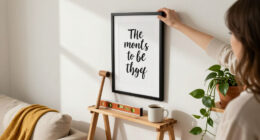
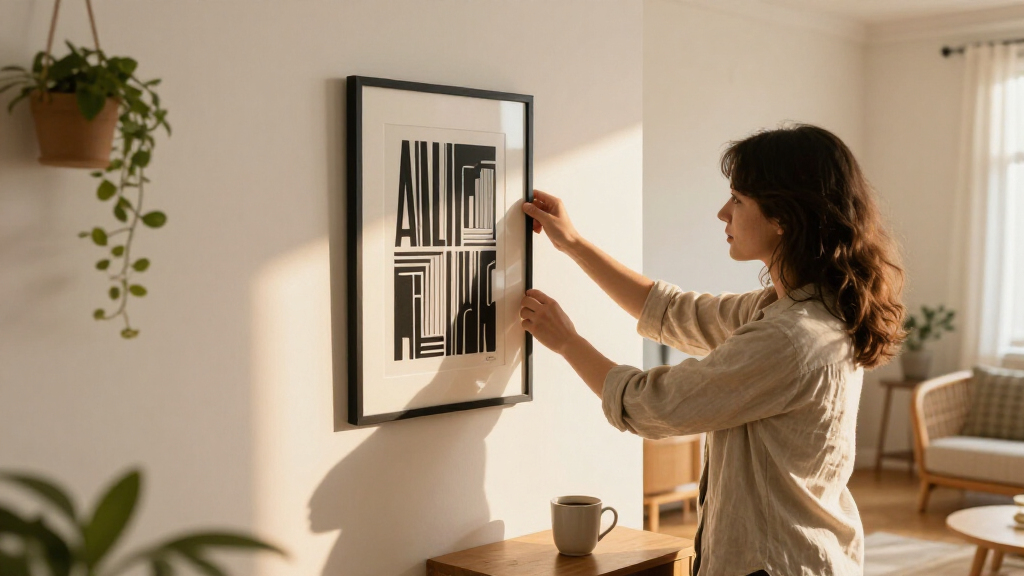
Motivational quote wall art combines short, encouraging messages with visual design for display in homes, offices, classrooms, and gyms. The most effective pieces pair a message that feels personally relevant with readable typography and placement sized to the wall. Verify attributions before printing a name under a quote, and check rights before reproducing quotes commercially.
The most-viewed piece of art in your home is probably not the one you paid the most for. It’s whatever hangs where your eyes land every morning — above the desk, opposite the bed, next to the coffee maker. That’s the quiet power of a motivational quote wall: you don’t read it on purpose. It just seeps in.
But most quote art fails, and it fails for boring reasons. The message feels generic by week three. The swirly font is unreadable from the couch. The quote is attributed to Einstein, except Einstein never said it. This guide walks you through choosing words, fonts, formats, and placement that actually last — and the mistakes that send prints to the closet.
Effective quote wall art needs three things aligned: a personally relevant message, readable typography at real viewing distance, and design that suits the roo…
Sticky-note test a quote for a week before buying — if the wording still lands after seven days, it will likely last for years.
Verify quote attributions against a reputable primary source; use "attributed to" when you can’t confirm, since online repetition proves nothing.
Printable files printed on quality cardstock can match framed prints at a fraction of the cost — check file resolution and final print size first.
Printables and decals are the most renter-friendly formats; adhesive products vary by paint finish, so follow mounting instructions.
What Makes a Quote on a Wall Actually Work (and Not Just Decorate It)
A piece of motivational quote wall art is effective when three things line up: the message feels relevant to you, the lettering is readable at real viewing distance, and the design suits the room. Miss any one of those and you’ve bought wallpaper with words on it. It’s that simple, and that easy to get wrong.
The reason relevance matters most is repetition. Unlike a painting, quote art delivers its entire value through repeated exposure — and repetition is a double-edged sword. A message that genuinely reflects your goals compounds over time; a generic one gets filtered out, then actively annoys, then becomes invisible. This is why trendy slogans age so fast: they were chosen to match a mood in a store, not a real thread in your life.
Think about the difference between “Live Laugh Love” and the half-marathon finish time your sister framed after her first race. One is furniture-store filler. The other gets a story told about it at every dinner party. The words themselves aren’t better — they’re yours, and that personal anchor is what keeps the piece alive to your eye instead of fading into the wall.
There’s a tradeoff worth naming, though: the more specific and intense the message, the more it demands of you. “No excuses” above a home gym reads as fuel to some people and as a guilt trip to others — and it can flip from one to the other over time. Before you buy, ask: will this phrasing still feel good on a bad day, six months from now? A message that supports you on your worst days will support you on your best ones too; the reverse isn’t true.
The best quote art isn’t the most inspiring slogan — it’s the one you’d still choose if nobody else ever saw it.
3 Questions That Find a Quote Worth Living With
Choosing a personal message is easier when you stop browsing Pinterest and start with yourself. The strongest pieces come from a value, goal, or reminder that already matters to you — the art just makes it visible. Here’s a quick process:
- Start with the feeling you want. Confidence before presentations? Calm at the end of the day? Grit during 6 a.m. workouts? Name it first, then find words for it. The sequence matters: words chosen for a named feeling fit your life; words found first tend to reshape your goal to fit them, which is how people end up living with someone else’s motto.
- Test the quote for a week. Write it on a sticky note and put it where the art will hang. If it still lands after seven days, it’ll likely last seven years. This works because wall art is a slow-burn medium — the note simulates the low-attention, repeated glances the print will actually get, rather than the deliberate reading you do while shopping.
- Check the source. Misattributed quotes are everywhere online — lines get attached to Einstein, Twain, and Wilde that none of them wrote. Look for a reputable primary reference, or use “attributed to” if you can’t confirm it. It feels pedantic until you realize a wrong name quietly undermines the quote’s weight: part of why “Be the change” lands is who supposedly said it.
Your own words count too — and often count double. A family saying, a line from a grandparent’s letters, a phrase from your wedding vows carries a private meaning no store-bought slogan can match, and custom wording dodges the attribution problem entirely. The tradeoff is permanence: if the phrase ties to a phase of life, decide in advance whether you’ll want it on the wall after that phase ends. Just triple-check spelling before ordering a custom print; that typo will stare at you daily.
Fonts and Colors You Can Actually Read From Across the Room
Readability beats beauty when it comes to quote art, because the medium is the glance, not the read. Highly decorative script that looks lovely at the print shop can turn into gray mush from ten feet away, and a message you can’t read is decor, not motivation. The implication: you’re not choosing a font, you’re choosing how easily your future self can absorb the message while thinking about something else entirely.
Here’s a quick test: pull up the product photo on your phone, walk to the far end of the room where the print will hang, and look at the screen. If you can’t read it at that distance, the font is too fussy or too small for your wall.
- Contrast first: dark text on light background, or the reverse. Pale gray-on-white looks minimalist and reads as a smudge. Contrast does the heavy lifting because your eye resolves shape before detail — without it, no font choice can save the piece.
- Sans-serif and simple serif fonts hold up best at distance; save the calligraphy for short words. This is a genuine style-versus-function tradeoff: script conveys warmth and personality but spends your legibility budget to get it. One calligraphy word paired with clean body text often gets you both.
- Size the text to the space: above a desk, viewers sit three feet away — smaller type works. In a hallway or above a sofa, aim bigger. The same print can be perfect in one room and invisible in another, which is why sizing rules always reference viewing distance, not wall size alone.
- Accessibility: strong contrast and generous text size also make the piece readable for people with low vision, which matters in classrooms and shared offices — and features that help the lowest-vision viewer reliably help everyone skimming past.
Short quotes generally win for glanceable spots — you catch “Begin again” mid-stride. Longer quotes work where people pause: a reading nook, a bathroom, a waiting area. Matching length to dwell time is the underlying principle; a paragraph-length quote in a hallway just becomes texture.
Framed Print vs. Canvas vs. Decal vs. Printable: Which Format Fits Your Life
The right format depends on your budget, your walls, and whether you own or rent — and the tradeoffs between them are real, because no single format wins on everything. Framed prints look the most finished but cost more and shatter when they fall; decals are cheap and commitment-free but can’t be moved without risk; printables are flexible but shift the quality burden onto you. Here’s how the main options compare on the things people actually care about:
| Format | Look | Typical Cost | Renter-Friendly? | Best For |
|---|---|---|---|---|
| Framed paper print | Polished, gallery-like | Medium to high | Yes (small nails) | Living rooms, offices, gifts |
| Canvas | Soft, frameless, modern | Medium to high | Mostly | Bedrooms, large walls |
| Poster (unframed) | Casual, budget | Low | Yes | Kids’ rooms, dorms, gyms |
| Wall decal | Clean, direct-on-wall | Low to medium | Usually, but adhesive varies by paint | Renters, temporary spaces |
| Printable file | Depends on printing | Lowest | Yes | Fast, flexible sizing |
Printables deserve a fair shake: a high-resolution file printed on matte cardstock at a local print shop can look nearly identical to a $60 framed print for under $10. Quality depends entirely on file resolution, paper, and printer — check the specs before you hit print, especially for anything larger than 8×10. What you’re really trading is convenience for control: the seller can’t guarantee the outcome, so the spec-reading is the price of the savings.
Adhesive mounting products don’t work on every paint finish or texture — always follow the product instructions, or you’ll be patching drywall later.
Where to Hang It: Placement That Puts Words Where Your Eyes Already Go
The best placement for motivational quote wall art is wherever you naturally pause or look during a moment that matches the message — because context is what gives a quote its meaning. “One shift at a time” above a desk is encouragement; the same words in a guest bathroom is just decoration. Common sweet spots include the home office (focus and confidence), the bedroom (calm, gratitude), the entryway (the last thing you see leaving), classrooms, and workout areas. The principle: match the message to the emotional state of the room, not just to an empty wall.
Practical example: a woman in nursing school hung “One shift at a time” on the wall visible from her kitchen table, where she studied and ate. She saw it maybe fifteen times a day without trying. That’s placement doing the work a scroll of phone wallpapers never could — passive repetition beats intentional consumption, because willpower to open an affirmations app runs out exactly when you’d need it most.
Before you buy, measure the wall and check the finished dimensions of the piece — including the frame. A print that looked substantial online can arrive looking like a coaster on a big empty wall, and oversized art can crowd a small room. Scale matters psychologically, not just aesthetically: an undersized quote on a large wall reads as tentative, which subtly undercuts a confident message. Masking tape outlines on the wall are an old decorator’s trick that saves a lot of regret — five minutes of tape beats five years of squinting past a mistake.
Can You Print That Quote? Attribution and Copyright Basics
Not every quote you find online is free to print and sell, and the reason is that two separate layers of rights can apply. A quote’s age, source, and jurisdiction all affect whether it’s protected, and the artwork or design around it may carry its own copyright even when the words don’t — which is why a public-domain phrase can still appear on a print you’re not allowed to copy. If you’re printing for your own wall, personal use is usually low-risk. If you’re selling prints, check rights and licensing rather than assuming short quotes are always fair game; “short” is not a legal safe harbor, and enforcement is inconsistent, which means the risk is real even if takedowns are rare.
Attribution is the other trap, and it matters more than it seems. Misattributions spread because one website copies another, and pretty soon a 1990s self-help line is credited to Theodore Roosevelt. The deeper cost is credibility: a wrong attribution leeches authenticity from the quote itself once you or a guest discovers it. Before you attach a name to a quote, look for a reliable primary or reputable reference — a published book, a documented speech, an academic citation. If you can’t verify it, either omit the attribution or write “attributed to”. It’s the honest move, it’s accurate about your uncertainty, and it protects you from pedantic dinner guests.
Personal wording sidesteps both problems: your grandmother’s recipe-card saying, your own mantra, a line your kid said at age four. Those are yours, provably yours, and they’re usually better anyway.
Your 5-Step Buying Checklist (Don’t Skip #2)
When you’re ready to buy or make a piece, run through this in order — the sequence exists because each step filters out a different failure mode:
- Pick the message from a real value or goal, not from what’s trending — then sticky-note test it for a week. This filters out the most common failure: a message that fades.
- Verify the attribution against a reputable source, or drop the name entirely. This filters out the embarrassing failure: a misattributed quote you have to explain away later.
- Measure your wall and the print’s finished size, and confirm the text will be readable from your normal viewing distance. This filters out the invisible failure: art you own but never actually see.
- Choose the format that matches your budget, walls, and how long you’ll keep it up. A decal for a two-year lease, a frame for the home you’ll retire in.
- Consider a personalized version — names, dates, or custom wording — if the piece marks a specific milestone. The more personal the anchor, the longer the piece stays meaningful.
One honest caveat: quote art can act as a personal cue and make a space feel more encouraging, but it won’t fix a bad workflow, a rough job, or an unhelpful environment on its own. Think of it as a nudge, not a strategy — nudges work when they’re pointed at a direction you’re already moving; they can’t supply the movement.
Frequently Asked Questions
Can motivational quote wall art actually improve mood or productivity?
It can act as a personal cue and make a space feel more encouraging, but effects vary from person to person. It works best as a nudge alongside practical changes to your environment and routine — not as a substitute for them.
How do I know if a quote is correctly attributed?
Look for a reliable primary source or reputable reference, such as a documented speech or published book. Just because a quote appears on hundreds of websites with a famous name attached doesn’t establish who actually said it — misattributions spread through copying. When in doubt, write “attributed to” or leave the name off.
What size motivational quote art should I buy?
Match the print to both the wall and the viewing distance. Measure the available space, check the finished dimensions including the frame, and confirm the text is readable from where people normally sit or stand. A hallway piece needs larger type than something hung above a desk three feet from your eyes.
Can I print a quote I found online?
Not necessarily. The quote, artwork, or design may be protected by copyright depending on its age and source. Printing for personal use is usually low-risk, but if you plan to sell prints or use the quote commercially, check the rights and licensing first rather than assuming short quotes are free to reproduce.
Are printable quote files good quality?
They can be. Quality depends on the file resolution, paper, printer, and final print size. A high-resolution file printed on matte cardstock at a local shop can rival a pre-framed print at a fraction of the cost — just review the file specifications and print instructions before committing.
Conclusion
Choose the words first, the design second, and the placement third — in that order. A verified, personally meaningful quote in readable type on the wall your eyes already land on will outlast every trend-driven canvas you’ve ever bought.
What’s the one sentence you’d want to read fifteen times a day without trying? Start there. The wall will figure itself out.
Fall Picks
fall essentials
As an affiliate, we earn on qualifying purchases.